×
×
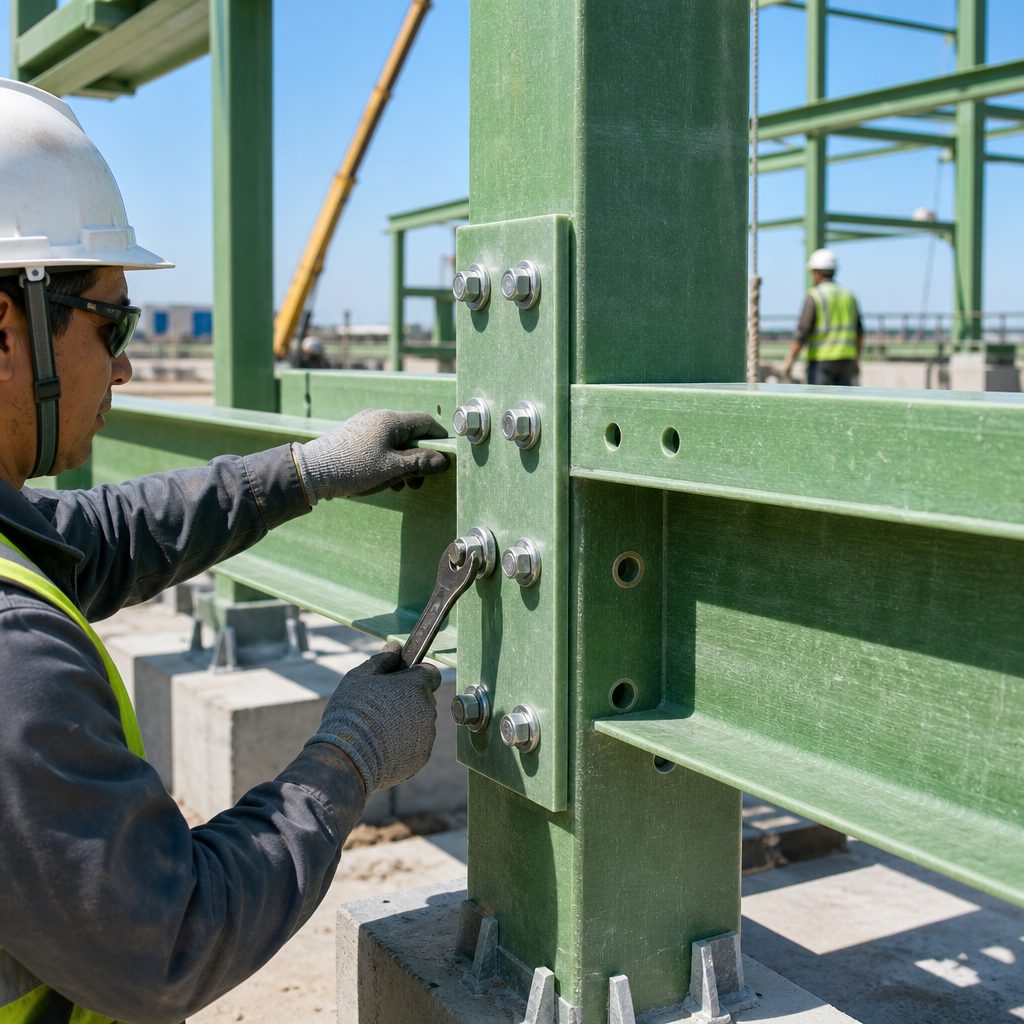
In the evolving world of modern infrastructure, the demand for materials that combine extreme durability with low maintenance has never been higher. Fiberglass structural profiles, produced through the advanced pultrusion process, represent the ultimate solution for engineers and architects facing corrosive, high-load, or electrically sensitive environments.
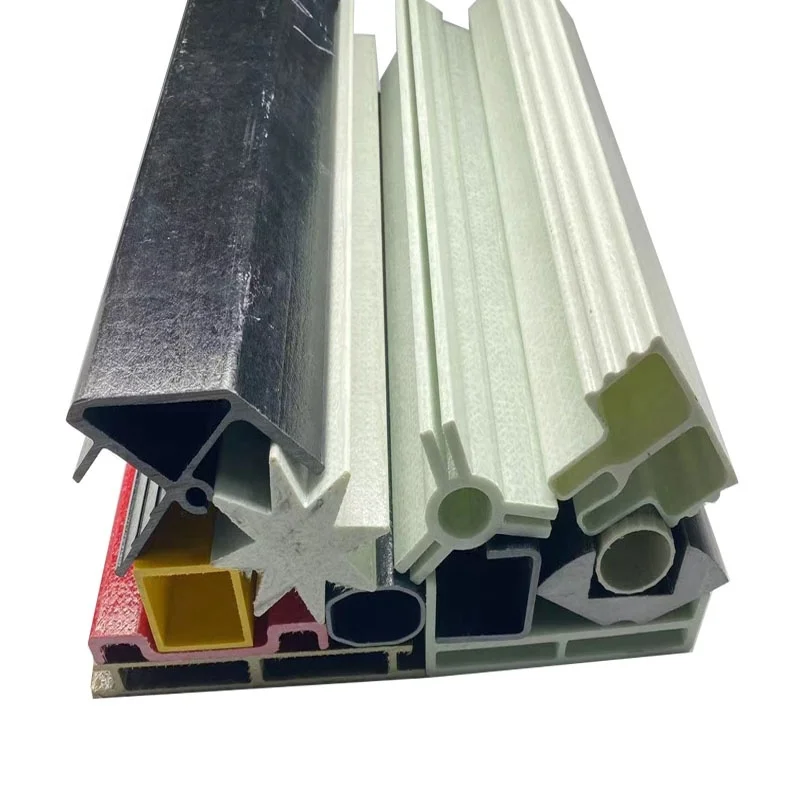
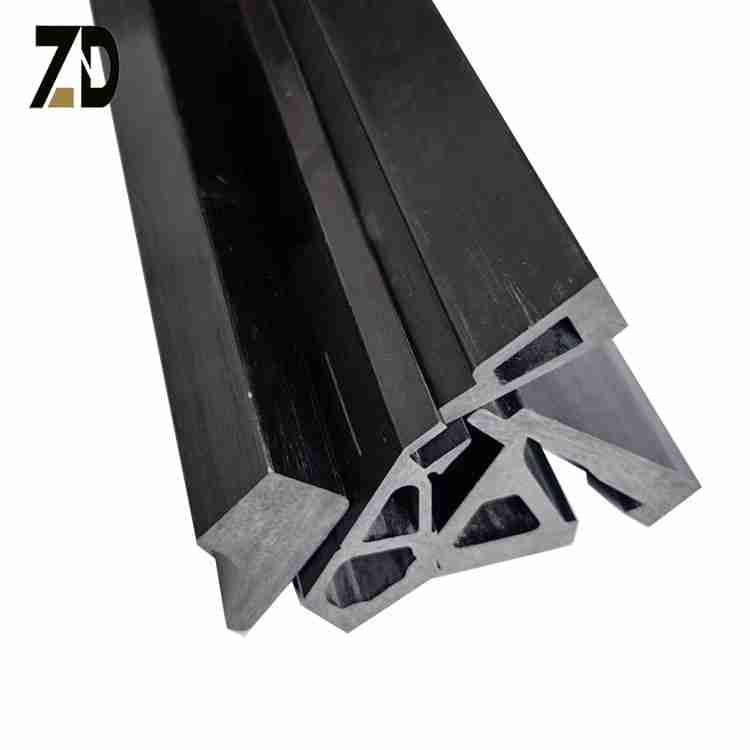
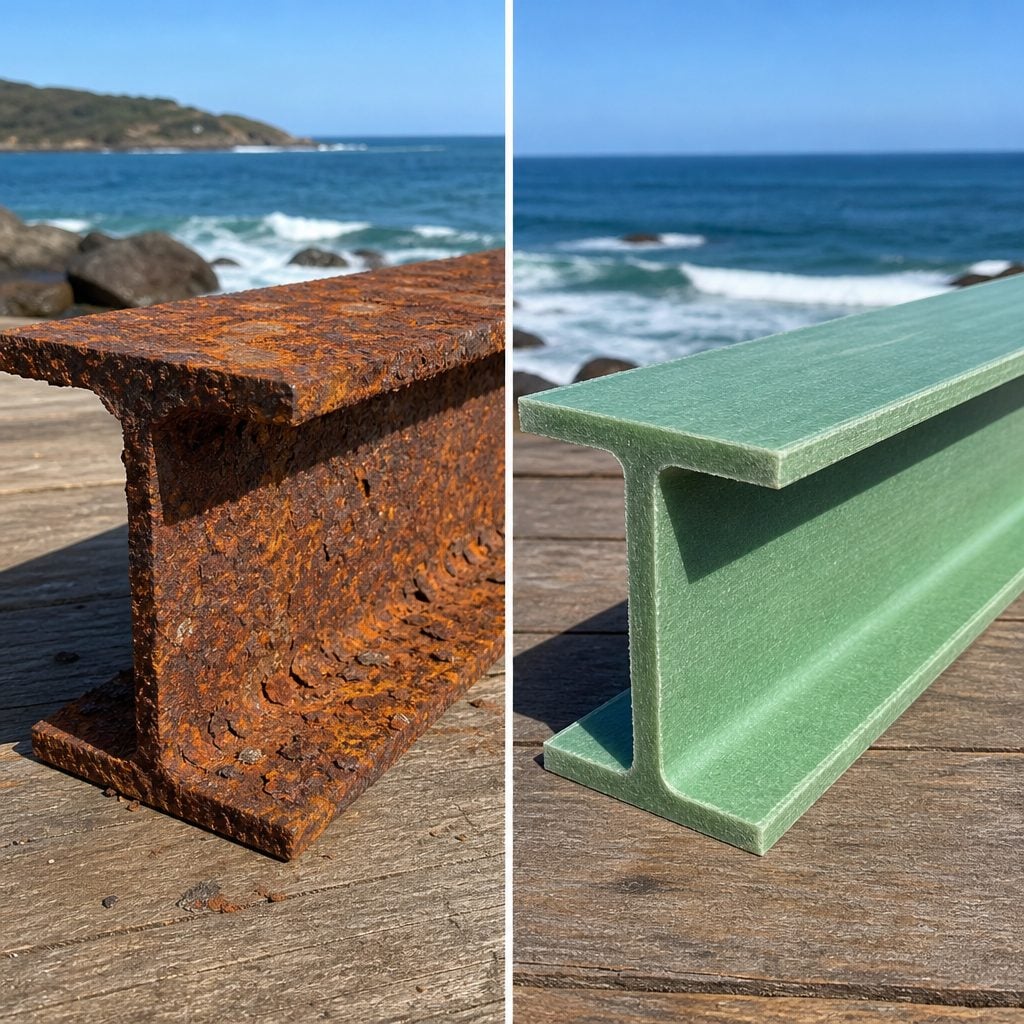
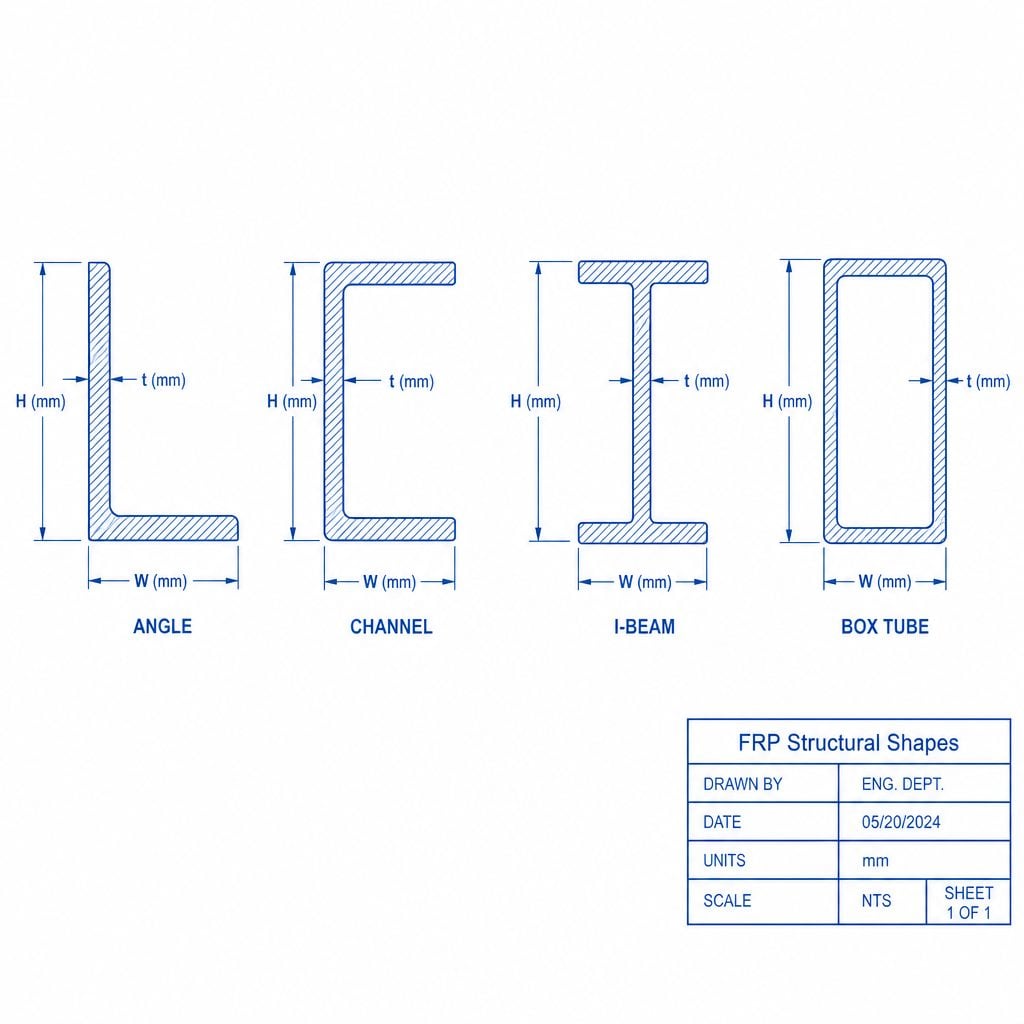
Unlike traditional steel that rusts or aluminum that pits, pultruded fiberglass structural profiles provide a permanent, non-corrosive framework for everything from cooling towers and chemical plants to pedestrian bridges and architectural facades. At our facility, we manufacture a comprehensive range of FRP structural shapes—including angles, channels, I-beams, and box tubes—designed to meet and exceed international building standards.
2,Why Pultrusion for Construction?
The "secret sauce" behind our fiberglass structural profiles is the pultrusion process. While other molding methods may produce complex shapes, pultrusion ensures a continuous, high-density fiber reinforcement that runs the entire length of the profile.
3,Key Features & Benefits
Every fiberglass structural profile we ship is engineered to solve specific construction pain points:
4,Technical Specifications
| Property (ASTM Standard) | Value (Typical) | Units |
|---|---|---|
| Tensile Strength (LW) | 30,000 - 65,000 | psi |
| Tensile Modulus | 2.5 - 4.5 | 10^6 psi |
| Flexural Strength (LW) | 30,000 - 65,000 | psi |
| Compressive Strength (LW) | 30,000 - 60,000 | psi |
| Dielectric Strength | 35 - 50 | kV/in |
| Density | 1.7 - 1.9 | g/cm³ |
| Water Absorption (24h) | < 0.5% | % |
| Thermal Conductivity | 4 - 6 | BTU-in/hr/ft²/°F |
5,Primary Construction Applications
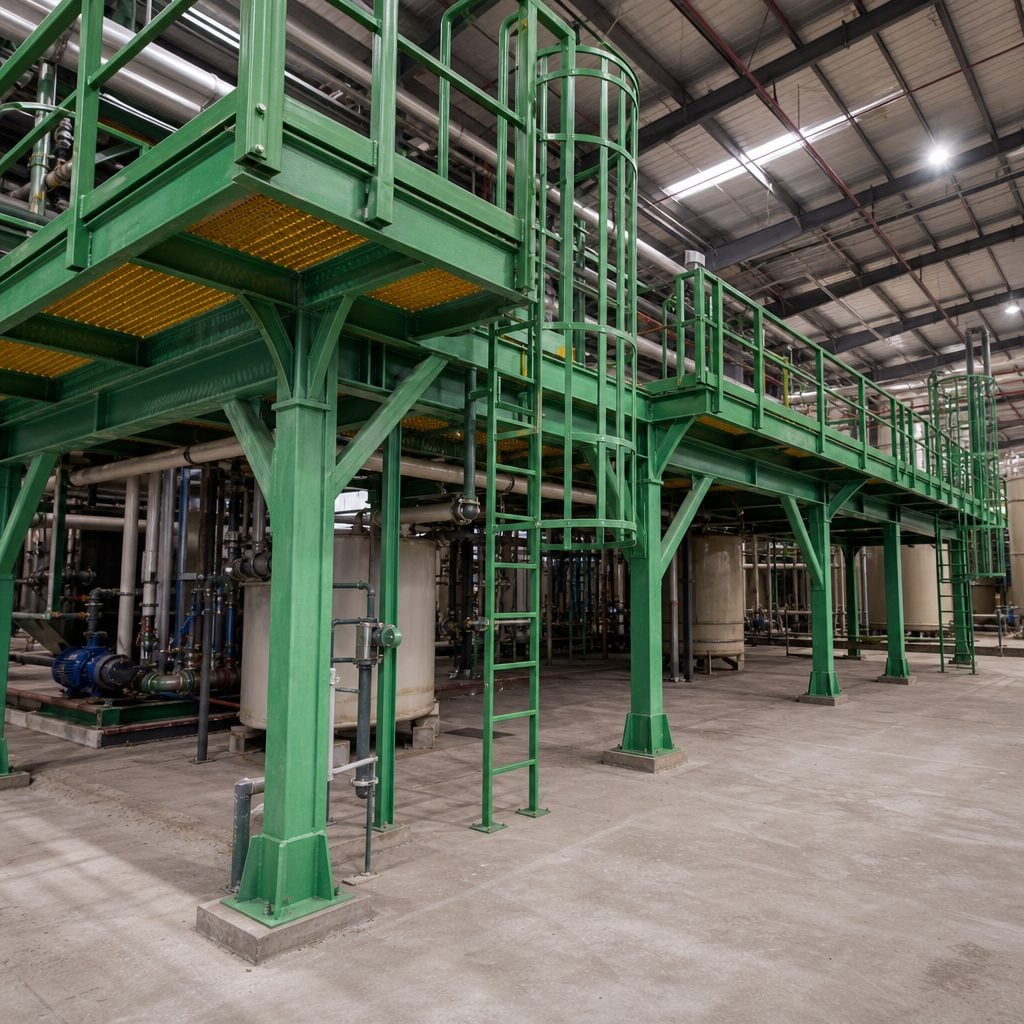
In chemical processing plants and offshore oil rigs, metal flooring and supports fail rapidly. Our fiberglass structural profiles form the backbone of safe, slip-resistant grating systems and access platforms. By using FRP channels and beams, facility managers eliminate the recurring cost of sandblasting and repainting steel structures.
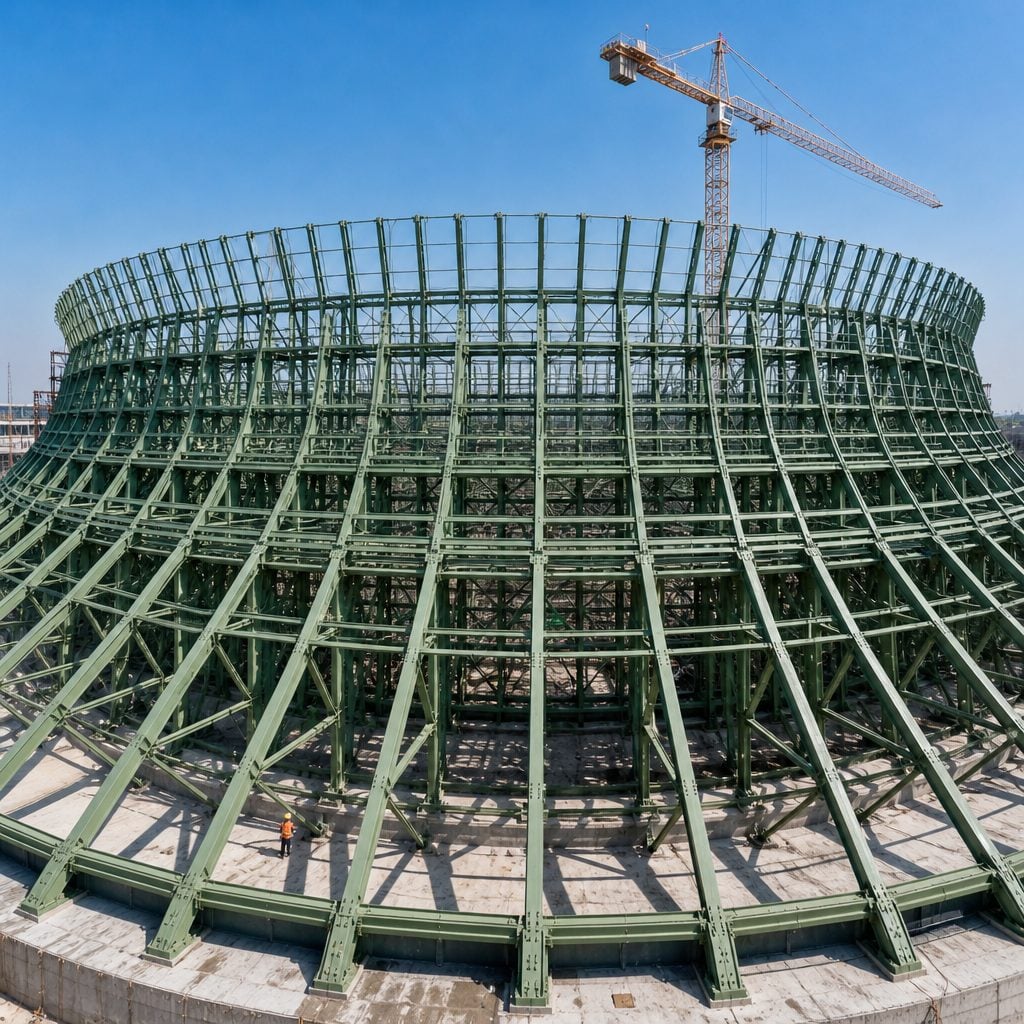
Cooling towers are perhaps the most aggressive environment for construction materials, involving constant moisture and chemical treatment. Pultruded fiberglass structural profiles have become the industry standard for cooling tower frames, providing the structural capacity to support massive water loads while remaining completely unaffected by constant evaporation cycles.
From pedestrian bridge trusses to park railings, fiberglass structural profiles offer a lightweight alternative that simplifies logistics in remote locations. Architects increasingly use our FRP structural shapes for park benches, boardwalk supports, and fencing because they do not rot like wood or corrode like iron.
Modern green buildings utilize fiberglass structural profiles as "thermal breaks" in window and door systems. Because FRP has a much lower thermal conductivity than aluminum, it prevents heat transfer, helping buildings achieve LEED certification and reduce energy consumption.
We don't just sell "off-the-shelf" parts; we provide integrated construction solutions:
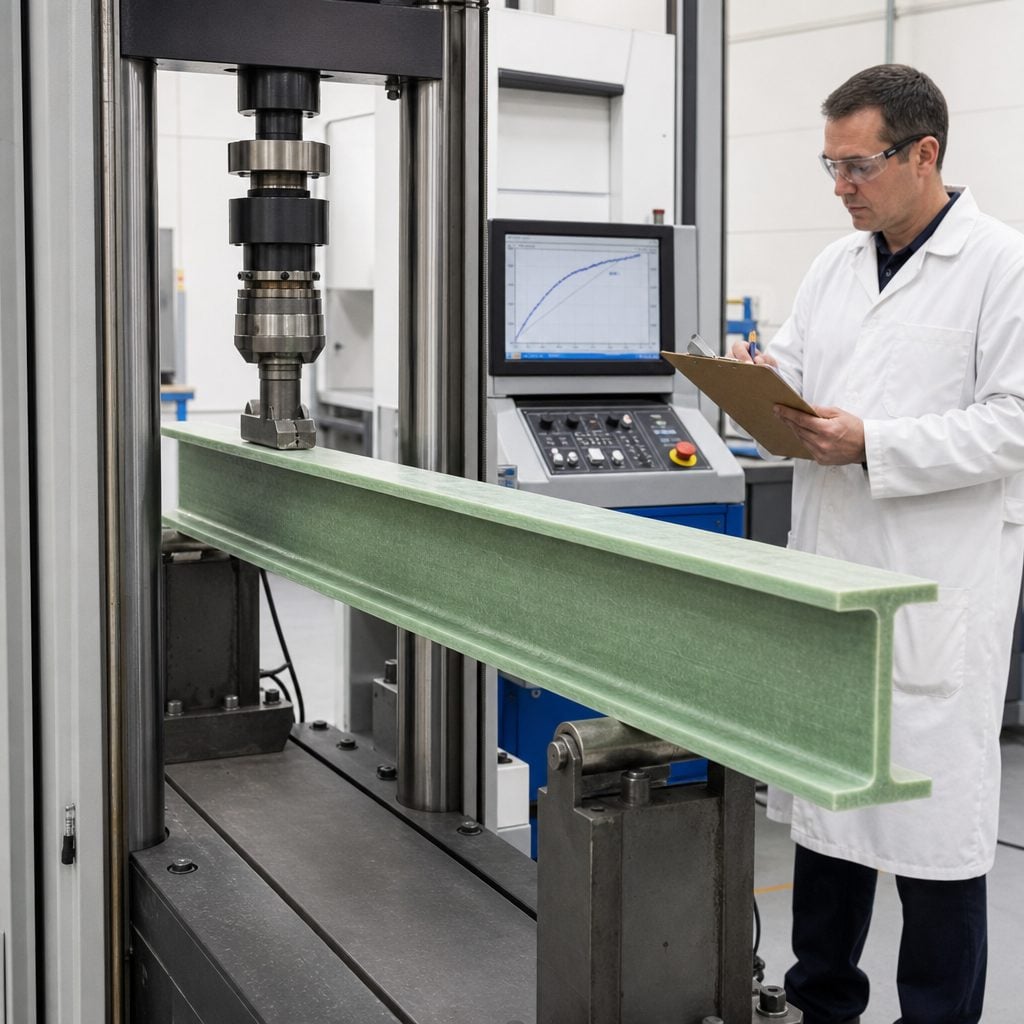
7,Quality Assurance
Our fiberglass structural profiles undergo a rigorous 4-step verification:
8,Packaging & Logistics
Q1: How do fiberglass structural profiles compare to steel in price? A: While the initial material cost of fiberglass structural profiles can be higher than carbon steel, the "Total Cost of Ownership" is significantly lower. When you factor in the elimination of heavy cranes for installation, the lack of maintenance/painting, and a service life 3-4 times longer than steel, FRP is the more economical long-term choice.
Q2: Can I weld fiberglass structural profiles? A: No, FRP cannot be welded. Fiberglass structural profiles are joined using high-strength mechanical fasteners (bolts/rivets) or structural adhesives. We provide engineering guides on the best joining methods for our profiles.
Q3: Do these profiles degrade in sunlight? A: No. We incorporate premium UV inhibitors directly into the resin matrix, and for extreme solar exposure, we can add a synthetic surface veil or a polyurethane coating to ensure the fiberglass structural profiles maintain their color and strength for decades.
Q4: Are your FRP structural shapes fire-rated? A: Yes, we offer several resin systems that meet Class 1 flame spread ratings according to ASTM E-84, as well as UL-94 V0 certifications for electrical applications.
Q5: What is the maximum length available? A: Because pultrusion is a continuous process, we can produce fiberglass structural profiles in almost any length. Practically, lengths are limited by shipping containers (typically 5.8m or 11.8m), but we can accommodate custom logistical requirements.
10,CTA
Upgrade Your Infrastructure with Pultruded Fiberglass Structural Profiles. Whether you are designing a cooling tower, an industrial platform, or a modern green building, our engineering team is ready to help you transition from heavy, corrosive metals to advanced composites.
 Hot News
2026-09-08
2026-09-05
2026-08-10
2026-08-05
2026-07-11
2026-04-23

 EN
EN