×
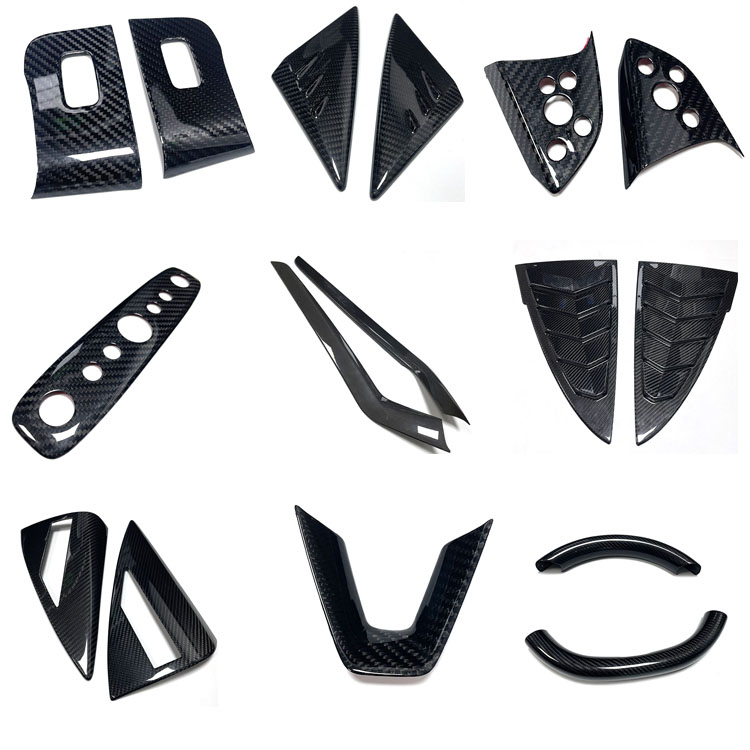
Automotive modification is no longer limited to a larger wheel, a louder exhaust or a more aggressive body kit. For modern performance-car builders, the real opportunity is to redesign how a vehicle looks, responds and communicates its engineering identity. That is why carbon fiber automotive modification parts have become a defining category across premium road cars, track-focused builds, show vehicles and motorsport-inspired projects.
The appeal of carbon fiber is not based on appearance alone. A well-designed carbon fiber component can combine low mass, high stiffness, corrosion resistance and a distinctive surface finish in one engineered part. However, the material only delivers those advantages when the fiber architecture, resin system, laminate orientation, tooling method and mounting design are matched to the application.
This Application guide explains where carbon fiber creates the most value in automotive modification, how different components should be engineered, and how buyers can choose a suitable production route for custom parts.
The first reason is straightforward: automotive modifiers are constantly working within a limited weight, space and design envelope. Replacing a conventional panel or trim component with a properly engineered composite part can help reduce unnecessary mass while preserving the shape required by the vehicle platform.
The second reason is stiffness. A flat panel, bracket or aerodynamic surface can lose performance when it flexes under vibration, airflow or repeated handling. Carbon fiber allows engineers to place reinforcement where the load actually travels instead of increasing thickness everywhere. A carefully designed laminate can therefore support a thin, clean part without making it visually heavy.
The third reason is environmental durability. Exterior automotive parts are exposed to water, road salt, temperature changes, ultraviolet radiation and repeated cleaning. Unlike unprotected steel, carbon fiber does not rust. It still requires correct resin selection, edge sealing, surface protection and galvanic-isolation design when it is installed next to aluminum or other conductive metals, but the composite itself is well suited to demanding vehicle environments.
Finally, the surface of a carbon fiber part has become a design language. 3K twill, plain weave, forged-style textures and controlled matte or gloss finishes allow a modification brand to create a recognisable product family. The appearance is strongest when the weave direction, edge finish and clear coat are consistent from one component to the next.
Exterior panels are one of the most visible applications for carbon fiber automotive modification parts. They also represent one of the most demanding areas because the component must satisfy both design and engineering expectations.
A carbon fiber hood can be developed as a lightweight cosmetic panel, a semi-structural panel with integrated reinforcement, or a functional panel with vents and air-management features. The correct design depends on how the hood is mounted, how it is supported when open, where hinges and latches are located, and what thermal conditions exist around the engine bay.
For a modification brand, the important details are not only the outer weave. Inner ribs, local reinforcement around fasteners, bonded inserts and reliable edge finishing determine whether the panel remains stable during daily use. A high-quality hood should look controlled from the outside and remain mechanically credible underneath.
Roof panels and trunk lids offer a large visual area for a carbon fiber weave, making them popular in premium builds. Their design must account for curvature, mounting points, glass or trim interfaces and water management. A roll-wrapped or molded construction may be selected depending on the geometry and production volume.
The most effective design strategy is to treat the panel as a system rather than a decorative skin. The laminate, core or reinforcement pattern, bonded brackets and surrounding seals must work together. This approach prevents the common mistake of copying only the visible surface while overlooking the interfaces that control fit and long-term stability.
Smaller exterior parts are often the best starting point for a new carbon fiber modification line. Mirror caps, fender vents, side skirts, pillar trims and grille surrounds have manageable tooling requirements and give customers an immediate visual upgrade.
These components are usually judged by surface consistency, dimensional fit and edge quality. A clean part should maintain its intended weave direction across curves, avoid resin-rich patches, and align with the adjacent bodywork. For distributors, repeatable fit across production batches is often more valuable than a dramatic but inconsistent finish.
Splitters, canards, spoilers, wings, diffusers and underbody panels are not simply styling accessories. They interact with airflow and may experience vibration, impact from road debris and repeated loading at mounting points. The design objective is therefore not “make it look like carbon fiber”; it is to create a stable aerodynamic surface with predictable attachment points.
A front splitter, for example, needs sufficient stiffness to maintain its designed position when air loads increase. A diffuser requires accurate geometry across a broad surface, along with durable mounting features. A rear wing or spoiler must manage local loads at brackets and fasteners without allowing excessive deflection.
The fiber orientation should follow the dominant load paths. Unidirectional reinforcement can add strength along a known direction, while woven layers help balance handling, surface appearance and off-axis stability. Hybrid lay-ups may be useful when the part needs both a visible cosmetic layer and a more performance-oriented internal schedule.
For B2B buyers, aerodynamic parts should be specified with more than a length and width. The inquiry package should include the intended vehicle area, mounting method, expected operating environment, surface requirement, target production volume and whether the component is decorative, functional or track-use oriented. These inputs help the manufacturer select a sensible laminate and tooling route.
Carbon fiber has a natural place in vehicle interiors because it combines a technical appearance with a thin, refined surface. Common applications include dashboard inserts, center-console panels, door-handle surrounds, steering-wheel trim, instrument binnacle covers, seat-back shells and switch panels.
Interior parts are often smaller than body panels, but they are not simple. They must match existing clips, screws, adhesives, leather, plastics and metallic trim. They also face frequent hand contact, sunlight through the windshield, cleaning chemicals and temperature cycling inside the cabin.
For these reasons, interior carbon fiber parts should be designed around surface feel and interface accuracy. A satin finish can reduce reflections on certain visual surfaces, while a high-gloss finish may be selected for a more dramatic show-car appearance. The edges should be smooth and sealed, especially where a passenger may touch or where the part meets another trim piece.
Compression molding is particularly useful for complex interior shapes with compound curves, ribs, bosses or molded-in inserts. For simpler flat or gently curved panels, laminated sheet can be CNC cut and finished according to the drawing. The correct process depends on geometry, volume, appearance and the required repeatability.
Carbon fiber can also be used for functional components behind the visible bodywork. Examples include engine-bay covers, cooling shrouds, sensor brackets, cable guides, electronics covers, air-box panels and lightweight support plates.
These parts require a more disciplined engineering review because heat, vibration, fluids and fastener loads may be significant. A cosmetic carbon fiber panel should not automatically be treated as a structural safety component. Engineered structural parts must be evaluated for the actual load case, temperature range, impact exposure, joining method and failure consequences.
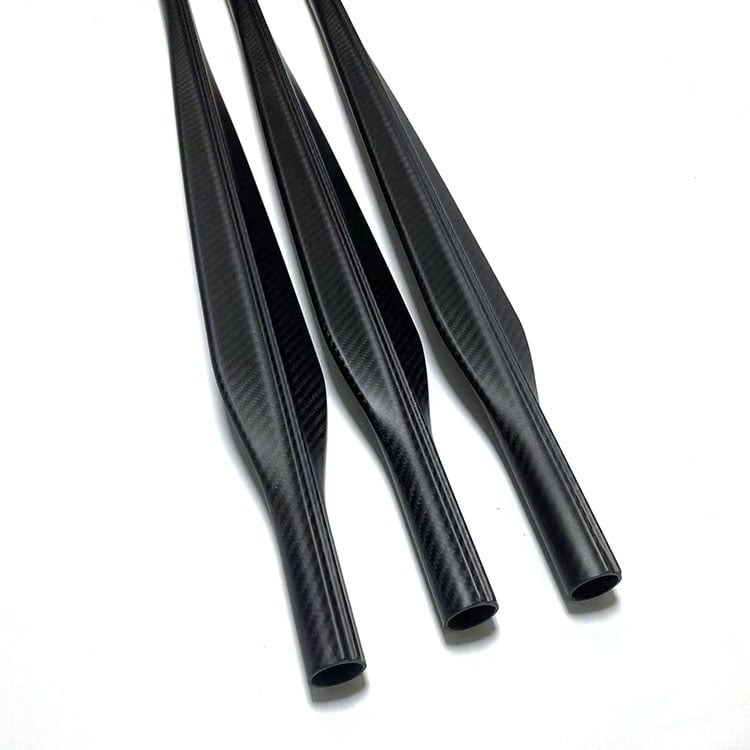
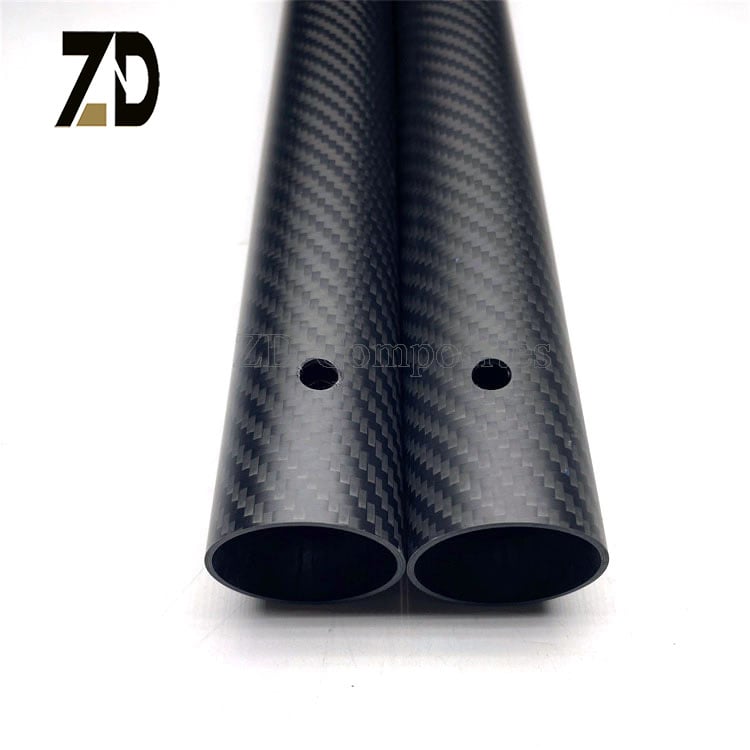
Carbon fiber tubes are another useful form in this area. A pultruded carbon fiber tube can be considered for braces, linkages, support members and lightweight frames where the principal load is aligned with the tube axis or a known bending direction. Roll-wrapped tubes may be more appropriate when the design requires greater multi-directional reinforcement or improved crush resistance.
This distinction is important for automotive modification suppliers. “Carbon fiber” describes a material family, not one universal construction. A plate, tube, molded shell and braided section each distribute load differently. Choosing the product form before understanding the load path can create avoidable fit and durability problems.
The production method should follow the component's geometry and commercial purpose.
CNC-cut plate is suitable for flat brackets, mounting plates, interior inserts and prototypes. It supports rapid design changes and precise hole patterns. Designers should account for edge finishing, drilling strategy, fiber breakout and fastener spacing during the drawing stage.
Roll-wrapped carbon fiber is commonly used for tubes and curved components requiring multiple fiber directions. The lay-up can be adapted to balance axial stiffness, hoop strength, torsional behaviour and surface appearance. It is useful when the part has a cylindrical or tapered geometry and the production volume supports dedicated tooling.
Compression molding is suitable for repeatable three-dimensional parts such as trim shells, aerodynamic housings, brackets and complex covers. The mold defines the geometry, while controlled pressure and temperature help maintain part-to-part consistency. Molded-in inserts and local reinforcement can be incorporated when the design is prepared correctly.
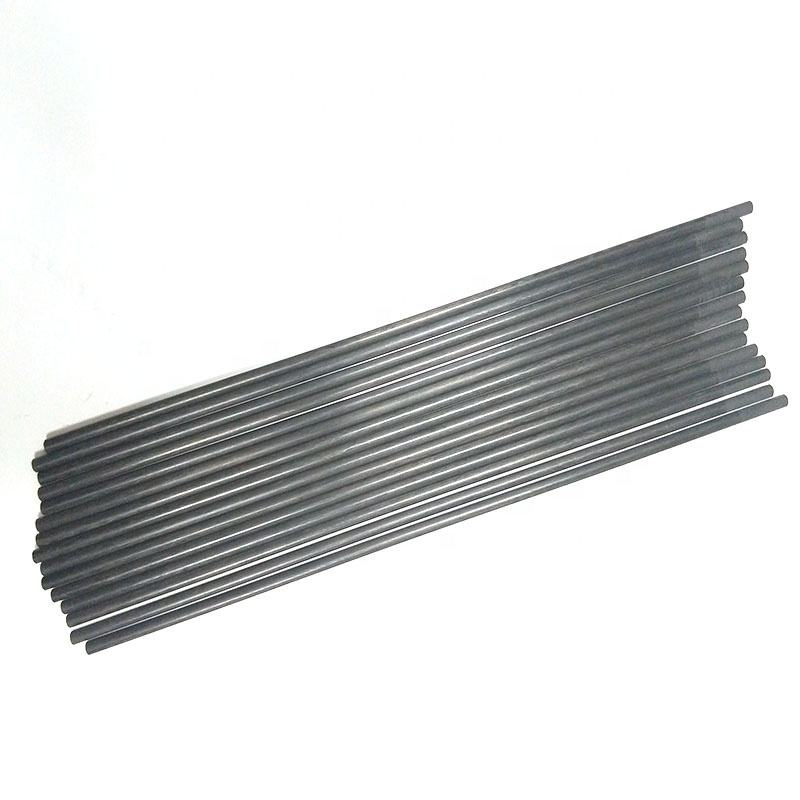
Pultrusion is a continuous process for profiles and tubes with a stable cross-section. It is particularly attractive for long carbon fiber rods, strips, tubes and support sections where consistent dimensions and efficient production are important. Post-cutting, drilling, bonding and end finishing can then adapt the continuous product to the vehicle assembly.
A reliable automotive modification program may use more than one route. For example, a pultruded carbon fiber tube can serve as an internal support, while a compression-molded panel provides the exterior form. The goal is not to force every component into one process, but to build a practical material and manufacturing system.
A professional RFQ for carbon fiber automotive modification parts should answer the following questions:
The more complete this information is, the easier it becomes to select the right carbon fiber grade, laminate schedule, tooling method and finishing process. It also reduces the risk of quoting a part that looks correct but does not fit the assembly.
For brands and distributors, a strong product line should not consist of unrelated carbon fiber accessories. It should have a coherent visual and engineering language. A customer who purchases a mirror cap may later look for a spoiler, interior trim, hood panel or matching support component.
That is why weave direction, surface finish, edge treatment, fastener style and packaging should be documented as part of a product system. Application pages can then connect the material story to specific product pages: exterior panels, aerodynamic parts, interior components, carbon fiber tubes, plates and custom OEM parts.
This structure is also useful for search visibility. A broad Application article attracts visitors researching carbon fiber automotive modification. More specific pages can then answer commercial queries such as custom carbon fiber hood panels, carbon fiber diffuser parts, carbon fiber interior trim, pultruded carbon fiber support tubes and OEM automotive composite components.
 Hot News
2026-10-12
2026-09-25
2026-09-08
2026-09-05
2026-08-10
2026-08-05

 EN