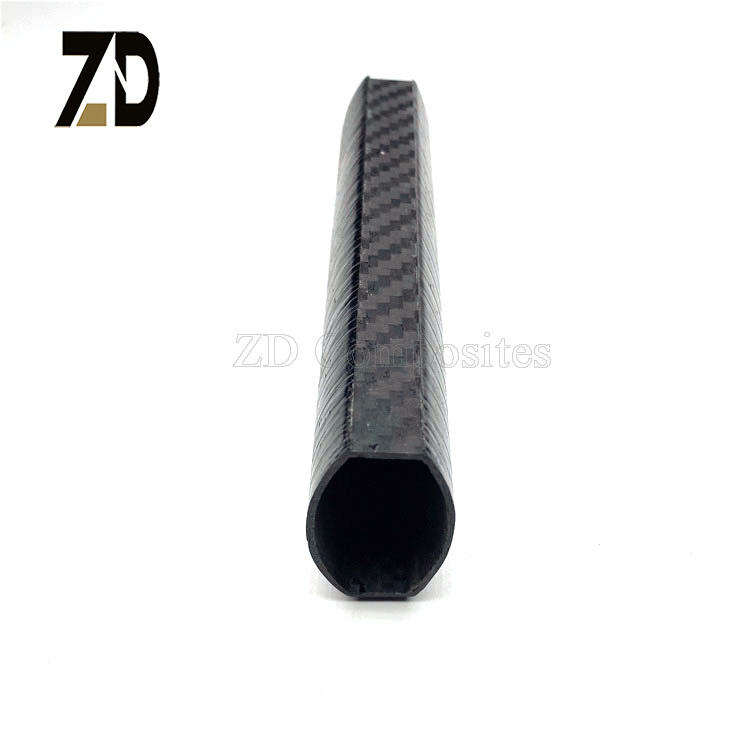
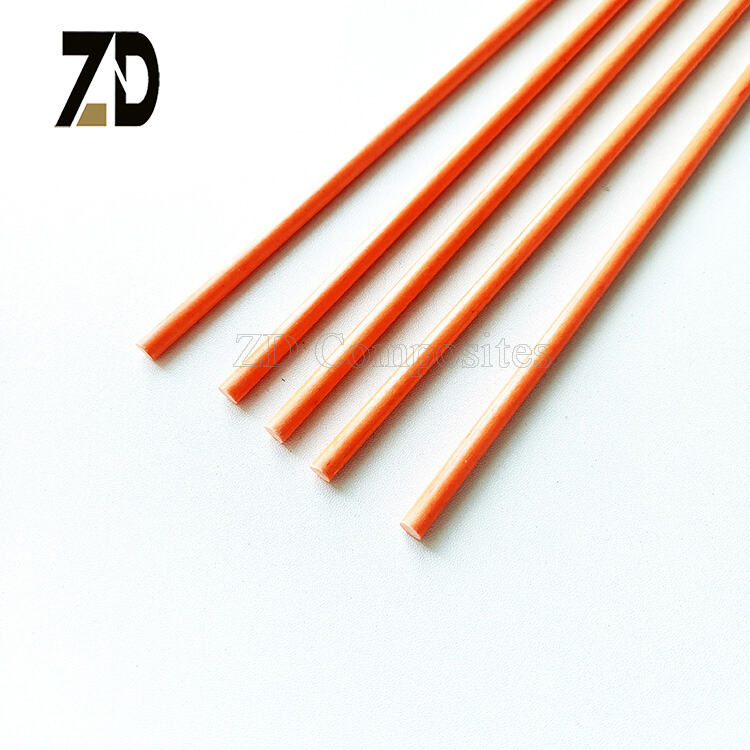
Premium Carbon Fiber Round Rod - Lightweight, High-Strength Composite Solutions

Get a Free Quote

Our representative will contact you soon.
Email
Name
Company Name
Message
0/1000

carbon fiber round rod

Carbon fiber round rod represents a revolutionary advancement in composite material engineering, offering exceptional performance characteristics that make it an indispensable component across numerous industries. This cylindrical composite material consists of thousands of carbon fibers bound together with polymer resin, creating a structural element that delivers remarkable strength-to-weight ratios. The carbon fiber round rod manufacturing process involves precise layering of carbon fiber sheets in specific orientations, followed by curing under controlled temperature and pressure conditions to achieve optimal mechanical properties. These rods are available in various diameters ranging from small precision components measuring just a few millimeters to large structural elements exceeding several inches in diameter. The carbon fiber round rod exhibits superior tensile strength, often surpassing steel while maintaining significantly lower weight. Its primary functions include providing structural support in aerospace applications, serving as drive shafts in automotive systems, and acting as reinforcement elements in construction projects. The technological features of carbon fiber round rod include excellent fatigue resistance, minimal thermal expansion, and outstanding corrosion resistance properties. Unlike traditional materials such as aluminum or steel, the carbon fiber round rod maintains its structural integrity under extreme environmental conditions, including exposure to chemicals, moisture, and temperature fluctuations. The material's anisotropic properties allow engineers to optimize fiber orientation for specific load requirements, making each carbon fiber round rod suitable for targeted applications. Advanced manufacturing techniques ensure consistent quality and dimensional accuracy across production batches. The carbon fiber round rod finds extensive applications in robotics, where its lightweight nature reduces inertia in moving parts, and in sporting goods, where performance enhancement is crucial. Marine applications benefit from the carbon fiber round rod's resistance to saltwater corrosion, while aerospace industries utilize these components for critical structural elements requiring both strength and weight reduction.

Popular Products

The carbon fiber round rod offers numerous compelling advantages that position it as the preferred choice for demanding applications across multiple industries. Weight reduction stands as one of the most significant benefits, with carbon fiber round rod weighing approximately 75 percent less than equivalent steel components while maintaining comparable or superior strength characteristics. This dramatic weight savings translates directly into improved fuel efficiency in automotive and aerospace applications, reduced energy consumption in rotating machinery, and enhanced portability in handheld equipment. The exceptional strength properties of carbon fiber round rod enable engineers to design more efficient structures with smaller cross-sections, further optimizing space utilization and material usage. Durability represents another crucial advantage, as carbon fiber round rod resists fatigue failure even under millions of loading cycles, significantly extending component lifespan compared to traditional materials. The corrosion resistance properties eliminate the need for protective coatings or regular maintenance schedules, reducing long-term ownership costs and improving reliability in harsh environments. Temperature stability ensures that carbon fiber round rod maintains its mechanical properties across wide temperature ranges, from cryogenic applications to high-temperature industrial processes. The material's low thermal expansion coefficient prevents dimensional changes that could compromise precision assemblies or create unwanted stresses in constrained systems. Manufacturing flexibility allows carbon fiber round rod to be produced in custom lengths and diameters, accommodating specific project requirements without extensive machining or modification. The excellent vibration damping characteristics of carbon fiber round rod contribute to smoother operation and reduced noise levels in mechanical systems. Electrical properties can be tailored through fiber selection and resin systems, enabling applications requiring either conductivity or insulation. Cost-effectiveness emerges over the product lifecycle despite higher initial material costs, as carbon fiber round rod reduces maintenance requirements, extends service intervals, and improves overall system performance. The material's compatibility with modern manufacturing processes, including automated production techniques, ensures consistent quality and enables large-scale production when required. Environmental benefits include reduced energy consumption during use and potential recyclability of carbon fiber round rod components at end-of-life.

Tips And Tricks

How to Make a Carbon Fiber Box: Choosing the Right Prepreg, Resin & Mold

20

Oct

How to Make a Carbon Fiber Box: Choosing the Right Prepreg, Resin & Mold

View More
The advantages of fiberglass stakes

20

Oct

The advantages of fiberglass stakes

View More
Applications and advantages of carbon fiber materials in industry

27

Oct

Applications and advantages of carbon fiber materials in industry

View More

Get a Free Quote

Our representative will contact you soon.
Email
Name
Company Name
Message
0/1000

carbon fiber round rod

Exceptional Strength-to-Weight Performance Revolution

Exceptional Strength-to-Weight Performance Revolution

The carbon fiber round rod delivers an unprecedented strength-to-weight ratio that fundamentally transforms how engineers approach structural design challenges across industries. This remarkable characteristic stems from the unique molecular structure of carbon fibers, where individual carbon atoms are bonded in crystalline formations that provide extraordinary tensile strength while maintaining minimal mass. When these fibers are carefully aligned and consolidated into the carbon fiber round rod configuration, the resulting component can achieve tensile strengths exceeding 500,000 pounds per square inch while weighing less than a quarter of an equivalent steel rod. This performance advantage becomes particularly valuable in aerospace applications, where every gram of weight reduction translates into significant fuel savings and increased payload capacity. In automotive racing, carbon fiber round rod components enable the construction of lighter drive shafts that reduce rotational inertia, improving acceleration and handling characteristics while maintaining the structural integrity required for high-performance applications. The carbon fiber round rod's strength properties remain consistent across its entire cross-section, unlike some composite materials that may exhibit weak points or delamination issues under stress. This reliability makes carbon fiber round rod suitable for critical safety applications where failure could have catastrophic consequences. Manufacturing techniques for carbon fiber round rod have evolved to optimize fiber placement and resin distribution, ensuring maximum strength utilization in every component. The material's ability to handle both tensile and compressive loads makes carbon fiber round rod versatile for complex loading scenarios, while its resistance to crack propagation prevents sudden failure modes common in brittle materials. Engineers can specify carbon fiber round rod with confidence, knowing that the material's performance characteristics have been validated through extensive testing and real-world applications. The strength-to-weight advantage of carbon fiber round rod continues to drive innovation in fields ranging from renewable energy systems to medical devices, where traditional materials simply cannot meet the demanding requirements for both performance and portability.
Superior Environmental Resistance and Longevity

Superior Environmental Resistance and Longevity

The carbon fiber round rod demonstrates exceptional resistance to environmental degradation, making it the ideal choice for applications exposed to harsh conditions that would quickly compromise traditional materials. Unlike metals that suffer from corrosion, oxidation, and galvanic reactions, the carbon fiber round rod maintains its structural integrity when exposed to saltwater, industrial chemicals, UV radiation, and extreme temperature variations. This environmental stability stems from the inert nature of carbon fibers and the protective polymer matrix that encapsulates them, creating a barrier against moisture penetration and chemical attack. In marine environments, carbon fiber round rod components can operate for decades without the maintenance requirements associated with steel or aluminum alternatives, eliminating costly downtime for inspection and replacement. The material's resistance to fatigue failure under cyclic loading conditions ensures that carbon fiber round rod maintains its performance characteristics throughout extended service periods, even in applications involving millions of load cycles. Temperature stability represents another crucial aspect of environmental resistance, as carbon fiber round rod exhibits minimal thermal expansion and maintains its mechanical properties across temperature ranges that would cause significant dimensional changes or property degradation in other materials. This thermal stability makes carbon fiber round rod suitable for applications ranging from cryogenic systems to high-temperature industrial processes without requiring complex compensation mechanisms. The UV resistance of modern carbon fiber round rod formulations prevents the surface degradation and fiber exposure that could compromise long-term performance in outdoor applications. Chemical compatibility extends to a wide range of solvents, fuels, and industrial fluids, making carbon fiber round rod suitable for chemical processing equipment and fuel system components. The material's resistance to electrical corrosion in conductive environments eliminates concerns about galvanic reactions when carbon fiber round rod is used in proximity to dissimilar metals. Quality carbon fiber round rod products undergo accelerated aging tests that simulate years of environmental exposure, validating their suitability for long-term applications where replacement would be difficult or expensive. This proven environmental resistance makes carbon fiber round rod a cost-effective solution for infrastructure projects, offshore installations, and other applications where material longevity directly impacts project economics.
Precision Engineering and Customization Capabilities

Precision Engineering and Customization Capabilities

The carbon fiber round rod manufacturing process enables unprecedented precision and customization opportunities that allow engineers to optimize components for specific application requirements and performance criteria. Advanced production techniques for carbon fiber round rod include precise fiber orientation control, allowing manufacturers to tailor the directional properties of each component to match the expected load patterns and stress distributions in the final application. This customization capability extends to dimensional precision, with carbon fiber round rod products achieving tolerances that rival machined metal components while eliminating the material waste associated with subtractive manufacturing processes. The ability to incorporate different fiber types and weave patterns within a single carbon fiber round rod enables the creation of hybrid structures that optimize performance characteristics such as stiffness, damping, or electrical conductivity for specific zones within the component. Modern manufacturing facilities can produce carbon fiber round rod components with complex internal structures, including hollow sections, integrated mounting features, or graduated stiffness profiles that would be impossible to achieve with traditional materials. Quality control systems ensure that each carbon fiber round rod meets stringent specifications for straightness, surface finish, and mechanical properties, with non-destructive testing methods validating internal structure integrity without compromising the component. The manufacturing flexibility of carbon fiber round rod extends to production volume capabilities, accommodating both prototype quantities for research and development projects and large-scale production runs for commercial applications. Surface finishing options for carbon fiber round rod include various resin systems that provide specific characteristics such as enhanced wear resistance, improved bonding properties, or specialized appearance requirements. Integration capabilities allow carbon fiber round rod components to incorporate threaded inserts, bonded end fittings, or machined features during the manufacturing process, reducing assembly complexity and improving overall system reliability. The precision achievable in carbon fiber round rod manufacturing eliminates the need for secondary operations in many applications, reducing production costs and lead times while ensuring consistent quality. Advanced design software enables engineers to model carbon fiber round rod behavior under complex loading conditions, optimizing fiber placement and component geometry before production begins. This design optimization capability, combined with the inherent manufacturing precision, makes carbon fiber round rod the preferred choice for applications where performance margins are critical and traditional materials cannot meet the exacting requirements for dimensional accuracy and mechanical performance.

Get a Free Quote

Our representative will contact you soon.
Email
Name
Company Name
Message
0/1000