Premium Carbon Fiber Rectangular Rod - Lightweight Strength Solutions for Advanced Applications

Get a Free Quote

Our representative will contact you soon.
Email
Name
Company Name
Message
0/1000

carbon fiber rectangular rod

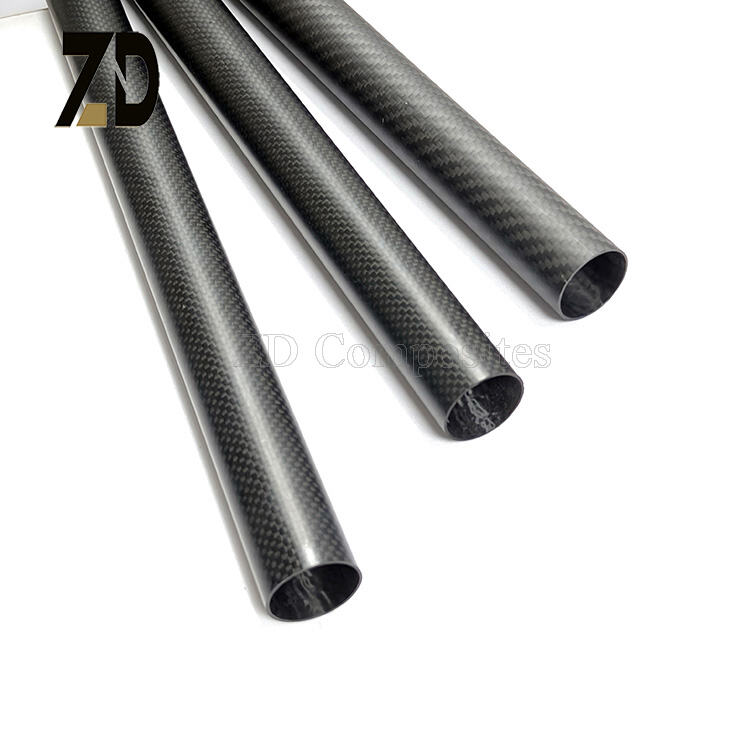
The carbon fiber rectangular rod represents a pinnacle of advanced composite engineering, offering exceptional structural integrity and versatility across numerous applications. This innovative product combines the lightweight properties of carbon fiber with the geometric advantages of a rectangular profile, creating a component that delivers superior strength-to-weight ratios compared to traditional materials. The carbon fiber rectangular rod is manufactured using high-grade carbon fiber filaments woven into precise patterns and embedded within advanced resin systems, resulting in a composite structure that maintains dimensional stability under varying environmental conditions. The rectangular geometry provides enhanced bending resistance and improved load distribution, making these rods particularly effective for applications requiring directional strength and precise dimensional control. Manufacturing processes involve sophisticated compression molding or pultrusion techniques that ensure consistent fiber orientation and optimal resin-to-fiber ratios throughout the entire length of each carbon fiber rectangular rod. The surface finish exhibits excellent smoothness and uniform texture, facilitating easy integration into complex assemblies and reducing the need for additional finishing operations. Temperature resistance capabilities allow the carbon fiber rectangular rod to perform reliably across extreme temperature ranges, from sub-zero arctic conditions to elevated industrial operating temperatures. The material exhibits excellent fatigue resistance, maintaining structural integrity through millions of loading cycles without significant degradation. Corrosion resistance properties eliminate concerns about environmental exposure, making the carbon fiber rectangular rod suitable for marine, aerospace, and outdoor applications where traditional materials might fail. The electrical properties can be tailored during manufacturing to provide either conductive or insulating characteristics, depending on specific application requirements. Quality control measures ensure each carbon fiber rectangular rod meets stringent dimensional tolerances and mechanical property specifications, providing consistent performance across production batches.

New Product Releases

The carbon fiber rectangular rod delivers remarkable weight savings compared to metal alternatives, reducing overall system mass by up to seventy percent while maintaining equivalent or superior strength characteristics. This weight reduction translates directly into improved fuel efficiency for automotive applications, enhanced payload capacity for aerospace systems, and easier handling during installation and maintenance procedures. The exceptional stiffness properties of the carbon fiber rectangular rod prevent unwanted deflection under load, ensuring precise positioning and maintaining tight tolerances in critical applications. Manufacturing flexibility allows customization of fiber orientations to optimize performance for specific loading conditions, whether the primary requirements involve bending strength, torsional rigidity, or impact resistance. The carbon fiber rectangular rod demonstrates outstanding vibration damping characteristics, reducing resonance issues and improving overall system stability in dynamic environments. Maintenance requirements remain minimal due to the inherent corrosion resistance and dimensional stability of the carbon fiber rectangular rod, eliminating the need for protective coatings, regular inspections for rust, or replacement due to environmental degradation. Installation processes become simplified because the lightweight nature of the carbon fiber rectangular rod reduces handling equipment requirements and allows for easier positioning during assembly operations. The thermal expansion coefficient closely matches that of many other composite materials, minimizing stress concentrations in multi-material assemblies and preventing joint failures due to differential expansion. Manufacturing consistency ensures reliable mechanical properties across production runs, allowing engineers to specify performance parameters with confidence and reducing the need for extensive testing and qualification procedures. Cost effectiveness emerges over the product lifecycle through reduced maintenance, longer service life, and improved system performance, despite higher initial material costs compared to traditional alternatives. The carbon fiber rectangular rod enables design optimization through its ability to be integrated into complex geometries and assemblies, supporting innovative engineering solutions that would be impractical with conventional materials. Environmental benefits include reduced energy consumption during transportation and operation, contributing to sustainability goals while delivering superior technical performance. The material compatibility with various joining methods, including mechanical fasteners, adhesive bonding, and co-curing processes, provides design flexibility and enables efficient manufacturing workflows for complex assemblies incorporating the carbon fiber rectangular rod.

Practical Tips

How to Make a Carbon Fiber Box: Choosing the Right Prepreg, Resin & Mold

20

Oct

How to Make a Carbon Fiber Box: Choosing the Right Prepreg, Resin & Mold

View More
The advantages of fiberglass stakes

20

Oct

The advantages of fiberglass stakes

View More
Applications and advantages of carbon fiber materials in industry

27

Oct

Applications and advantages of carbon fiber materials in industry

View More

Get a Free Quote

Our representative will contact you soon.
Email
Name
Company Name
Message
0/1000

carbon fiber rectangular rod

Unmatched Strength-to-Weight Performance

Unmatched Strength-to-Weight Performance

The carbon fiber rectangular rod achieves an extraordinary strength-to-weight ratio that fundamentally transforms design possibilities across multiple industries. This remarkable characteristic stems from the unique properties of carbon fibers, which possess tensile strengths exceeding steel while maintaining density levels approximately four times lower than aluminum. The rectangular cross-sectional geometry maximizes the utilization of these superior material properties by distributing fibers optimally throughout the structure, creating moment of inertia values that deliver exceptional bending resistance with minimal material usage. Engineering analysis reveals that a carbon fiber rectangular rod can replace steel components while reducing weight by seventy to eighty percent without compromising structural integrity or safety margins. This weight reduction creates cascading benefits throughout entire systems, from reduced foundation requirements in stationary applications to improved acceleration and fuel economy in mobile platforms. The fiber orientation within each carbon fiber rectangular rod can be precisely controlled during manufacturing to align with primary load paths, ensuring maximum efficiency in material utilization and preventing waste of the expensive carbon fiber reinforcement. Advanced resin systems bond the fibers into a cohesive matrix that transfers loads effectively between individual filaments, creating a composite structure that exhibits superior fatigue resistance compared to metals that suffer from crack propagation and stress concentration issues. The rectangular profile provides predictable section properties that simplify engineering calculations and enable confident design optimization. Unlike round tubes or solid bars, the flat surfaces of the carbon fiber rectangular rod facilitate easy mounting and connection to other components using standard hardware and joining techniques. Manufacturing precision ensures consistent cross-sectional dimensions and material properties along the entire length, eliminating weak points and ensuring reliable performance throughout the service life. This combination of lightweight construction and exceptional strength makes the carbon fiber rectangular rod particularly valuable in applications where weight savings directly translate to performance improvements, such as aerospace structures, automotive components, sporting goods, and portable equipment where every gram matters for user experience and operational efficiency.
Superior Environmental Durability and Longevity

Superior Environmental Durability and Longevity

The carbon fiber rectangular rod exhibits exceptional resistance to environmental degradation, maintaining structural integrity and dimensional stability across decades of service in harsh conditions that would rapidly destroy conventional materials. Unlike metals that suffer from corrosion, oxidation, and galvanic reactions, the carbon fiber rectangular rod remains chemically inert when exposed to moisture, salt water, acids, alkalis, and most industrial chemicals. This corrosion immunity eliminates maintenance requirements associated with protective coatings, cathodic protection systems, and periodic replacement of degraded components. The polymer matrix system protects the carbon fibers from ultraviolet radiation and environmental exposure while maintaining flexibility to accommodate thermal cycling without developing stress cracks or delamination. Temperature stability extends from cryogenic applications below negative one hundred degrees Celsius to elevated temperature service exceeding one hundred fifty degrees Celsius, depending on the specific resin system selected during manufacturing. The carbon fiber rectangular rod demonstrates minimal creep under sustained loading, maintaining dimensional accuracy and structural performance over extended periods without the relaxation issues common in metals subjected to constant stress. Freeze-thaw cycling has negligible impact on the carbon fiber rectangular rod because the low moisture absorption prevents internal ice formation that could cause matrix cracking or fiber-matrix debonding. Marine environments pose no threat to the carbon fiber rectangular rod, making it ideal for offshore platforms, boat building, dock construction, and other applications where saltwater exposure would rapidly corrode metal alternatives. The electrical properties remain stable throughout the service life, whether the carbon fiber rectangular rod is manufactured for conductive or insulating applications, ensuring consistent performance in electronic systems and electrical equipment. Biological resistance prevents degradation from fungi, bacteria, and other microorganisms that might attack organic components in other composite systems. The surface finish maintains its appearance and functional properties without requiring refinishing or protective treatments, reducing lifecycle costs and eliminating downtime for maintenance procedures. Quality assurance testing validates the long-term performance characteristics of each carbon fiber rectangular rod through accelerated aging protocols that simulate decades of environmental exposure in compressed timeframes, providing confidence in the extended service life and reliability of the material system.
Exceptional Design Flexibility and Manufacturing Precision

Exceptional Design Flexibility and Manufacturing Precision

The carbon fiber rectangular rod offers unparalleled design flexibility through customizable manufacturing processes that enable precise tailoring of mechanical properties, dimensions, and surface characteristics to meet specific application requirements. Manufacturing techniques such as pultrusion and compression molding allow for exact control over fiber orientation angles, creating carbon fiber rectangular rods optimized for particular loading conditions, whether the primary requirements involve unidirectional tension, multi-axial bending, or torsional resistance. The rectangular cross-section provides inherent advantages for integration into structural assemblies, offering flat mounting surfaces that eliminate the need for special brackets or adapters required with round profiles. Dimensional precision achievable during manufacturing enables carbon fiber rectangular rod production with tolerances measured in thousandths of an inch, ensuring consistent fit and function in precision assemblies without extensive machining or fitting operations. The surface quality emerges directly from the manufacturing process with smooth, consistent texture that facilitates painting, bonding, or other finishing operations when required for specific applications. Length capabilities extend from short precision components measuring inches to continuous structural members exceeding twenty feet, accommodating diverse application requirements from micro-scale precision instruments to large-scale architectural elements. The carbon fiber rectangular rod can incorporate various fiber types, including standard modulus, intermediate modulus, and high modulus carbon fibers, each offering different stiffness and strength characteristics to optimize performance for specific design requirements. Hybrid constructions combine carbon fibers with glass fibers or other reinforcements within the same carbon fiber rectangular rod to achieve unique property combinations that balance performance with cost considerations. Manufacturing flexibility extends to the incorporation of inserts, threaded connections, and integrated mounting features directly into the carbon fiber rectangular rod during the molding process, eliminating secondary operations and ensuring optimal load transfer between components. The resin selection process allows customization of chemical resistance, temperature capability, and electrical properties to match service environment requirements precisely. Post-manufacturing operations such as precision machining, drilling, and surface treatments can be performed on the carbon fiber rectangular rod using standard industrial equipment and tooling, ensuring compatibility with existing manufacturing processes and quality control procedures. This manufacturing versatility enables the carbon fiber rectangular rod to serve as a platform technology that can be adapted to solve diverse engineering challenges across multiple industries while maintaining the fundamental advantages of carbon fiber composite construction.

Get a Free Quote

Our representative will contact you soon.
Email
Name
Company Name
Message
0/1000