High-Performance Solid Carbon Fiber Rods - Superior Strength, Lightweight, Corrosion Resistant

Get a Free Quote

Our representative will contact you soon.
Email
Name
Company Name
Message
0/1000

solid carbon fiber rods

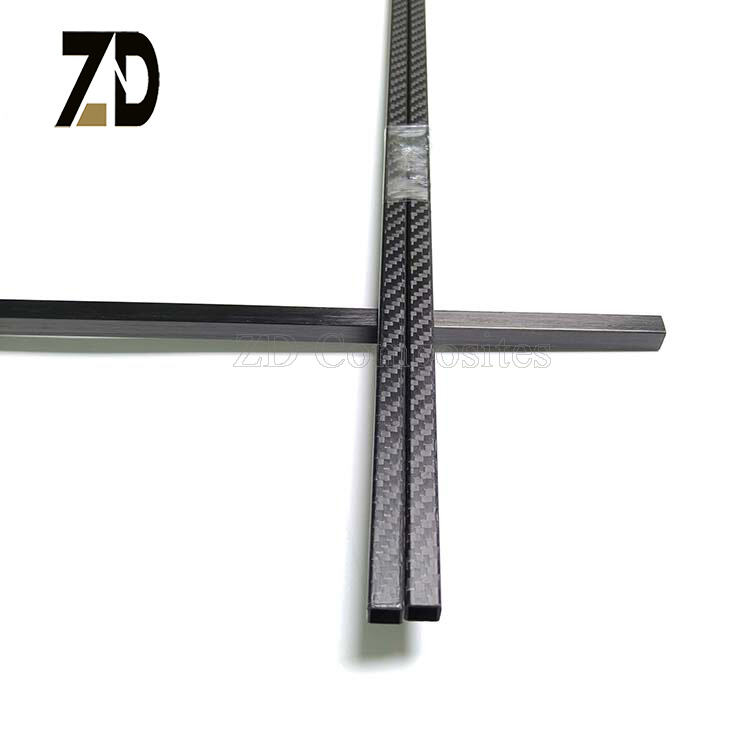
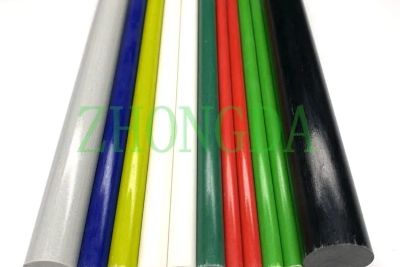
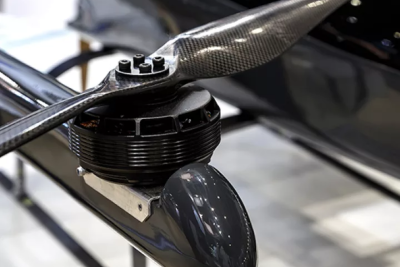
Solid carbon fiber rods represent a revolutionary advancement in composite material technology, offering unparalleled performance characteristics that make them indispensable across numerous industries. These remarkable engineering components are manufactured through advanced pultrusion processes, where continuous carbon fibers are impregnated with high-performance resin systems and cured under controlled temperature and pressure conditions. The resulting solid carbon fiber rods exhibit exceptional mechanical properties that surpass traditional materials like steel, aluminum, and fiberglass in multiple performance metrics. The main functions of solid carbon fiber rods include structural reinforcement, lightweight load-bearing applications, and precision engineering components where dimensional stability is critical. These rods serve as essential elements in aerospace structures, automotive components, marine applications, sporting goods, and industrial machinery. The technological features of solid carbon fiber rods encompass their remarkable strength-to-weight ratio, which can be up to five times stronger than steel while weighing significantly less. The unidirectional fiber orientation provides maximum tensile strength along the rod's length, making them ideal for applications requiring high load-bearing capacity. Additionally, these rods demonstrate excellent fatigue resistance, maintaining their structural integrity even under repeated stress cycles. Their low thermal expansion coefficient ensures dimensional stability across temperature variations, while their inherent corrosion resistance eliminates the need for protective coatings or treatments. The manufacturing precision achievable with solid carbon fiber rods allows for tight dimensional tolerances, making them suitable for applications requiring exact specifications. Furthermore, their electromagnetic transparency makes them valuable in radar and communication systems where metal components would cause interference. The versatility of solid carbon fiber rods extends to customizable fiber orientations, resin systems, and surface finishes, enabling engineers to optimize performance for specific applications while maintaining the core benefits of carbon fiber technology.

New Product Recommendations

Solid carbon fiber rods deliver exceptional performance benefits that transform how engineers approach structural design challenges. The most significant advantage lies in their outstanding strength-to-weight ratio, which enables designers to create lighter structures without compromising load-bearing capacity. This weight reduction translates directly into improved fuel efficiency in transportation applications, reduced material handling costs, and enhanced performance in dynamic systems. The corrosion resistance of solid carbon fiber rods eliminates long-term maintenance concerns that plague metal components, resulting in substantial cost savings over the product lifecycle. Unlike steel or aluminum, these rods never rust, corrode, or degrade when exposed to harsh environmental conditions, making them ideal for marine, chemical, and outdoor applications. The dimensional stability of solid carbon fiber rods provides consistent performance across temperature ranges, ensuring that precision assemblies maintain their accuracy regardless of environmental fluctuations. This thermal stability proves invaluable in aerospace applications, scientific instruments, and manufacturing equipment where dimensional changes could compromise functionality. Manufacturing flexibility represents another crucial advantage, as solid carbon fiber rods can be produced in various lengths, diameters, and fiber orientations to meet specific application requirements. This customization capability allows engineers to optimize performance characteristics for their unique needs without accepting compromises inherent in standard materials. The electrical properties of solid carbon fiber rods offer both benefits and design considerations, as they can provide electrical conductivity when required or be modified for insulation applications. Their electromagnetic transparency makes them essential components in radar systems, antenna structures, and communication equipment where metal components would cause signal interference. Installation and handling advantages include ease of machining, drilling, and cutting using standard tools, though proper safety precautions are necessary due to the abrasive nature of carbon fibers. The rods maintain their structural properties even after machining operations, unlike some composite materials that may delaminate or lose strength. Long-term reliability ensures consistent performance throughout extended service lives, with minimal degradation under normal operating conditions. This reliability reduces replacement frequency and maintenance schedules, contributing to lower total cost of ownership. The aesthetic appeal of solid carbon fiber rods, with their distinctive weave pattern and high-tech appearance, adds value in consumer applications where visual appeal matters. These combined advantages make solid carbon fiber rods the preferred choice for demanding applications where traditional materials fall short of performance requirements.

Latest News

How to Make a Carbon Fiber Box: Choosing the Right Prepreg, Resin & Mold

20

Oct

How to Make a Carbon Fiber Box: Choosing the Right Prepreg, Resin & Mold

View More
The advantages of fiberglass stakes

20

Oct

The advantages of fiberglass stakes

View More
Applications and advantages of carbon fiber materials in industry

27

Oct

Applications and advantages of carbon fiber materials in industry

View More

Get a Free Quote

Our representative will contact you soon.
Email
Name
Company Name
Message
0/1000

solid carbon fiber rods

Unmatched Strength-to-Weight Performance

Unmatched Strength-to-Weight Performance

The exceptional strength-to-weight ratio of solid carbon fiber rods revolutionizes structural design possibilities across industries, delivering performance levels that traditional materials simply cannot match. This remarkable characteristic stems from the unique properties of carbon fibers, which possess tensile strengths exceeding 3,500 MPa while maintaining densities approximately 75% lighter than steel. When these fibers are precisely aligned and bonded within a solid rod configuration, they create a structural element capable of supporting enormous loads while contributing minimal weight to the overall system. In aerospace applications, this advantage translates to significant fuel savings and enhanced payload capacity, as every pound of weight reduction multiplies through improved efficiency across the aircraft's operational lifetime. The automotive industry leverages this performance characteristic to create lighter vehicles that maintain safety standards while achieving better fuel economy and handling dynamics. Marine applications benefit enormously from the strength-to-weight advantage, as solid carbon fiber rods enable the construction of lightweight yet robust masts, booms, and structural elements that enhance vessel performance while reducing stress on hull structures. Manufacturing equipment designers utilize these rods to create precision machinery components that deliver exceptional rigidity without the mass penalties associated with steel alternatives. The implications extend beyond simple weight savings, as the reduced inertia of carbon fiber components enables faster acceleration and deceleration in dynamic systems, improving overall system responsiveness. Construction applications benefit from easier handling and installation procedures, as workers can manipulate solid carbon fiber rods more easily than equivalent steel components, reducing labor costs and installation time. The strength characteristics remain consistent throughout the rod's length, ensuring uniform load distribution and eliminating weak points that might develop in welded or joined metal assemblies. Testing data consistently demonstrates that solid carbon fiber rods maintain their strength advantage across temperature ranges and environmental conditions, providing reliable performance in demanding applications. This strength-to-weight superiority enables engineers to push design boundaries previously limited by material constraints, opening possibilities for innovative solutions that were previously impractical or impossible to achieve with conventional materials.
Superior Corrosion and Environmental Resistance

Superior Corrosion and Environmental Resistance

The inherent corrosion and environmental resistance of solid carbon fiber rods provides unmatched durability in challenging conditions, eliminating the degradation issues that plague metal components throughout their service lives. This resistance stems from the inert nature of carbon fibers and the chemical stability of advanced resin matrix systems used in their construction. Unlike steel, aluminum, or other metals that react with environmental elements, solid carbon fiber rods maintain their structural integrity when exposed to salt water, acids, alkalis, and various industrial chemicals. Marine applications particularly benefit from this characteristic, as solid carbon fiber rods never suffer from the galvanic corrosion that destroys metal components in saltwater environments. Boat builders and offshore platform designers rely on these rods to create structures that maintain their strength and appearance for decades without requiring protective coatings or cathodic protection systems. Chemical processing facilities utilize solid carbon fiber rods in equipment exposed to aggressive chemicals, where metal alternatives would require frequent replacement due to chemical attack. The environmental resistance extends to ultraviolet radiation, with properly formulated surface resin systems protecting the underlying fibers from UV degradation that could compromise structural properties. Temperature cycling, humidity variations, and freeze-thaw conditions that cause metal fatigue have minimal impact on solid carbon fiber rods, ensuring consistent performance across diverse climatic conditions. Industrial applications in mining, pulp and paper, and wastewater treatment facilities benefit from this resistance, as equipment remains operational in environments that would quickly destroy conventional materials. The absence of corrosion eliminates the need for protective coatings, reducing initial costs and eliminating ongoing maintenance requirements associated with coating renewal and inspection. This resistance characteristic proves particularly valuable in remote or difficult-to-access installations, where maintenance activities are costly and logistically challenging. Infrastructure applications benefit enormously, as solid carbon fiber rods can be embedded in concrete or exposed to weather without the expansion and degradation concerns associated with steel reinforcement. The long-term cost benefits multiply over time, as facility operators avoid replacement costs, maintenance downtime, and the safety risks associated with corroded structural elements. Quality assurance becomes simpler, as visual inspections can easily identify any surface damage without concerns about hidden corrosion that might compromise structural integrity.
Precise Manufacturing and Customization Capabilities

Precise Manufacturing and Customization Capabilities

The advanced manufacturing processes used to create solid carbon fiber rods enable unprecedented precision and customization options that allow engineers to optimize performance for specific applications while maintaining consistent quality standards. Modern pultrusion technology permits the production of rods with extremely tight dimensional tolerances, often achieving variations of less than ±0.1mm in diameter across significant lengths. This precision eliminates the need for extensive machining operations that add cost and potentially compromise the fiber structure. The manufacturing process allows for precise control over fiber orientation, enabling the creation of rods optimized for specific loading conditions, whether pure tensile loads, compression forces, or combined stress scenarios. Resin system selection provides another avenue for customization, with engineers choosing from epoxy, vinyl ester, polyester, or specialized high-temperature matrices to match environmental requirements and performance specifications. Surface finish options range from smooth, machined surfaces for precision applications to textured finishes that enhance bonding characteristics for secondary assembly operations. The ability to incorporate different fiber types, including standard modulus, intermediate modulus, and high modulus carbon fibers, allows designers to optimize stiffness characteristics for specific applications. Manufacturing flexibility extends to the integration of other materials, such as fiberglass outer layers for improved impact resistance or aramid fibers for enhanced toughness in demanding applications. Custom length capabilities eliminate waste and reduce inventory requirements, as manufacturers can produce rods to exact specifications rather than requiring customers to purchase standard lengths and perform cutting operations. The manufacturing process maintains fiber integrity throughout production, ensuring that the final product retains the full strength potential of the constituent materials without the degradation that can occur during secondary processing operations. Quality control systems integrated throughout the manufacturing process monitor resin content, fiber alignment, void content, and dimensional accuracy, ensuring consistent properties batch after batch. Advanced manufacturing techniques enable the production of hollow sections, tapered profiles, and complex cross-sectional shapes while maintaining the structural advantages of solid carbon fiber construction. The scalability of modern manufacturing processes allows for both prototype quantities and high-volume production runs, making solid carbon fiber rods accessible for both specialized applications and mass-market products. Documentation and traceability systems provide complete material certification, including fiber source, resin batch information, and mechanical property verification, ensuring compliance with aerospace, automotive, and other industry quality standards.

Get a Free Quote

Our representative will contact you soon.
Email
Name
Company Name
Message
0/1000