Lightweight Carbon Fiber Rod: Superior Strength, Minimal Weight - Advanced Composite Solutions

Get a Free Quote

Our representative will contact you soon.
Email
Name
Company Name
Message
0/1000

lightweight carbon fiber rod

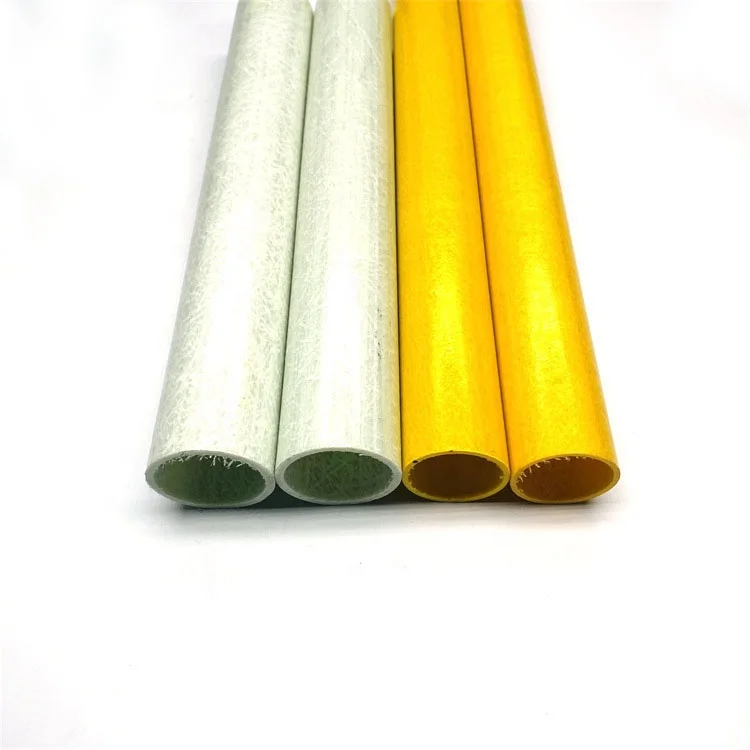
The lightweight carbon fiber rod represents a revolutionary advancement in material engineering, combining exceptional strength with minimal weight to deliver superior performance across diverse applications. This innovative product utilizes advanced carbon fiber technology to create a structural element that outperforms traditional materials while maintaining remarkable durability and flexibility. The lightweight carbon fiber rod achieves its outstanding properties through a sophisticated manufacturing process that aligns carbon fibers in precise orientations, creating a matrix that maximizes strength-to-weight ratios. These rods typically weigh 70-80% less than equivalent steel alternatives while providing comparable or superior tensile strength, making them ideal for applications where weight reduction is critical. The core technology behind the lightweight carbon fiber rod involves weaving carbon filaments into a composite structure that distributes stress evenly throughout the material. This construction method ensures consistent performance under various load conditions and environmental factors. The lightweight carbon fiber rod features excellent corrosion resistance, eliminating the maintenance concerns associated with metal alternatives. These rods maintain their structural integrity across extreme temperature ranges, from arctic conditions to high-heat environments, making them suitable for aerospace, automotive, marine, and industrial applications. The lightweight carbon fiber rod also exhibits superior vibration dampening properties, reducing fatigue and improving operational smoothness in dynamic applications. Manufacturing precision ensures dimensional stability and consistent quality across production runs, while the material's inherent properties provide long-term reliability. The lightweight carbon fiber rod can be customized in various diameters, lengths, and surface finishes to meet specific application requirements, offering engineers and designers unprecedented flexibility in their projects.

New Product Releases

The lightweight carbon fiber rod delivers numerous practical benefits that make it an exceptional choice for demanding applications across multiple industries. Weight reduction stands as the most significant advantage, with these rods weighing substantially less than traditional materials while maintaining superior strength characteristics. This weight savings translates directly into improved fuel efficiency for vehicles, enhanced payload capacity for aircraft, and easier handling during installation and maintenance procedures. The lightweight carbon fiber rod eliminates the burden of heavy structural components, allowing designers to optimize their projects for maximum performance. Durability represents another major advantage, as the lightweight carbon fiber rod resists corrosion, chemical degradation, and environmental wear that typically affects metal alternatives. This resistance means reduced maintenance costs, extended service life, and improved reliability in harsh operating conditions. Users save significant money over the product lifecycle through decreased replacement frequencies and minimal upkeep requirements. The lightweight carbon fiber rod also offers exceptional dimensional stability, maintaining precise tolerances even under varying temperature and humidity conditions. This stability ensures consistent performance and eliminates the expansion and contraction issues common with traditional materials. Flexibility in design applications provides engineers with creative freedom to develop innovative solutions previously impossible with heavier alternatives. The lightweight carbon fiber rod can be formed into complex shapes, integrated into composite structures, and adapted for specialized requirements without compromising performance. Installation simplicity represents a practical advantage that reduces labor costs and project timelines. The lightweight carbon fiber rod requires less heavy equipment for handling and positioning, enabling faster installation processes and improved worker safety. Performance characteristics exceed expectations in demanding environments, with the lightweight carbon fiber rod maintaining structural integrity under extreme loads, temperature variations, and dynamic stress conditions. Cost effectiveness emerges through reduced transportation expenses, lower installation costs, and decreased long-term maintenance requirements, making the lightweight carbon fiber rod a smart investment for forward-thinking organizations.

Practical Tips

How to Make a Carbon Fiber Box: Choosing the Right Prepreg, Resin & Mold

20

Oct

How to Make a Carbon Fiber Box: Choosing the Right Prepreg, Resin & Mold

View More
The advantages of fiberglass stakes

20

Oct

The advantages of fiberglass stakes

View More
Applications and advantages of carbon fiber materials in industry

27

Oct

Applications and advantages of carbon fiber materials in industry

View More

Get a Free Quote

Our representative will contact you soon.
Email
Name
Company Name
Message
0/1000

lightweight carbon fiber rod

Superior Strength-to-Weight Ratio Performance

Superior Strength-to-Weight Ratio Performance

The lightweight carbon fiber rod achieves an unprecedented strength-to-weight ratio that revolutionizes structural engineering possibilities across multiple industries. This remarkable characteristic stems from the advanced carbon fiber matrix construction, where individual carbon filaments are precisely oriented and bonded to create a composite structure that maximizes load-bearing capacity while minimizing mass. The lightweight carbon fiber rod typically delivers tensile strength values exceeding 3,000 MPa while maintaining a density of only 1.6 g/cm³, compared to steel's 7.8 g/cm³ density. This exceptional performance means engineers can design structures that carry identical loads with significantly reduced weight, leading to cascading benefits throughout entire systems. In aerospace applications, the lightweight carbon fiber rod enables aircraft to achieve better fuel efficiency and increased payload capacity, directly impacting operational profitability. Automotive engineers utilize these rods to reduce vehicle weight without compromising safety or performance, contributing to improved acceleration, handling, and fuel economy. The lightweight carbon fiber rod's strength characteristics remain consistent across varying environmental conditions, unlike some lightweight alternatives that sacrifice durability for weight reduction. Manufacturing quality controls ensure that each lightweight carbon fiber rod meets stringent strength specifications, providing engineers with reliable performance data for critical calculations. The material's high modulus of elasticity means structures built with the lightweight carbon fiber rod exhibit minimal deflection under load, maintaining precise positioning and alignment in sensitive applications. Testing protocols demonstrate that the lightweight carbon fiber rod can withstand repeated loading cycles without fatigue failure, making it ideal for dynamic applications where traditional materials might fail over time. This strength-to-weight advantage translates into real-world benefits including reduced foundation requirements for structures, lower shipping costs for components, and improved handling characteristics during installation and maintenance procedures.
Exceptional Environmental Resistance and Longevity

Exceptional Environmental Resistance and Longevity

The lightweight carbon fiber rod demonstrates outstanding resistance to environmental factors that typically degrade traditional materials, ensuring long-term performance and reliability in challenging conditions. Unlike metal alternatives that suffer from corrosion, oxidation, and chemical degradation, the lightweight carbon fiber rod maintains its structural integrity across decades of service life. This environmental resistance stems from the inherent properties of carbon fiber, which does not react with moisture, salt, acids, or most industrial chemicals that cause premature failure in conventional materials. Marine applications particularly benefit from the lightweight carbon fiber rod's resistance to saltwater corrosion, eliminating the need for protective coatings and regular maintenance schedules required by metal components. The lightweight carbon fiber rod performs exceptionally well in extreme temperature environments, maintaining its mechanical properties from -50°C to 150°C without degradation or dimensional changes. This temperature stability makes it ideal for applications ranging from arctic installations to high-heat industrial processes. UV radiation, which can degrade many materials over time, has minimal impact on properly manufactured lightweight carbon fiber rod products, ensuring consistent appearance and performance in outdoor applications. Chemical processing facilities rely on the lightweight carbon fiber rod's resistance to aggressive chemicals, acids, and solvents that would quickly destroy metal alternatives. The material's non-conductive properties provide additional safety benefits in electrical applications while eliminating galvanic corrosion concerns when used with dissimilar materials. Fatigue resistance represents another crucial advantage, with the lightweight carbon fiber rod maintaining its strength characteristics through millions of loading cycles without developing stress cracks or failure points. This longevity translates directly into reduced lifecycle costs, as users avoid frequent replacements, maintenance procedures, and the associated downtime costs. Quality manufacturing processes ensure that the lightweight carbon fiber rod maintains consistent properties throughout its service life, providing predictable performance that engineers can rely upon for critical applications.
Versatile Customization and Application Flexibility

Versatile Customization and Application Flexibility

The lightweight carbon fiber rod offers exceptional customization capabilities that enable engineers and designers to create tailored solutions for specific application requirements across diverse industries. Manufacturing processes allow for precise control over dimensions, with the lightweight carbon fiber rod available in diameters ranging from millimeters to several inches, lengths extending to dozens of feet, and custom cross-sectional profiles including round, square, rectangular, and complex geometries. Surface treatments can be applied to the lightweight carbon fiber rod to enhance specific properties such as electrical conductivity, thermal management, or aesthetic appearance, expanding its utility in specialized applications. The modular nature of carbon fiber construction enables manufacturers to adjust fiber orientation, resin systems, and layup schedules to optimize the lightweight carbon fiber rod for specific load conditions, environmental requirements, or performance criteria. Aerospace engineers specify custom lightweight carbon fiber rod configurations for control surfaces, structural supports, and antenna elements, taking advantage of the material's ability to be formed into complex shapes while maintaining precise dimensional tolerances. Automotive applications utilize specialized lightweight carbon fiber rod designs for drive shafts, suspension components, and chassis reinforcements, where custom length and strength specifications are critical for vehicle performance and safety. Medical device manufacturers rely on biocompatible versions of the lightweight carbon fiber rod for prosthetics, surgical instruments, and imaging equipment, where customization ensures patient safety and device effectiveness. Industrial automation systems incorporate the lightweight carbon fiber rod into robotic arms, conveyor systems, and precision machinery, where custom stiffness and damping characteristics improve operational accuracy and reduce vibration. The lightweight carbon fiber rod can be integrated with other materials through bonding, mechanical fastening, or molding processes, enabling hybrid constructions that leverage multiple material properties. Quality assurance protocols ensure that customized lightweight carbon fiber rod products meet exact specifications while maintaining the reliability and performance characteristics expected from standard configurations. This flexibility reduces the need for complex assemblies and allows designers to create elegant, efficient solutions that would be impossible with traditional materials.

Get a Free Quote

Our representative will contact you soon.
Email
Name
Company Name
Message
0/1000