Outstanding Mechanical Durability and Wear Resistance
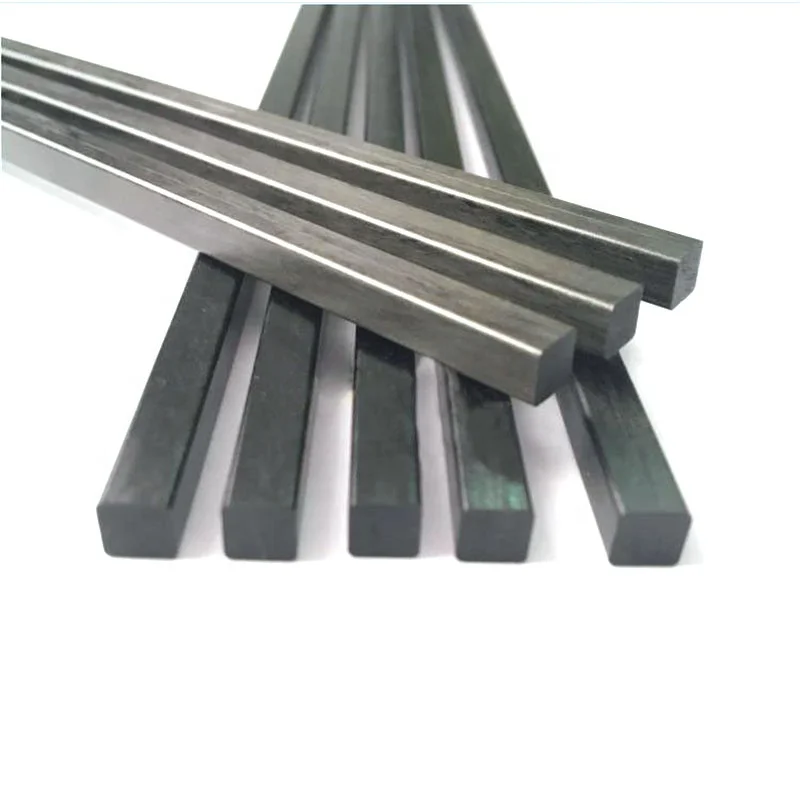
The solid carbon rod exhibits exceptional mechanical properties that translate into superior durability and wear resistance across demanding industrial applications. The compressive strength of the solid carbon rod exceeds that of many conventional materials, enabling it to withstand high mechanical loads without deformation or failure. This strength characteristic makes the solid carbon rod particularly valuable in applications involving heavy mechanical stress, such as bearing systems, mechanical seals, and structural components in high-load environments. The wear resistance of the solid carbon rod significantly outperforms traditional materials, maintaining surface integrity even under continuous abrasive conditions that would quickly degrade alternative materials. This superior wear resistance results from the hardness and self-lubricating properties inherent in the solid carbon rod structure, which reduces friction and prevents material transfer during sliding contact applications. The fatigue resistance of the solid carbon rod ensures reliable performance under cyclic loading conditions, preventing crack initiation and propagation that could lead to premature failure in dynamic applications. Industries utilizing reciprocating machinery, rotating equipment, and vibrating systems benefit from the solid carbon rod's ability to maintain structural integrity under repeated stress cycles. The solid carbon rod demonstrates excellent dimensional stability under mechanical load, preventing creep or permanent deformation that could affect equipment alignment or performance tolerances. This characteristic proves particularly important in precision applications where dimensional accuracy must be maintained throughout the service life. The impact resistance of the solid carbon rod allows it to absorb sudden mechanical shocks without fracturing, making it suitable for applications involving impact loading or emergency stop conditions. The solid carbon rod also exhibits superior performance in vacuum applications, where outgassing from other materials could contaminate sensitive processes or equipment. The mechanical properties of the solid carbon rod remain stable across varying environmental conditions, including temperature fluctuations, humidity changes, and chemical exposure that might affect other materials. Manufacturing flexibility allows the solid carbon rod to be machined, ground, or formed into complex shapes while maintaining its mechanical properties, enabling custom solutions for specialized applications. The solid carbon rod requires no special surface treatments or coatings to achieve its mechanical performance, simplifying procurement and installation while reducing long-term maintenance requirements in mechanical systems.
 ×
×

 EN
EN