Premium Carbon Fiber Tubing Solutions - Lightweight, Strong & Corrosion Resistant

Get a Free Quote

Our representative will contact you soon.
Email
Name
Company Name
Message
0/1000

carbon fiber tubing

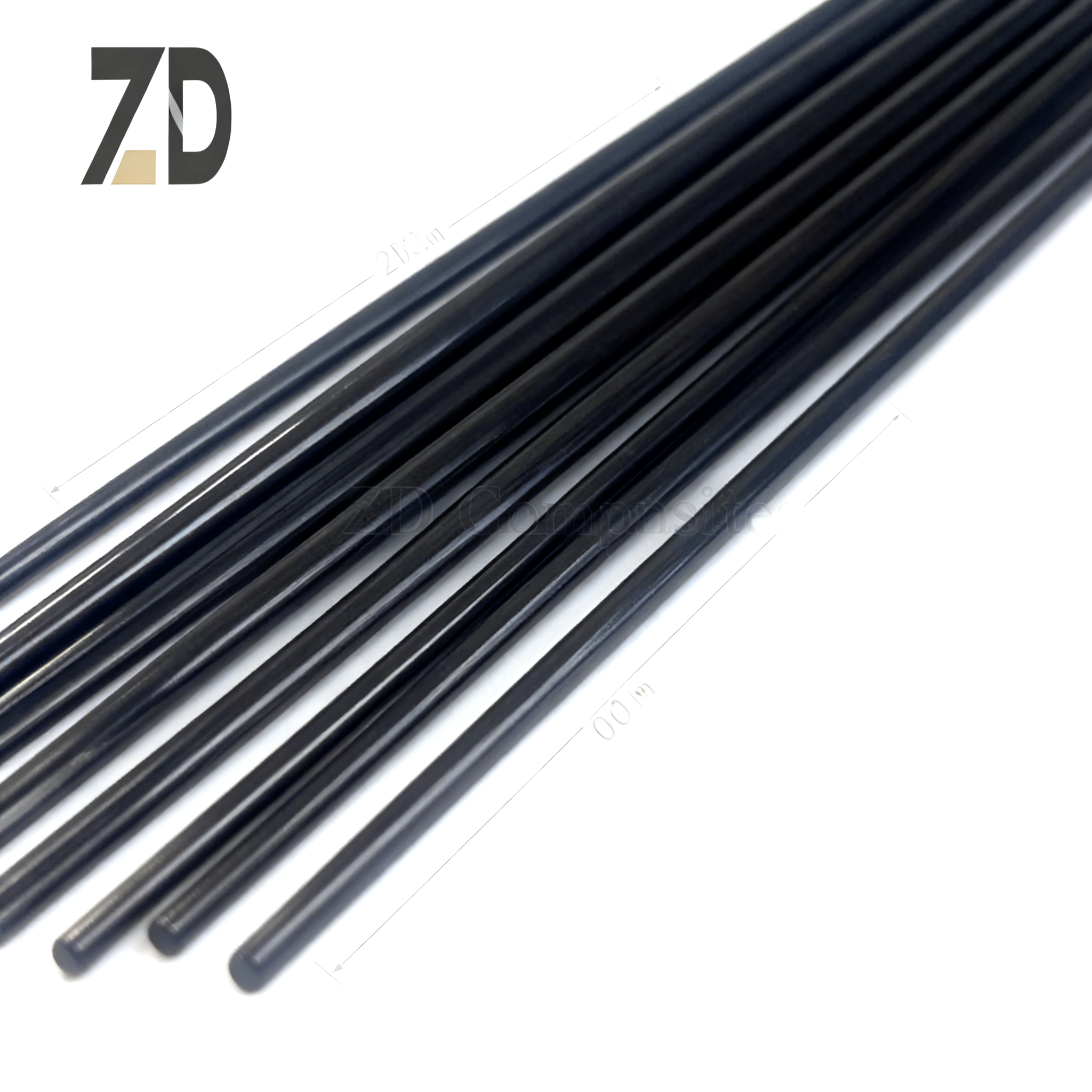
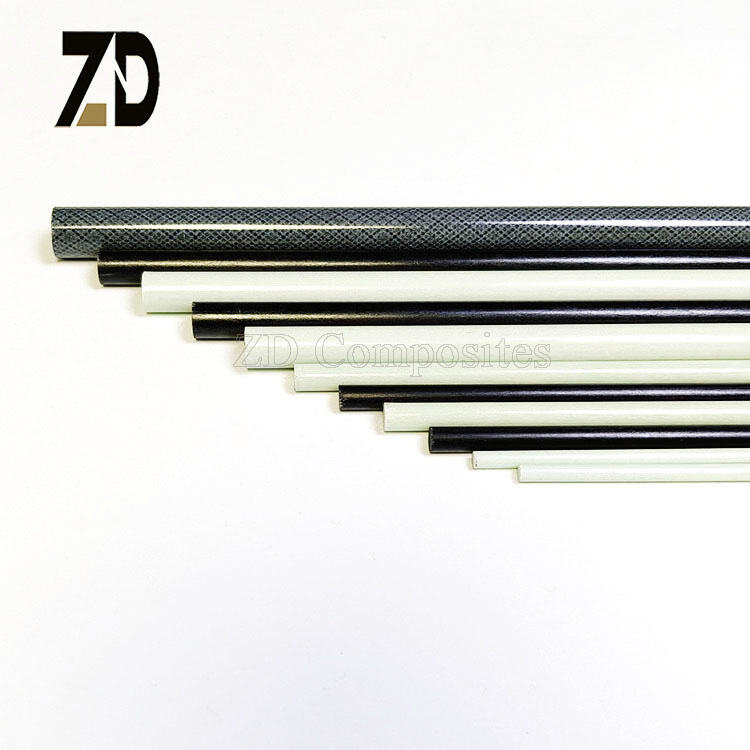
Carbon fiber tubing represents a revolutionary advancement in composite material technology, combining exceptional strength with remarkable lightweight properties. This innovative tubular structure consists of carbon fibers woven together and bonded with resin matrices, creating a material that outperforms traditional alternatives in numerous applications. The manufacturing process involves precise layering of carbon fiber sheets around mandrels, followed by curing under controlled temperature and pressure conditions to achieve optimal structural integrity. Carbon fiber tubing exhibits extraordinary tensile strength, often exceeding steel while weighing significantly less. The material demonstrates excellent fatigue resistance, maintaining structural performance under repeated stress cycles that would compromise conventional materials. Its inherent corrosion resistance eliminates the degradation issues commonly associated with metal alternatives, ensuring long-term reliability in harsh environments. The tubing's anisotropic properties allow engineers to tailor strength characteristics by adjusting fiber orientation during manufacturing. This customization capability enables optimization for specific load requirements, whether axial, torsional, or bending forces dominate the application. Carbon fiber tubing maintains dimensional stability across wide temperature ranges, resisting thermal expansion that affects metal components. The material's electromagnetic transparency makes it invaluable in applications requiring RF signal transmission without interference. Modern carbon fiber tubing incorporates advanced resin systems that enhance impact resistance while maintaining flexibility. Surface treatments and protective coatings can be applied to improve environmental resistance and aesthetic appeal. The manufacturing precision achievable with carbon fiber tubing allows for tight tolerances and consistent quality across production runs. These technological features position carbon fiber tubing as the preferred choice for aerospace, automotive, marine, sporting goods, and industrial applications where performance, weight reduction, and durability are critical success factors.

Popular Products

Carbon fiber tubing delivers substantial weight savings compared to traditional materials, reducing overall system mass by up to 70 percent while maintaining equivalent or superior strength characteristics. This weight reduction translates directly into improved fuel efficiency for vehicles, enhanced payload capacity for aircraft, and easier handling for sporting equipment. The material's exceptional strength-to-weight ratio enables designers to create thinner wall sections without compromising structural integrity, further optimizing weight distribution and space utilization. Users benefit from reduced transportation costs and lower energy consumption throughout the product lifecycle. The superior stiffness properties of carbon fiber tubing minimize deflection under load, ensuring precise positioning and stability in critical applications. This enhanced rigidity eliminates unwanted vibrations and improves system accuracy, particularly valuable in robotics, precision machinery, and measurement equipment. Carbon fiber tubing resists fatigue failure far better than metal alternatives, maintaining performance characteristics through millions of stress cycles without developing cracks or permanent deformation. This durability reduces maintenance requirements and extends service life, providing significant cost savings over time. The material's immunity to corrosion eliminates the need for protective coatings and regular maintenance associated with steel or aluminum components. Users enjoy reduced downtime and lower total cost of ownership. Carbon fiber tubing offers excellent thermal stability, maintaining structural properties across temperature extremes from cryogenic conditions to elevated operating temperatures. This consistency ensures reliable performance in demanding environments without thermal stress concerns. The material's low thermal conductivity provides natural insulation properties, reducing heat transfer and improving energy efficiency in temperature-sensitive applications. Carbon fiber tubing can be manufactured with precise dimensions and smooth surface finishes, eliminating secondary machining operations and reducing production costs. The material's inherent dampening properties reduce noise and vibration transmission, creating quieter, more comfortable operating environments. These combined advantages make carbon fiber tubing an intelligent investment for applications prioritizing performance, efficiency, and long-term reliability.

Tips And Tricks

How to Make a Carbon Fiber Box: Choosing the Right Prepreg, Resin & Mold

20

Oct

How to Make a Carbon Fiber Box: Choosing the Right Prepreg, Resin & Mold

View More
The advantages of fiberglass stakes

20

Oct

The advantages of fiberglass stakes

View More
Applications and advantages of carbon fiber materials in industry

27

Oct

Applications and advantages of carbon fiber materials in industry

View More

Get a Free Quote

Our representative will contact you soon.
Email
Name
Company Name
Message
0/1000

carbon fiber tubing

Unmatched Strength-to-Weight Performance

Unmatched Strength-to-Weight Performance

Carbon fiber tubing achieves strength-to-weight ratios that surpass all conventional materials, delivering tensile strengths exceeding 500,000 psi while maintaining densities lower than aluminum. This extraordinary performance stems from the unique properties of carbon fibers, which consist of aligned carbon atoms forming incredibly strong crystalline structures. When properly oriented and bonded within the tubing matrix, these fibers create a material capable of withstanding enormous loads while remaining remarkably lightweight. The strength advantage becomes particularly evident in applications requiring high load-bearing capacity without weight penalties. Aerospace manufacturers utilize carbon fiber tubing for structural components, landing gear assemblies, and fuselage frames, achieving weight reductions that directly translate into increased fuel efficiency and payload capacity. Automotive engineers incorporate carbon fiber tubing into roll cages, drive shafts, and suspension components, improving vehicle performance while reducing unsprung weight for enhanced handling characteristics. The material's ability to maintain strength under various loading conditions makes it invaluable for dynamic applications where forces change direction and magnitude rapidly. Unlike metals that exhibit uniform properties, carbon fiber tubing can be engineered with directional strength characteristics, concentrating reinforcement where maximum stress occurs while minimizing material usage in low-stress areas. This optimization capability allows designers to create components that are both lighter and stronger than traditional alternatives. The strength retention of carbon fiber tubing under cyclic loading conditions far exceeds that of metals, which suffer from fatigue crack propagation over time. This superior fatigue resistance ensures consistent performance throughout the component's service life, reducing the risk of unexpected failures and associated safety concerns. Manufacturing techniques for carbon fiber tubing have evolved to produce components with strength properties that remain consistent across the entire structure, eliminating weak points that could compromise overall integrity. The combination of high strength, low weight, and design flexibility makes carbon fiber tubing the optimal choice for performance-critical applications where traditional materials fall short.
Superior Corrosion and Environmental Resistance

Superior Corrosion and Environmental Resistance

Carbon fiber tubing demonstrates exceptional resistance to corrosion, chemical attack, and environmental degradation, maintaining structural integrity in conditions that rapidly destroy metal alternatives. Unlike steel, aluminum, or other metals that oxidize when exposed to moisture, salt, chemicals, or atmospheric pollutants, carbon fiber tubing remains chemically inert and structurally stable. This inherent resistance stems from the carbon fiber's molecular structure and the protective resin matrix that encapsulates the fibers. Marine applications particularly benefit from this corrosion resistance, as carbon fiber tubing performs reliably in saltwater environments that cause rapid deterioration of metal components. Boat manufacturers use carbon fiber tubing for masts, booms, and structural elements that must withstand constant exposure to corrosive marine conditions while maintaining strength and appearance. Chemical processing industries utilize carbon fiber tubing for piping systems, support structures, and equipment components that encounter aggressive chemicals daily. The material's resistance to acids, bases, solvents, and other reactive substances eliminates the costly maintenance and replacement cycles associated with metal systems. Outdoor applications expose materials to ultraviolet radiation, temperature cycling, and moisture variations that cause degradation over time. Carbon fiber tubing incorporates UV-resistant resin systems and protective surface treatments that prevent fiber degradation and maintain structural properties despite prolonged sun exposure. This environmental stability makes the material ideal for telecommunications towers, solar panel support structures, and architectural elements requiring long-term outdoor performance. The absence of galvanic corrosion concerns allows carbon fiber tubing to be used alongside dissimilar materials without creating electrochemical reactions that accelerate deterioration. This compatibility simplifies design requirements and reduces the need for isolation techniques required with metal components. Industrial facilities benefit from reduced maintenance costs and improved safety when carbon fiber tubing replaces metal components in corrosive environments. The material's resistance to stress corrosion cracking ensures reliable performance under combined mechanical and environmental stresses that cause premature failure in susceptible metals.

Advanced Manufacturing Precision and Customization

Advanced Manufacturing Precision and Customization

Carbon fiber tubing manufacturing processes achieve exceptional dimensional accuracy and surface quality while enabling extensive customization for specific application requirements. Modern production techniques utilize precision mandrels, automated fiber placement systems, and controlled curing processes that maintain tolerances within thousandths of an inch across the entire tube length. This manufacturing precision eliminates the secondary machining operations typically required for metal components, reducing production costs and lead times while ensuring consistent quality. The ability to control fiber orientation during manufacturing allows engineers to tailor strength and stiffness properties for specific loading conditions, creating components optimized for their intended applications. Filament winding processes can vary fiber angles, layer sequences, and wall thickness along the tube length, producing components with varying mechanical properties where needed. This customization capability enables the creation of carbon fiber tubing with reinforced areas at connection points, reduced wall thickness in low-stress regions, and optimized fiber orientations for complex loading scenarios. Advanced resin systems and curing techniques produce carbon fiber tubing with smooth internal and external surfaces that minimize friction losses in fluid transport applications and provide excellent bonding surfaces for secondary operations. The manufacturing process accommodates complex geometries, including tapered sections, integrated fittings, and non-circular cross-sections that would be difficult or expensive to produce with traditional materials. Quality control systems monitor every aspect of production, from fiber tension and resin content to curing temperature and pressure profiles, ensuring consistent performance across all manufactured components. Automated manufacturing processes reduce human error and variability while increasing production efficiency and repeatability. The ability to incorporate functional elements during manufacturing, such as threaded inserts, mounting brackets, or sensor attachment points, eliminates assembly operations and reduces overall system complexity. Custom surface treatments and finishes can be applied during production to enhance appearance, improve environmental resistance, or provide specific functional properties such as electrical conductivity or radar absorption. This integration of manufacturing and finishing operations streamlines production workflows and reduces handling requirements that could introduce defects or dimensional variations.

Get a Free Quote

Our representative will contact you soon.
Email
Name
Company Name
Message
0/1000