Precision Manufacturing and Customization Capabilities
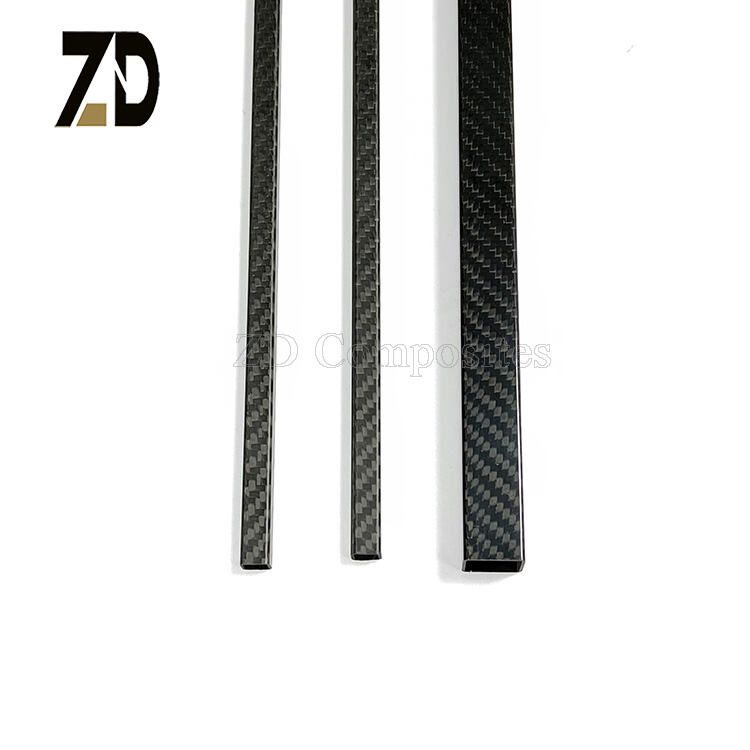
The oval carbon fiber tube benefits from sophisticated manufacturing processes that deliver precise dimensional control, consistent material properties, and extensive customization options to meet specific application requirements. Advanced pultrusion and filament winding technologies enable production of tubes with wall thickness variations as small as ±0.05mm, ensuring predictable performance characteristics and reliable assembly tolerances. Computer-controlled fiber placement systems orient reinforcement materials with exceptional accuracy, optimizing strength properties for specific loading conditions while minimizing material waste. The manufacturing process accommodates a wide range of customization options including variable wall thickness along the tube length, integrated mounting features, and specialized surface treatments. Resin transfer molding techniques allow for complex internal geometries and hollow sections that would be impossible with traditional manufacturing methods. Quality assurance protocols include real-time monitoring of temperature, pressure, and cure cycles to ensure consistent material properties throughout production runs. Dimensional inspection using coordinate measuring machines verifies that each oval carbon fiber tube meets specified tolerances before shipment. Custom fiber orientations can be precisely controlled to optimize specific mechanical properties, with options for unidirectional reinforcement for maximum tensile strength or balanced layups for improved torsional characteristics. Surface finish options range from standard smooth finishes to textured surfaces for enhanced bonding or aesthetic requirements. The manufacturing flexibility extends to length capabilities, with continuous production methods enabling tubes exceeding 12 meters without joints or splices. Rapid prototyping capabilities allow customers to evaluate design concepts quickly, with sample tubes typically available within two weeks of specification finalization. Integration of sensors, heating elements, or other functional components can be accomplished during the manufacturing process, creating smart structural components with embedded monitoring capabilities. Post-processing operations including machining, drilling, and surface modification can be performed with standard tooling, simplifying integration into existing manufacturing workflows. Documentation packages include material certifications, dimensional reports, and mechanical test data to support quality requirements in regulated industries.
 ×
×

 EN
EN