Hexagonal Carbon Fiber Tube: Advanced Lightweight Structural Solutions for Engineering Applications

Get a Free Quote

Our representative will contact you soon.
Email
Name
Company Name
Message
0/1000

hexagonal carbon fiber tube

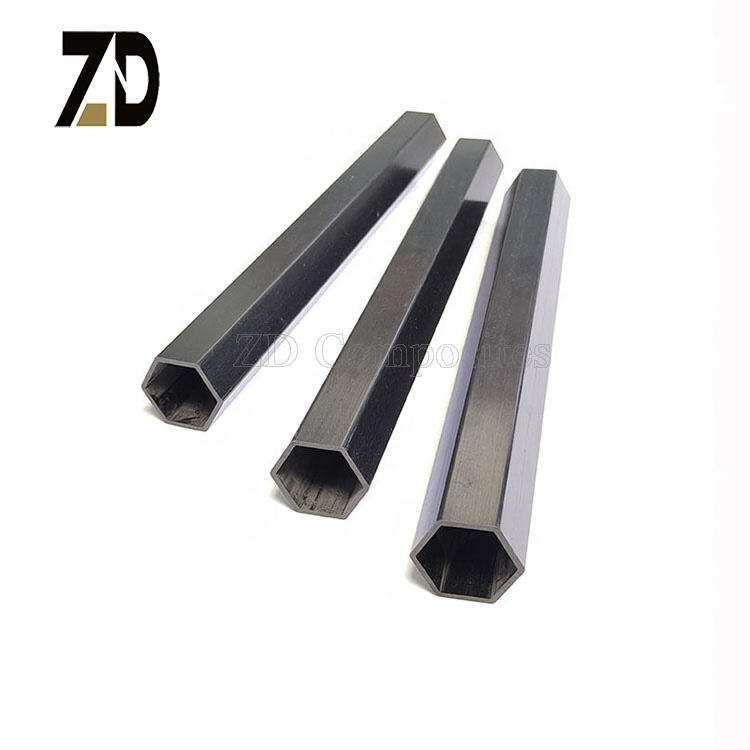
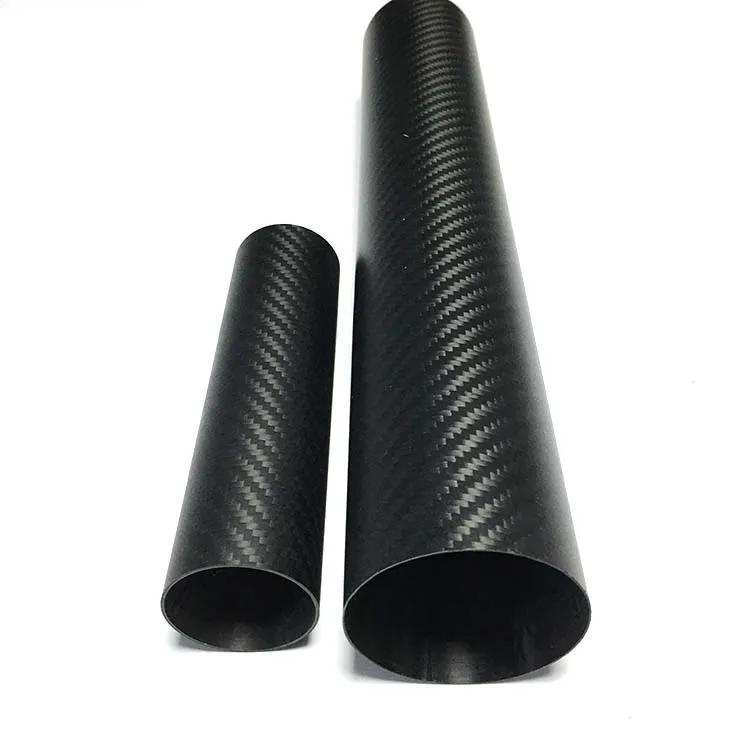
The hexagonal carbon fiber tube represents a revolutionary advancement in composite material engineering, combining the exceptional properties of carbon fiber with an innovative geometric design that maximizes structural efficiency. This specialized tubular structure features six flat sides arranged in a perfect hexagonal cross-section, creating a unique profile that offers superior performance characteristics compared to traditional round or square tubes. The hexagonal carbon fiber tube is manufactured using advanced filament winding or pultrusion processes, where continuous carbon fiber strands are precisely oriented and bonded with high-performance resin systems to achieve optimal strength-to-weight ratios. The main functions of this engineering marvel include providing exceptional structural support, reducing overall system weight, and delivering outstanding resistance to various stress forces including bending, torsion, and compression. The technological features of the hexagonal carbon fiber tube encompass its anisotropic properties, which allow engineers to tailor fiber orientations to match specific loading requirements. The hexagonal geometry provides multiple flat surfaces that facilitate easier mounting and connection points, while the inherent stiffness of the shape reduces material usage without compromising structural integrity. These tubes exhibit remarkable dimensional stability across wide temperature ranges, making them ideal for precision applications where thermal expansion must be minimized. The applications for hexagonal carbon fiber tubes span numerous industries including aerospace, automotive, robotics, sporting goods, and architectural structures. In aerospace applications, these tubes serve as lightweight structural components in aircraft frames, satellite booms, and unmanned aerial vehicle construction. The automotive industry utilizes hexagonal carbon fiber tubes for roll cages, chassis reinforcement, and high-performance vehicle components where weight reduction directly translates to improved fuel efficiency and performance.

New Products

The hexagonal carbon fiber tube delivers remarkable advantages that make it an exceptional choice for demanding engineering applications across multiple industries. The most significant benefit lies in its extraordinary strength-to-weight ratio, which surpasses traditional materials like steel and aluminum by substantial margins. This lightweight characteristic enables designers to reduce overall system weight while maintaining or even enhancing structural performance, leading to improved efficiency and reduced operational costs. The hexagonal shape provides inherent advantages over circular or rectangular profiles by offering multiple flat surfaces that simplify mounting procedures and connection interfaces. Engineers can easily attach brackets, clamps, and other hardware to these flat surfaces without requiring custom adapters or complex mounting solutions. The geometric stability of the hexagonal carbon fiber tube prevents rotation under load, eliminating the need for additional anti-rotation mechanisms that would otherwise add weight and complexity to the assembly. Another compelling advantage is the exceptional fatigue resistance that carbon fiber materials naturally possess. Unlike metallic alternatives that suffer from fatigue crack propagation over time, the hexagonal carbon fiber tube maintains its structural integrity through millions of loading cycles, significantly extending service life and reducing maintenance requirements. The corrosion resistance of carbon fiber eliminates concerns about environmental degradation, making these tubes ideal for marine, chemical, and outdoor applications where traditional materials would require protective coatings or frequent replacement. The thermal properties of the hexagonal carbon fiber tube provide additional benefits, including low thermal expansion coefficients that maintain dimensional accuracy across temperature variations. This thermal stability proves crucial in precision instruments, optical systems, and aerospace applications where dimensional changes can compromise performance. The electromagnetic transparency of carbon fiber allows radio frequency signals to pass through without interference, making hexagonal carbon fiber tubes perfect for antenna supports and communication equipment housings. Manufacturing flexibility enables customization of wall thickness, fiber orientation, and resin systems to match specific performance requirements, allowing engineers to optimize designs for particular applications. The vibration damping characteristics of carbon fiber composite materials help reduce noise and improve system stability in dynamic applications. Additionally, the hexagonal carbon fiber tube offers excellent electrical properties, functioning as either a conductor or insulator depending on the fiber orientation and resin system selected during manufacturing.

Tips And Tricks

How to Make a Carbon Fiber Box: Choosing the Right Prepreg, Resin & Mold

20

Oct

How to Make a Carbon Fiber Box: Choosing the Right Prepreg, Resin & Mold

View More
The advantages of fiberglass stakes

20

Oct

The advantages of fiberglass stakes

View More
Applications and advantages of carbon fiber materials in industry

27

Oct

Applications and advantages of carbon fiber materials in industry

View More

Get a Free Quote

Our representative will contact you soon.
Email
Name
Company Name
Message
0/1000

hexagonal carbon fiber tube

Superior Structural Efficiency Through Hexagonal Geometry

Superior Structural Efficiency Through Hexagonal Geometry

The hexagonal carbon fiber tube achieves unparalleled structural efficiency through its innovative geometric design that maximizes material utilization while minimizing weight. The hexagonal cross-section creates an optimal balance between structural performance and material economy, utilizing the inherent properties of carbon fiber to deliver exceptional results. This geometric configuration distributes loads more evenly across the tube wall compared to circular or rectangular alternatives, reducing stress concentrations that could lead to premature failure. The six-sided design provides multiple load paths, creating redundancy that enhances overall structural reliability and safety margins in critical applications. The flat surfaces of the hexagonal carbon fiber tube eliminate the need for complex machining operations typically required with round tubes when creating mounting points or connection interfaces. Engineers can directly attach components to any of the six surfaces without compromising the structural integrity of the tube wall, streamlining assembly processes and reducing manufacturing costs. The hexagonal shape also prevents unwanted rotation under torsional loads, a common problem with circular tubes that often requires additional anti-rotation devices. This inherent resistance to rotation simplifies system design and eliminates potential failure points associated with secondary restraining mechanisms. The geometric advantages extend to packaging efficiency, where hexagonal carbon fiber tubes can be nested together more compactly during storage and transportation, reducing logistics costs. The structural efficiency of the hexagonal design allows for thinner wall sections compared to equivalent circular tubes, further reducing weight while maintaining required strength levels. Advanced finite element analysis demonstrates that the hexagonal carbon fiber tube can achieve up to thirty percent weight savings compared to circular alternatives with equivalent performance characteristics. The corner regions of the hexagonal profile create natural stress risers that can be strategically reinforced during manufacturing to handle specific loading conditions, providing engineers with precise control over strength distribution throughout the structure.
Advanced Material Properties and Manufacturing Excellence

Advanced Material Properties and Manufacturing Excellence

The hexagonal carbon fiber tube showcases advanced material properties that result from sophisticated manufacturing processes and carefully selected raw materials designed to meet the most demanding performance requirements. The carbon fiber reinforcement consists of thousands of individual carbon filaments, each measuring only a few micrometers in diameter, that are woven or arranged in precise orientations to maximize strength and stiffness in specific directions. The manufacturing process allows for complete control over fiber placement, enabling engineers to tailor mechanical properties to match anticipated loading conditions. High-performance epoxy resin systems bond the carbon fibers together, creating a composite material that exhibits properties superior to either constituent material alone. The curing process occurs under controlled temperature and pressure conditions, ensuring complete resin penetration and optimal fiber-to-matrix bonding that maximizes structural performance. Quality control measures throughout manufacturing include ultrasonic testing, dimensional verification, and mechanical property validation to guarantee that each hexagonal carbon fiber tube meets stringent specifications. The anisotropic nature of carbon fiber allows for directional optimization, where fibers can be oriented to provide maximum strength and stiffness in primary loading directions while maintaining adequate properties in secondary directions. Advanced manufacturing techniques such as automated fiber placement and resin transfer molding enable precise control over fiber volume fraction, typically ranging from fifty to seventy percent, which directly influences mechanical properties and performance characteristics. The hexagonal carbon fiber tube demonstrates exceptional environmental resistance, maintaining structural properties across temperature ranges from minus one hundred to plus two hundred degrees Celsius, depending on the specific resin system selected. Moisture absorption remains minimal, typically less than one percent by weight, ensuring dimensional stability in humid environments. The manufacturing process can incorporate various surface finishes and coatings to enhance specific properties such as electrical conductivity, electromagnetic shielding, or chemical resistance, expanding the application possibilities for hexagonal carbon fiber tubes across diverse industries and operating environments.
Versatile Applications and Cost-Effective Performance

Versatile Applications and Cost-Effective Performance

The hexagonal carbon fiber tube delivers exceptional versatility across numerous applications while providing cost-effective performance that justifies initial investment through long-term operational benefits. In aerospace applications, these tubes serve as primary structural components in aircraft fuselages, wing structures, and landing gear assemblies where weight reduction directly translates to fuel savings and increased payload capacity. The automotive industry leverages hexagonal carbon fiber tubes for chassis reinforcement, roll cage construction, and suspension components where strength and weight optimization improve vehicle performance and safety ratings. Robotics applications benefit from the high stiffness-to-weight ratio of hexagonal carbon fiber tubes, enabling the construction of lightweight robotic arms and actuator assemblies that can achieve higher speeds and improved precision while consuming less energy. The sporting goods industry utilizes these tubes in bicycle frames, golf club shafts, fishing rods, and archery equipment where performance advantages directly impact user experience and competitive results. Marine applications include mast construction, hull reinforcement, and deck structures where corrosion resistance and weight savings provide significant operational advantages over traditional materials. The construction industry incorporates hexagonal carbon fiber tubes in architectural elements, bridge reinforcement, and seismic retrofitting applications where strength, durability, and design flexibility create new possibilities for innovative structures. Scientific instruments and optical systems benefit from the dimensional stability and vibration damping characteristics of hexagonal carbon fiber tubes, ensuring measurement accuracy and system reliability in precision applications. The cost-effectiveness of hexagonal carbon fiber tubes becomes apparent when considering total lifecycle costs rather than initial purchase price alone. Reduced maintenance requirements, extended service life, and elimination of corrosion-related replacements often result in lower total ownership costs compared to traditional materials. Energy savings achieved through weight reduction in mobile applications can quickly offset higher initial costs through reduced fuel consumption or increased battery life in electric vehicles. The manufacturing scalability of hexagonal carbon fiber tubes enables cost-effective production for both prototype quantities and high-volume applications, making advanced composite technology accessible across a broad range of industries and project scales.

Get a Free Quote

Our representative will contact you soon.
Email
Name
Company Name
Message
0/1000