Professional Carbon Fiber CNC Cutting Services - Precision Manufacturing Solutions

Get a Free Quote

Our representative will contact you soon.
Email
Name
Company Name
Message
0/1000

carbon fiber cnc cutting

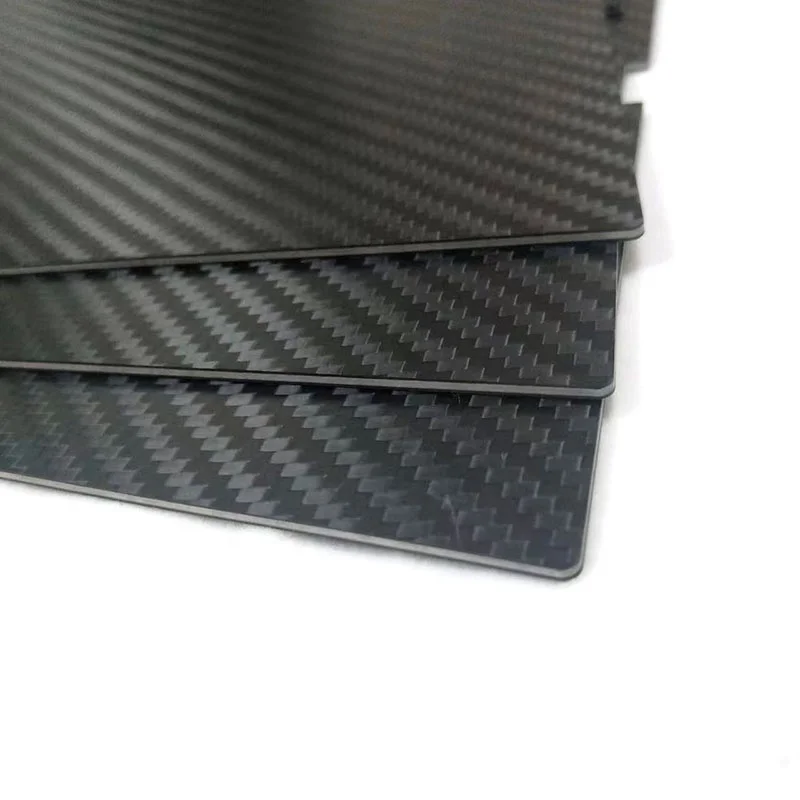
Carbon fiber CNC cutting represents a revolutionary manufacturing technology that combines computer numerical control precision with advanced composite material processing capabilities. This sophisticated cutting method utilizes programmable machine tools to create intricate shapes and components from carbon fiber materials with exceptional accuracy and consistency. The process involves mounting carbon fiber sheets or preforms onto a CNC machine bed, where computer-controlled cutting heads follow predetermined paths to slice through the material with remarkable precision. The main functions of carbon fiber CNC cutting encompass both two-dimensional and three-dimensional cutting operations, enabling manufacturers to produce complex geometries that would be impossible to achieve through traditional cutting methods. The technology incorporates various cutting mechanisms including laser cutting, waterjet cutting, and specialized blade systems, each optimized for specific carbon fiber configurations and thicknesses. Technological features of carbon fiber CNC cutting include real-time monitoring systems that track cutting parameters, automatic tool compensation mechanisms that adjust for material variations, and integrated dust collection systems that manage the fine particles generated during the cutting process. The precision positioning systems ensure repeatability within micrometers, while the computer-controlled feed rates optimize cutting speed without compromising edge quality. Advanced carbon fiber CNC cutting systems feature multi-axis capabilities that allow for beveled cuts and complex three-dimensional shaping operations. Applications span across aerospace manufacturing where lightweight structural components require precise dimensions, automotive industry for performance vehicle parts, sporting goods production for high-end equipment, and marine applications where corrosion-resistant lightweight components are essential. The technology proves invaluable in prototyping phases where design iterations demand quick turnaround times and in production environments where consistent quality and dimensional accuracy are paramount requirements.

New Product Releases

Carbon fiber CNC cutting delivers substantial benefits that transform manufacturing processes and product quality across multiple industries. The primary advantage lies in the exceptional precision achieved through computer-controlled operations, eliminating human error and ensuring consistent dimensional accuracy across production runs. This precision translates directly into reduced material waste, as the optimized cutting paths minimize scrap generation and maximize material utilization efficiency. Manufacturers experience significant cost savings through reduced labor requirements, as the automated nature of carbon fiber CNC cutting reduces dependency on skilled manual operators while maintaining superior output quality. The speed advantage becomes apparent when comparing traditional hand-cutting methods to automated CNC operations, where production throughput increases dramatically without sacrificing precision or finish quality. Carbon fiber CNC cutting systems provide remarkable flexibility in design implementation, allowing manufacturers to switch between different product specifications without extensive retooling or setup changes. This adaptability proves crucial in custom manufacturing environments where small batch production demands quick changeovers and minimal downtime. The clean cutting edges produced by carbon fiber CNC cutting eliminate the need for extensive post-processing operations, reducing overall production time and associated costs. Quality consistency represents another significant advantage, as the computer-controlled process eliminates variations that typically occur with manual cutting operations. The repeatable nature of carbon fiber CNC cutting ensures that every component meets exact specifications, reducing quality control rejection rates and improving overall manufacturing efficiency. Safety benefits emerge from the enclosed cutting environment and automated operation, minimizing operator exposure to carbon fiber dust and reducing workplace injury risks. The technology enables complex cutting patterns that would be impossible or extremely time-consuming to execute manually, opening new design possibilities for engineers and designers. Integration capabilities allow carbon fiber CNC cutting systems to connect seamlessly with existing manufacturing workflows, CAD systems, and production planning software, creating streamlined operations from design to finished product delivery.

Practical Tips

How to Make a Carbon Fiber Box: Choosing the Right Prepreg, Resin & Mold

20

Oct

How to Make a Carbon Fiber Box: Choosing the Right Prepreg, Resin & Mold

View More
The advantages of fiberglass stakes

20

Oct

The advantages of fiberglass stakes

View More
Applications and advantages of carbon fiber materials in industry

27

Oct

Applications and advantages of carbon fiber materials in industry

View More

Get a Free Quote

Our representative will contact you soon.
Email
Name
Company Name
Message
0/1000

carbon fiber cnc cutting

Unmatched Precision and Dimensional Accuracy

Unmatched Precision and Dimensional Accuracy

The precision capabilities of carbon fiber CNC cutting systems represent a quantum leap forward in composite material processing technology, delivering dimensional accuracy that meets the most stringent aerospace and automotive industry standards. These advanced systems utilize high-resolution positioning mechanisms that achieve tolerances within ±0.05mm consistently across the entire cutting area, ensuring that every component produced meets exact specifications without deviation. The computer-controlled nature of carbon fiber CNC cutting eliminates the variability inherent in manual cutting operations, where human factors such as fatigue, skill level, and environmental conditions can introduce inconsistencies. Multi-axis positioning systems enable the creation of complex three-dimensional cuts with beveled edges and intricate internal geometries that would be impossible to achieve through conventional methods. Real-time feedback systems continuously monitor cutting parameters and automatically adjust tool paths to compensate for material variations, ensuring consistent results regardless of carbon fiber batch differences or environmental conditions. The precision extends beyond simple dimensional accuracy to include edge quality control, where the cutting process produces clean, burr-free edges that require minimal finishing operations. This level of precision proves particularly valuable in applications where components must fit together with tight tolerances, such as aircraft structural elements or high-performance automotive parts. The repeatability factor ensures that production runs maintain consistent quality from the first piece to the last, eliminating the need for extensive quality control inspections and reducing rejection rates. Advanced carbon fiber CNC cutting systems incorporate laser measurement systems that verify dimensional accuracy in real-time, providing immediate feedback and enabling instant corrections when necessary. This precision capability translates into significant cost savings through reduced rework, improved assembly efficiency, and enhanced product performance in final applications.
Enhanced Material Utilization and Waste Reduction

Enhanced Material Utilization and Waste Reduction

Carbon fiber CNC cutting technology revolutionizes material efficiency through intelligent nesting algorithms and optimized cutting strategies that maximize raw material utilization while minimizing waste generation. These sophisticated systems analyze component geometries and automatically arrange cutting patterns to achieve optimal material usage, often exceeding 90% utilization rates compared to 60-70% typical of manual cutting methods. The computer-controlled cutting paths eliminate the material waste associated with human cutting errors, where incorrect cuts or measurements can result in entire sheets being scrapped. Advanced nesting software considers grain direction requirements, ensuring that each component maintains proper fiber orientation for maximum structural integrity while optimizing material layout for minimum waste. The precision cutting capabilities enable tighter spacing between components, reducing the material required between parts and maximizing the number of components produced from each carbon fiber sheet. Automated cutting parameter optimization ensures that kerf width remains consistent and minimal, further reducing material consumption without compromising cut quality. The system's ability to handle complex shapes and internal cutouts efficiently means that previously unusable material sections can be converted into smaller components, maximizing overall material value. Real-time material tracking capabilities provide detailed reports on material consumption, waste generation, and cost per component, enabling manufacturers to optimize their processes continuously. The reduced waste generation contributes to environmental sustainability goals while simultaneously improving profitability through better material economics. Carbon fiber CNC cutting systems can process multiple material thicknesses and types within the same cutting cycle, enabling manufacturers to utilize partial sheets and remnants that would otherwise be discarded. This enhanced material utilization directly impacts manufacturing costs, reducing raw material expenses and disposal costs while improving overall production efficiency and environmental responsibility.
Versatile Multi-Application Manufacturing Capability

Versatile Multi-Application Manufacturing Capability

The versatility of carbon fiber CNC cutting systems extends across diverse manufacturing sectors, providing manufacturers with the flexibility to serve multiple markets and applications from a single production platform. These systems accommodate various carbon fiber configurations including woven fabrics, unidirectional tapes, prepreg materials, and cured laminates, enabling manufacturers to process different material types without requiring specialized equipment for each application. The programmable nature allows rapid switching between product types and specifications, making the technology ideal for both high-volume production runs and custom prototype development. Automotive manufacturers utilize carbon fiber CNC cutting for producing lightweight body panels, structural reinforcements, and performance components that meet strict safety and weight requirements. Aerospace applications benefit from the technology's ability to create complex structural components, interior panels, and specialized parts that must meet rigorous certification standards. Sporting goods manufacturers leverage the precision and flexibility to produce high-performance equipment ranging from bicycle frames to tennis rackets, where weight optimization and structural integrity are paramount. Marine industry applications include hull components, deck structures, and specialized fittings that require corrosion resistance and dimensional stability in harsh environments. The technology proves equally valuable in architectural applications where carbon fiber elements provide structural reinforcement while maintaining aesthetic appeal. Medical device manufacturing benefits from the precision capabilities for creating lightweight, biocompatible components with exact dimensional requirements. The system's ability to process both thick and thin materials enables manufacturers to serve diverse applications without investing in multiple specialized machines. Integration capabilities allow carbon fiber CNC cutting systems to connect with existing manufacturing workflows, quality control systems, and inventory management platforms, creating seamless production environments. This versatility translates into improved return on investment as manufacturers can diversify their product offerings and respond quickly to market opportunities across multiple industries without significant additional capital investment.

Get a Free Quote

Our representative will contact you soon.
Email
Name
Company Name
Message
0/1000