Advanced Flexible Carbon Fiber Sheets - Lightweight, Strong & Conformable Solutions

Get a Free Quote

Our representative will contact you soon.
Email
Name
Company Name
Message
0/1000

flexible carbon fiber sheets

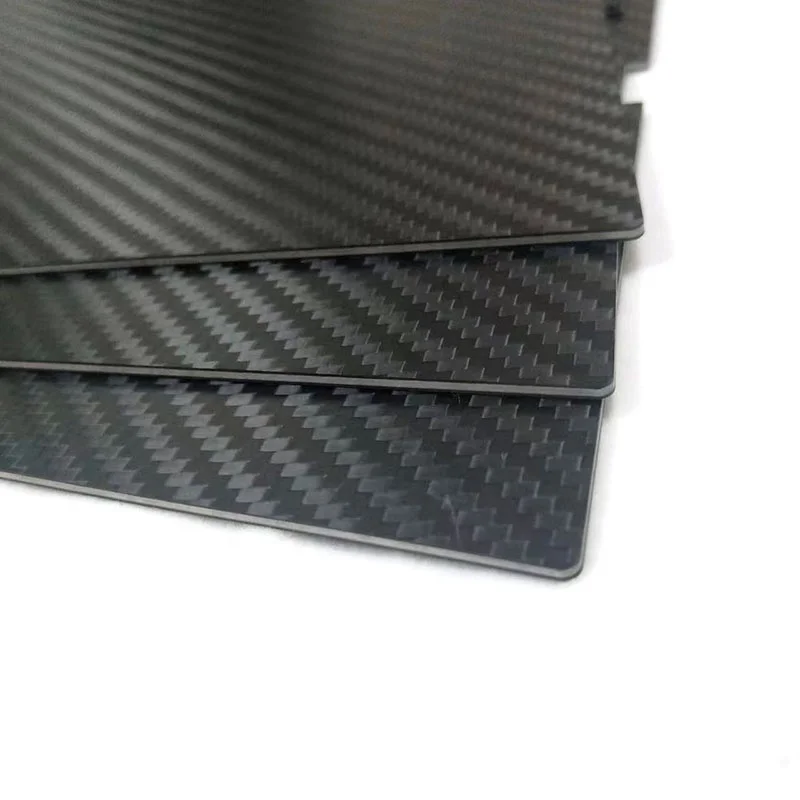
Flexible carbon fiber sheets represent a revolutionary advancement in composite materials technology, combining the exceptional strength-to-weight ratio of carbon fiber with remarkable flexibility and adaptability. These engineered materials consist of woven or unidirectional carbon fiber filaments embedded within a flexible matrix system, creating sheets that maintain structural integrity while offering unprecedented bendability and conformability. The main functions of flexible carbon fiber sheets encompass structural reinforcement, electromagnetic interference shielding, thermal management, and surface protection across diverse industrial applications. Unlike traditional rigid carbon fiber composites, these flexible variants can conform to complex geometries, curved surfaces, and irregular shapes without compromising their fundamental properties. The technological features of flexible carbon fiber sheets include variable thickness options ranging from ultra-thin films to robust structural layers, customizable weave patterns that optimize strength in specific directions, and specialized resin systems that maintain flexibility while preserving mechanical performance. Advanced manufacturing processes ensure consistent fiber orientation, uniform thickness distribution, and superior surface finish quality. These sheets demonstrate exceptional tensile strength, typically exceeding 3000 MPa, while maintaining flexibility that allows bending radii as tight as 5mm without fiber breakage. The applications span aerospace components, automotive body panels, marine hull reinforcement, sporting goods manufacturing, electronic device housings, architectural elements, and industrial equipment protection. In aerospace applications, flexible carbon fiber sheets enable weight reduction while enhancing structural performance in wing components, fuselage sections, and interior panels. Automotive manufacturers utilize these materials for lightweight body panels, underhood components, and aesthetic trim elements that require both durability and design flexibility. Marine applications benefit from corrosion resistance and conformability to hull curves, while electronics industries leverage electromagnetic shielding properties combined with mechanical protection for sensitive components.

New Product Recommendations

Flexible carbon fiber sheets deliver exceptional benefits that transform how engineers and manufacturers approach design challenges across multiple industries. The primary advantage lies in their remarkable strength-to-weight ratio, providing up to five times the strength of steel while weighing significantly less than aluminum alternatives. This weight reduction directly translates to improved fuel efficiency in automotive and aerospace applications, enhanced performance in sporting goods, and easier handling during installation processes. The flexibility advantage cannot be overstated, as these sheets conform to complex three-dimensional shapes without requiring expensive forming processes or specialized tooling. Traditional rigid materials often necessitate multiple pieces and complex joining techniques to achieve curved geometries, while flexible carbon fiber sheets accomplish the same results with single-piece construction, reducing manufacturing complexity and potential failure points. Corrosion resistance represents another critical advantage, as carbon fiber naturally resists chemical degradation, moisture absorption, and environmental weathering that commonly affect metal alternatives. This resistance extends product lifespan, reduces maintenance requirements, and ensures consistent performance in harsh operating environments. The electromagnetic interference shielding properties provide dual functionality, offering both structural benefits and electronic protection in a single material solution. Manufacturing versatility allows for customization of fiber orientation, thickness, and surface treatments to match specific application requirements. Installation simplicity emerges from the material's conformability and lightweight nature, reducing labor costs and installation time while minimizing the need for specialized equipment or extensive structural modifications. Thermal stability ensures reliable performance across wide temperature ranges, maintaining mechanical properties from cryogenic conditions to elevated operating temperatures. The aesthetic appeal of carbon fiber's distinctive weave pattern eliminates the need for additional finishing materials in visible applications, reducing both cost and weight while providing premium appearance. Long-term durability exceeds traditional materials, with properly designed flexible carbon fiber sheets maintaining performance characteristics throughout extended service lives. Cost-effectiveness becomes apparent when considering the total lifecycle benefits, including reduced maintenance, extended service life, improved performance, and simplified installation procedures. Energy efficiency improvements result from weight reduction and thermal properties, contributing to sustainability goals while reducing operating costs. Design freedom increases dramatically as engineers can create complex shapes and integrated solutions that would be impossible or prohibitively expensive with conventional materials.

Tips And Tricks

How to Make a Carbon Fiber Box: Choosing the Right Prepreg, Resin & Mold

20

Oct

How to Make a Carbon Fiber Box: Choosing the Right Prepreg, Resin & Mold

View More
The advantages of fiberglass stakes

20

Oct

The advantages of fiberglass stakes

View More
Applications and advantages of carbon fiber materials in industry

27

Oct

Applications and advantages of carbon fiber materials in industry

View More

Get a Free Quote

Our representative will contact you soon.
Email
Name
Company Name
Message
0/1000

flexible carbon fiber sheets

Superior Conformability and Design Flexibility

Superior Conformability and Design Flexibility

The outstanding conformability of flexible carbon fiber sheets revolutionizes product design and manufacturing approaches by enabling complex three-dimensional shapes that were previously impossible or economically unfeasible with traditional materials. This remarkable characteristic stems from the specialized resin matrix system and optimized fiber architecture that allows the material to bend, curve, and conform to intricate geometries while maintaining structural integrity and performance characteristics. Unlike rigid carbon fiber composites that require expensive molding processes and often result in material waste, flexible carbon fiber sheets can be formed around existing structures, wrapped over curved surfaces, and shaped to match complex contours without compromising fiber alignment or creating stress concentrations. This conformability advantage extends beyond simple bending, encompassing compound curves, tight radii, and irregular shapes that mirror real-world design requirements. Manufacturing efficiency improves dramatically as single sheets can replace multiple rigid components, eliminating the need for complex joining techniques, fasteners, and assembly processes that add weight, cost, and potential failure points. The design flexibility enables engineers to optimize load paths, reduce part count, and integrate multiple functions into single components, leading to more elegant and efficient solutions. In aerospace applications, this conformability allows for seamless integration with wing profiles, fuselage curves, and engine nacelle geometries, reducing drag and improving aerodynamic efficiency while maintaining structural requirements. Automotive designers benefit from the ability to create flowing body lines, integrate functional elements like air vents or mounting points, and achieve complex surface textures that enhance both aesthetics and performance. Marine applications leverage this flexibility to conform to hull curves, integrate with existing structures, and create watertight seals that would be difficult to achieve with rigid materials. The economic impact of this conformability extends throughout the product lifecycle, from reduced tooling costs and simplified manufacturing processes to improved serviceability and maintenance access. Quality control becomes more manageable as the material's flexibility accommodates minor dimensional variations and surface irregularities that might cause problems with rigid alternatives, reducing scrap rates and rework requirements while improving overall product consistency and reliability.
Exceptional Strength-to-Weight Performance

Exceptional Strength-to-Weight Performance

Flexible carbon fiber sheets deliver unparalleled strength-to-weight performance that fundamentally changes how engineers approach structural design challenges across diverse applications. The exceptional mechanical properties result from the unique combination of high-strength carbon fibers and advanced polymer matrices engineered to maintain flexibility without sacrificing structural performance. These materials typically achieve tensile strengths exceeding 3000 MPa while maintaining densities approximately 20% lower than aluminum and 75% lower than steel, creating opportunities for significant weight reduction without compromising structural integrity or safety margins. This superior strength-to-weight ratio enables designers to reduce material thickness, minimize structural mass, and achieve performance targets that would be impossible with conventional materials. In transportation applications, every kilogram of weight reduction translates directly to improved fuel efficiency, extended range, reduced emissions, and enhanced performance characteristics. The structural efficiency extends beyond simple weight savings to include improved stiffness-to-weight ratios that reduce vibration, enhance stability, and improve user experience across various applications. Manufacturing advantages emerge from the reduced material volume required to achieve equivalent performance levels, leading to lower raw material costs, reduced shipping expenses, and simplified handling procedures. The high specific strength enables design optimization that reduces overall system complexity by eliminating the need for additional reinforcement structures, support brackets, and redundant load paths commonly required with heavier materials. Fatigue resistance characteristics surpass traditional materials significantly, with flexible carbon fiber sheets maintaining performance through millions of load cycles without degradation, extending service life and reducing maintenance requirements. Dynamic loading performance remains consistent across wide frequency ranges, making these materials ideal for applications involving vibration, impact, or cyclic stresses. The strength properties remain stable across broad temperature ranges, ensuring reliable performance from arctic conditions to elevated operating temperatures without significant property degradation. Cost-effectiveness improves when considering total system weight reduction, including secondary benefits like reduced foundation requirements, simplified transportation, and enhanced operational efficiency. Performance optimization becomes possible through tailored fiber orientations that maximize strength in primary loading directions while maintaining flexibility for secondary movements and thermal expansion. Long-term durability ensures that the exceptional strength-to-weight advantages persist throughout extended service lives, providing sustained value and performance reliability that justifies initial investment decisions.
Multi-Functional Performance Integration

Multi-Functional Performance Integration

The multi-functional performance integration of flexible carbon fiber sheets represents a paradigm shift from traditional single-purpose materials to comprehensive solution platforms that address multiple design requirements simultaneously. This integration capability stems from the inherent properties of carbon fiber combined with engineered matrix systems that optimize diverse performance characteristics within a single material solution. Electromagnetic interference shielding represents one of the most valuable integrated functions, providing effective protection against radio frequency interference, electromagnetic pulse effects, and signal noise while simultaneously delivering structural performance. This dual functionality eliminates the need for separate shielding materials, reducing system complexity, weight, and cost while improving overall reliability and performance. Thermal management capabilities integrate seamlessly with structural functions, as carbon fiber's excellent thermal conductivity enables effective heat dissipation while maintaining mechanical properties across wide temperature ranges. This thermal performance proves invaluable in electronic applications where heat generation threatens component reliability and performance, allowing flexible carbon fiber sheets to provide both structural protection and thermal regulation in compact designs. Corrosion resistance integration eliminates the need for protective coatings, treatments, or barriers commonly required with metallic materials, reducing maintenance requirements and extending service life while maintaining consistent performance in harsh environmental conditions. Chemical compatibility with various substances ensures reliable operation in industrial environments where exposure to solvents, acids, or other reactive substances would degrade alternative materials. Vibration damping properties integrate naturally with structural functions, reducing noise transmission, improving stability, and enhancing user comfort without requiring additional damping materials or complex isolation systems. Aesthetic integration allows the distinctive carbon fiber appearance to serve functional and visual purposes simultaneously, eliminating the need for decorative coverings while providing premium appearance that enhances product value and market appeal. Electrical conductivity can be tailored through fiber selection and matrix formulation to provide specific resistance levels, enabling applications ranging from electrostatic dissipation to electromagnetic shielding depending on requirements. Manufacturing integration simplifies production processes by combining multiple material functions into single components, reducing assembly complexity, part count, and potential failure modes while improving quality control and consistency. Environmental resistance integration encompasses UV stability, moisture resistance, and chemical inertness that maintain performance and appearance throughout extended outdoor exposure without degradation or maintenance requirements.

Get a Free Quote

Our representative will contact you soon.
Email
Name
Company Name
Message
0/1000