High Strength Carbon Fiber Plate - Superior Performance Composite Solutions for Industrial Applications

Get a Free Quote

Our representative will contact you soon.
Email
Name
Company Name
Message
0/1000

high strength carbon fiber plate

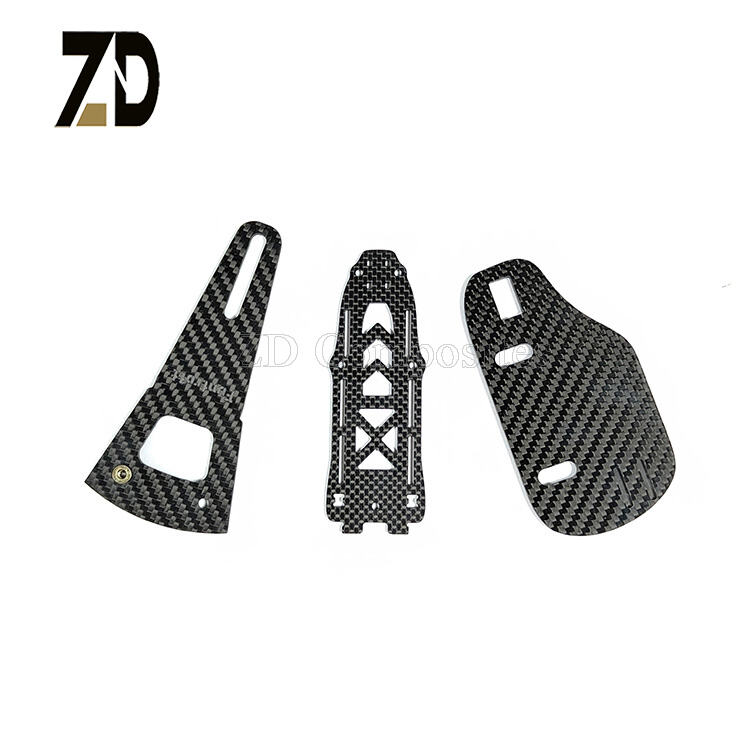
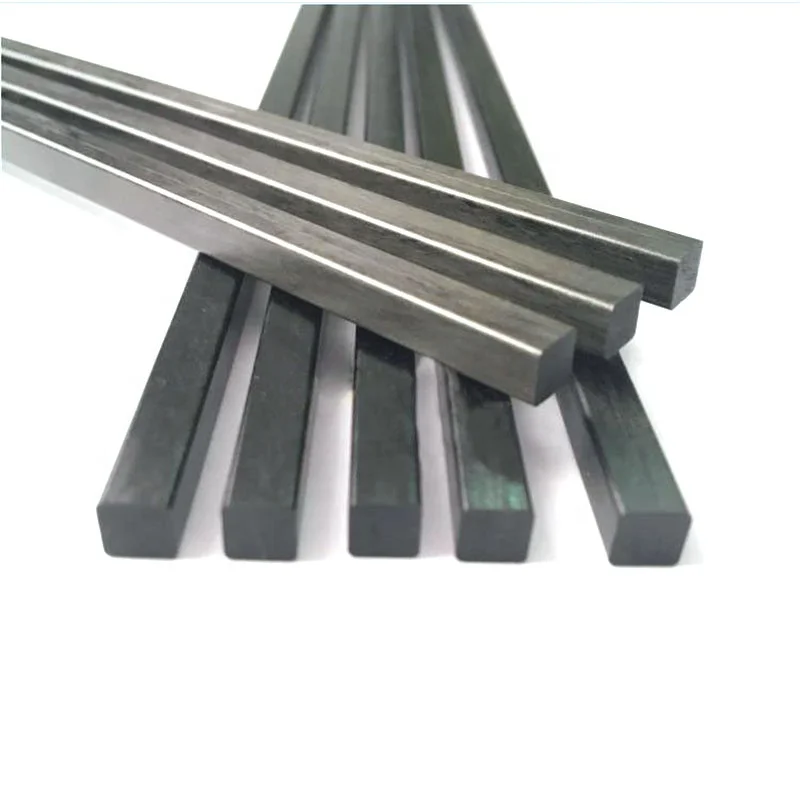
High strength carbon fiber plate represents a revolutionary advancement in composite material technology, offering exceptional performance characteristics that surpass traditional materials in numerous applications. This advanced composite material consists of carbon fiber reinforcement embedded within a polymer matrix, creating a structure that delivers outstanding strength-to-weight ratios and superior mechanical properties. The high strength carbon fiber plate manufacturing process involves precise layering of carbon fiber weaves or unidirectional tapes, followed by controlled curing under specific temperature and pressure conditions to achieve optimal fiber-matrix bonding. The technological foundation of high strength carbon fiber plate relies on the inherent properties of carbon atoms arranged in crystalline structures, providing remarkable tensile strength that often exceeds steel while maintaining significantly lower weight. Modern production techniques enable manufacturers to customize fiber orientations, layer configurations, and resin systems to meet specific performance requirements across diverse industries. The high strength carbon fiber plate exhibits excellent fatigue resistance, corrosion immunity, and dimensional stability under varying environmental conditions. These plates demonstrate superior stiffness characteristics, making them ideal for structural applications requiring minimal deflection under load. The material's low thermal expansion coefficient ensures consistent performance across temperature fluctuations, while its electromagnetic transparency properties make it suitable for specialized electronic applications. Quality control measures during high strength carbon fiber plate production include non-destructive testing methods such as ultrasonic inspection and X-ray analysis to ensure defect-free construction. The versatility of this composite material allows for various surface finishes and edge treatments to meet aesthetic and functional requirements. Advanced manufacturing capabilities enable the production of high strength carbon fiber plate in custom dimensions, thicknesses, and shapes to accommodate specific project needs across aerospace, automotive, marine, and industrial sectors.

New Product Releases

The primary advantage of high strength carbon fiber plate lies in its exceptional strength-to-weight ratio, delivering structural performance that dramatically reduces overall system weight while maintaining or exceeding strength requirements compared to traditional materials like steel or aluminum. This weight reduction translates directly into improved fuel efficiency for transportation applications, reduced foundation requirements for structural installations, and enhanced portability for portable equipment designs. The corrosion resistance of high strength carbon fiber plate eliminates the need for protective coatings, regular maintenance schedules, and replacement cycles associated with metal alternatives, resulting in significant long-term cost savings and improved reliability. Unlike metals that degrade through oxidation and chemical exposure, this composite material maintains its structural integrity throughout its service life, even in harsh marine, chemical, or industrial environments. The dimensional stability of high strength carbon fiber plate ensures consistent performance across varying temperature ranges, eliminating thermal expansion issues that plague metal components and require complex compensation mechanisms in precision applications. Manufacturing flexibility represents another crucial advantage, as high strength carbon fiber plate can be molded into complex geometries during production, reducing assembly requirements and eliminating welded joints that often become failure points in traditional constructions. The fatigue resistance properties far exceed those of metals, making high strength carbon fiber plate ideal for cyclic loading applications where traditional materials would experience crack propagation and eventual failure. Electrical isolation characteristics provide safety benefits in applications involving high voltage systems, while the material's electromagnetic transparency prevents interference with sensitive electronic equipment. The smooth surface finish of high strength carbon fiber plate reduces drag in fluid flow applications, improving efficiency in aerospace and marine environments. Processing advantages include shorter production cycles for complex shapes compared to machined metal components, reduced tooling costs for custom configurations, and the ability to integrate multiple functions into single composite structures. Quality consistency across production batches ensures reliable performance specifications, while the material's recyclability supports sustainable manufacturing practices and end-of-life environmental considerations.

Latest News

How to Make a Carbon Fiber Box: Choosing the Right Prepreg, Resin & Mold

20

Oct

How to Make a Carbon Fiber Box: Choosing the Right Prepreg, Resin & Mold

View More
The advantages of fiberglass stakes

20

Oct

The advantages of fiberglass stakes

View More
Applications and advantages of carbon fiber materials in industry

27

Oct

Applications and advantages of carbon fiber materials in industry

View More

Get a Free Quote

Our representative will contact you soon.
Email
Name
Company Name
Message
0/1000

high strength carbon fiber plate

Unmatched Strength-to-Weight Performance Revolution

Unmatched Strength-to-Weight Performance Revolution

The revolutionary strength-to-weight performance of high strength carbon fiber plate fundamentally transforms engineering possibilities across multiple industries by delivering structural capabilities that were previously unattainable with conventional materials. This exceptional characteristic stems from the unique molecular structure of carbon fibers, where individual carbon atoms form strong covalent bonds in a crystalline arrangement that provides tensile strength values often exceeding 3,500 MPa while maintaining a density approximately 75% lower than steel. The practical implications of this performance advantage extend far beyond simple weight reduction, enabling engineers to design structures that achieve superior performance metrics while consuming less material and reducing environmental impact. In aerospace applications, high strength carbon fiber plate components contribute to significant fuel savings throughout aircraft operational life, as every kilogram of weight reduction translates to measurable efficiency improvements and reduced carbon emissions. The automotive industry benefits tremendously from this strength-to-weight ratio, as high strength carbon fiber plate components enhance vehicle performance through improved acceleration, braking, and handling characteristics while simultaneously improving fuel economy and reducing tire wear. Marine applications leverage this advantage to create vessels that achieve higher speeds with less power consumption, while the reduced weight allows for increased payload capacity or extended range capabilities. Structural engineering applications benefit from the ability to create longer spans with fewer support columns, opening architectural possibilities that were previously impossible with traditional materials. The manufacturing efficiency gains associated with high strength carbon fiber plate strength-to-weight performance include reduced transportation costs, simplified installation procedures, and lower foundation requirements for supported structures. Quality control processes ensure consistent strength properties throughout the material, providing engineers with reliable design parameters that enable confident specification of safety factors and performance margins. The long-term economic benefits of this strength-to-weight advantage compound over time through reduced operational costs, maintenance requirements, and replacement needs, making high strength carbon fiber plate an intelligent investment for projects requiring optimal performance and lifecycle value.
Superior Durability and Maintenance-Free Operation

Superior Durability and Maintenance-Free Operation

The exceptional durability characteristics of high strength carbon fiber plate deliver maintenance-free operation that revolutionizes lifecycle cost calculations and operational reliability across demanding applications. Unlike traditional materials that deteriorate through corrosion, fatigue, or environmental degradation, high strength carbon fiber plate maintains its structural integrity and performance characteristics throughout extended service periods without requiring protective treatments, regular inspections, or scheduled maintenance interventions. The corrosion immunity of high strength carbon fiber plate stems from its composite nature, where carbon fibers embedded in polymer matrix systems remain chemically inert when exposed to moisture, salt spray, acids, alkalis, and other corrosive substances that would rapidly degrade metal alternatives. This corrosion resistance eliminates the need for expensive protective coatings, cathodic protection systems, or regular repainting schedules that add significant costs to metal structures throughout their operational life. The fatigue resistance properties of high strength carbon fiber plate exceed those of metals by substantial margins, with the material capable of withstanding millions of loading cycles without developing the crack propagation that leads to catastrophic failure in traditional materials. This fatigue immunity makes high strength carbon fiber plate particularly valuable in applications involving repetitive loading, vibration exposure, or cyclic stress conditions where metals would require frequent inspection and eventual replacement. Environmental stability represents another crucial durability advantage, as high strength carbon fiber plate exhibits minimal property changes when exposed to temperature fluctuations, UV radiation, chemical exposure, or humidity variations that would compromise the performance of alternative materials. The dimensional stability of high strength carbon fiber plate ensures that precision assemblies maintain their geometric relationships throughout the service life, eliminating the need for adjustment mechanisms or tolerance compensation that adds complexity and maintenance requirements to metal systems. Manufacturing quality controls ensure consistent durability performance across production batches, while advanced resin systems provide additional protection against environmental factors that might affect long-term performance. The combination of these durability characteristics results in total cost of ownership advantages that often justify the initial investment in high strength carbon fiber plate through reduced maintenance costs, extended service intervals, and improved system reliability.

Advanced Manufacturing Flexibility and Customization Capabilities

Advanced Manufacturing Flexibility and Customization Capabilities

The advanced manufacturing flexibility of high strength carbon fiber plate opens unprecedented customization possibilities that enable engineers to optimize designs for specific performance requirements while simplifying production processes and reducing overall system complexity. This manufacturing versatility stems from the composite construction process, where carbon fiber reinforcements can be oriented in precise directions to maximize strength and stiffness properties along predicted load paths, creating tailored mechanical properties that cannot be achieved with isotropic materials like metals. The molding capabilities of high strength carbon fiber plate allow for the creation of complex three-dimensional geometries in single manufacturing operations, eliminating the need for multiple components, welded joints, and assembly processes that add weight, cost, and potential failure points to traditional constructions. Custom thickness variations across individual high strength carbon fiber plate components enable designers to optimize material distribution, placing reinforcement exactly where structural analysis indicates maximum benefit while reducing material usage in areas experiencing lower stress levels. The integration possibilities inherent in high strength carbon fiber plate manufacturing allow for the incorporation of multiple functional elements into single components, such as mounting provisions, access panels, cable routing channels, and interface features that would require separate parts and additional assembly operations with conventional materials. Surface finish options for high strength carbon fiber plate range from smooth cosmetic surfaces suitable for visible applications to textured finishes that enhance bonding characteristics for secondary operations or improve aerodynamic performance in fluid flow applications. Manufacturing scalability accommodates both prototype development and high-volume production requirements, with tooling systems that can be adapted for different batch sizes and customization levels without significant retooling costs. Quality assurance processes during high strength carbon fiber plate manufacturing include real-time monitoring of fiber placement, resin content, cure temperature profiles, and dimensional accuracy to ensure consistent results across production runs. The ability to incorporate sensors, heating elements, or other functional components directly into high strength carbon fiber plate structures during manufacturing creates smart composite systems that provide real-time performance monitoring or active control capabilities. Design iteration flexibility allows for rapid prototype development and testing of high strength carbon fiber plate components, enabling engineers to validate performance characteristics and optimize designs before committing to full-scale production tooling investments.

Get a Free Quote

Our representative will contact you soon.
Email
Name
Company Name
Message
0/1000