
 EN


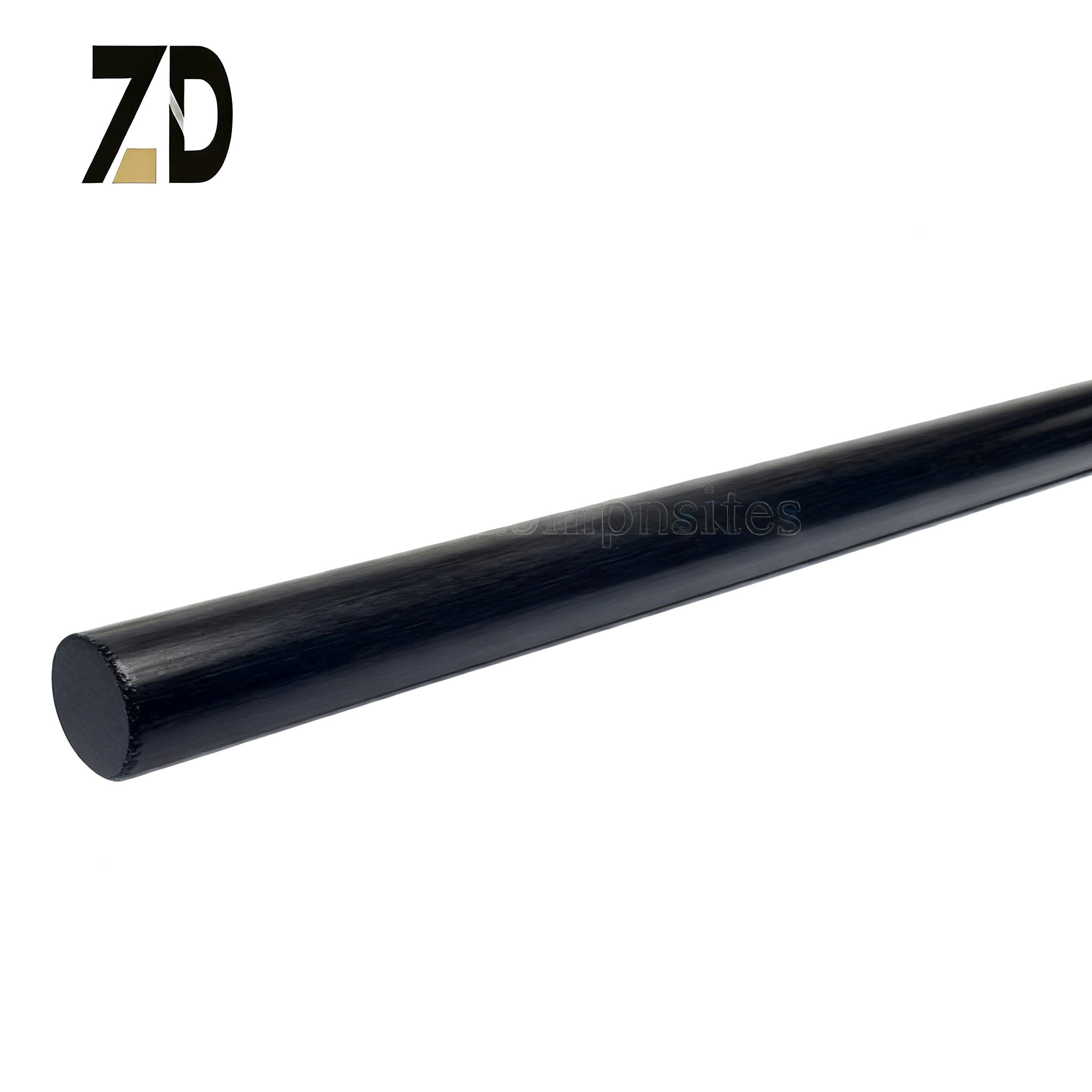
Selecting the right carbon fiber rods for aerospace structural applications demands precision, expertise, and a deep understanding of material specifications. Aerospace engineers and procurement specialists face significant pressure to choose carbon fiber rods that deliver exceptional strength-to-weight ratios while meeting rigorous certification standards. Satellite supports, fuselage components, and load-bearing structures require carbon fiber rods engineered to perform reliably in extreme thermal and mechanical environments where failure is not an option.
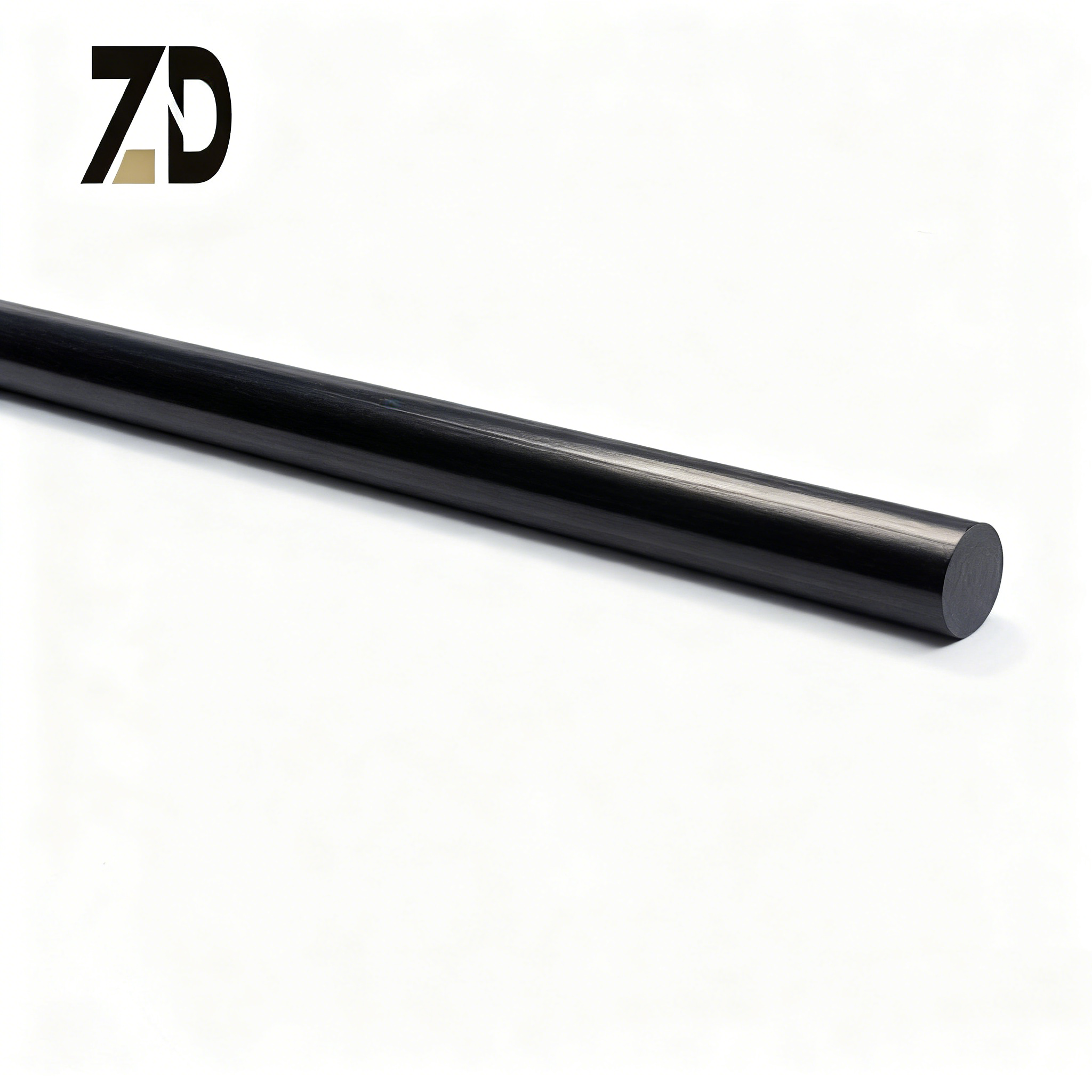
The distinction between standard industrial carbon fiber rods and aerospace-grade carbon fiber rods lies in fiber tow size, resin matrix composition, quality control protocols, and traceability documentation. Aerospace applications demand carbon fiber rods that comply with specifications such as AS9100 certification, AS4 material standards, or equivalent international requirements. Understanding which carbon fiber rods qualify for your specific satellite support or structural component application ensures compliance, performance reliability, and long-term operational safety.
Aerospace-Grade Material Specifications for Carbon Fiber Rods
Understanding Fiber Tow Size and Weave Architecture
Aerospace structural applications favor specific fiber tow sizes in carbon fiber rods because tow size directly affects surface finish, mechanical properties, and manufacturing consistency. High-modulus carbon fiber rods with 1K, 3K, or 6K tow configurations offer different balance points between stiffness and damage tolerance. For satellite supports requiring maximum stiffness with minimal weight, high-modulus carbon fiber rods deliver superior performance compared to intermediate-modulus or standard-modulus alternatives.
The weave architecture of carbon fiber rods determines how loads distribute across the composite matrix. Unidirectional carbon fiber rods excel in applications where loads occur primarily along the rod axis, while multi-directional layups in carbon fiber rods provide enhanced torsional and transverse strength. Aerospace engineers select carbon fiber rods weave patterns based on detailed finite-element analysis and worst-case loading scenarios specific to satellite structure requirements.
Resin Matrix Compatibility and Temperature Performance
The epoxy resin matrix used in aerospace-qualified carbon fiber rods must maintain structural integrity across extreme temperature ranges encountered in space environments. Typical aerospace-grade carbon fiber rods utilize cycloaliphatic or bisphenol-A epoxy resins formulated to withstand temperatures from minus 55 degrees Celsius to plus 120 degrees Celsius without significant property degradation. Specialized carbon fiber rods for high-temperature applications employ polyimide or bismaleimide matrices capable of sustained performance above 200 degrees Celsius.
Moisture absorption characteristics in carbon fiber rods resin systems directly affect dimensional stability and electrical properties critical for satellite applications. Aerospace-qualified carbon fiber rods typically demonstrate moisture absorption rates below 1.5 percent by weight to prevent swelling that could compromise fit and function in precision assemblies. The resin chemistry in aerospace carbon fiber rods also addresses electromagnetic compatibility and outgassing requirements mandated by space agencies.
Selection Criteria for Satellite Support Applications
Load-Bearing Requirements and Safety Factors
Satellite support structures depend on carbon fiber rods that demonstrate consistent mechanical properties verified through rigorous testing protocols. Tensile strength in aerospace-grade carbon fiber rods typically ranges from 3.5 to 7.0 gigapascals depending on fiber type and resin matrix selection. Flexural strength requirements for carbon fiber rods supporting antenna arrays or solar panel structures demand careful analysis of expected vibration frequencies and dynamic load scenarios.
Safety factors applied to carbon fiber rods structural calculations generally range from 1.5 to 4.0 depending on mission criticality and failure consequence severity. Satellite designers typically specify carbon fiber rods with documented ultimate tensile strength certification and statistical confidence intervals supporting reliability predictions. Impact resistance testing of carbon fiber rods becomes essential when micrometeorite or debris collision risks are present in the operational orbit.
Certification Standards and Traceability Documentation
Aerospace-certified carbon fiber rods must originate from suppliers maintaining AS9100 certification, demonstrating quality management systems specifically tailored to aerospace supply chain requirements. ISO 1268 and ASTM D3410 testing protocols validate mechanical properties of carbon fiber rods used in structural applications. Documentation accompanying aerospace-grade carbon fiber rods includes batch-specific test reports, fiber lot traceability, resin lot verification, and manufacturing process records.
Material certifications for carbon fiber rods specify allowed material substitutions, process change approvals, and deviation reporting requirements essential for configuration management. Procurement specifications often require suppliers to provide Chemical Analysis Test Reports and Physical Properties Test Reports for every shipment of carbon fiber rods. Dimensional tolerance documentation for carbon fiber rods typically specifies diameter uniformity within plus/minus 0.1 millimeters and runout specifications preventing imbalance during assembly.
Performance and Environmental Compatibility
Thermal and Mechanical Property Stability
Aerospace structural carbon fiber rods must maintain predictable properties across thermal cycles simulating launch acceleration, orbital temperature extremes, and re-entry environments. Glass transition temperature specifications for carbon fiber rods resin systems establish upper operational limits where matrix softening becomes problematic. Coefficient of thermal expansion in carbon fiber rods typically ranges from minus 1.0 to 0.5 parts per million per degree Celsius, providing dimensional stability superior to metallic alternatives.
Satellite support structures fabricated from carbon fiber rods demonstrate excellent fatigue resistance compared to aluminum or titanium alternatives, extending component service life significantly. Damping characteristics of carbon fiber rods assist in suppressing vibration transmission that might interfere with sensitive instruments or communication systems. Long-term creep behavior in properly designed carbon fiber rods structures remains negligible across decades-long mission durations typical for communication and Earth observation satellites.
Electrical and Thermal Conductivity Management
Carbon fiber naturally conducts electricity, making carbon fiber rods in satellite structures potential lightning strike paths if not properly integrated with grounding systems. Aerospace designers address electrical conductivity of carbon fiber rods through conductive pathways, bonding configurations, and shielding strategies preventing electromagnetic interference. Some specialized carbon fiber rods incorporate static-dissipative resin additives reducing surface electrical resistance while maintaining structural integrity.
Thermal conductivity in carbon fiber rods enables passive heat management in satellite structures, directing waste heat from electronics toward radiator surfaces. The anisotropic thermal properties of carbon fiber rods allow engineers to design heat flow pathways through oriented fiber architecture. Outgassing analysis of carbon fiber rods materials identifies volatile organic compounds released in vacuum environments ensuring compatibility with optical systems and sensitive electronics aboard satellites.
FAQ
What specific fiber grade should be selected for critical satellite support components?
High-modulus intermediate-strength carbon fiber rods combining IM6 or IM7 fiber with aerospace-grade epoxy matrices provide optimal balance for most satellite support applications. The selection depends on detailed structural analysis, load paths, temperature exposure, and mission duration. Consulting material property databases and engaging qualified aerospace composites engineers ensures carbon fiber rods selection aligns with performance requirements and certification standards.
How do I verify that carbon fiber rods meet aerospace certification requirements?
Request Material Certifications Test Reports (MCTR) documenting tensile strength, flexural strength, and interlaminar shear strength for specific carbon fiber rods batches. Verify supplier AS9100 certification status through official aerospace registries and confirm traceability documentation includes fiber manufacturer, resin lot, cure parameters, and quality inspection records. Third-party inspection certificates validating dimensional tolerances and surface quality of carbon fiber rods provide additional assurance for critical applications.
Can standard industrial carbon fiber rods be used for aerospace satellite structures?
Standard industrial carbon fiber rods typically lack the documentation, traceability, and certified mechanical properties required by aerospace specifications. Industrial-grade carbon fiber rods may originate from undocumented sources, employ non-qualified resin systems, and lack environmental qualification testing necessary for space applications. Aerospace satellite structures demand purpose-engineered carbon fiber rods from qualified suppliers ensuring reliability and regulatory compliance throughout mission lifecycles.