
 EN
EN


The modern engineering landscape demands materials that deliver exceptional strength while maintaining minimal weight, and carbon fiber square tube solutions have emerged as the gold standard for structural applications across multiple industries. These advanced composite components offer unparalleled performance characteristics that make them indispensable in aerospace, automotive, construction, and marine engineering projects. Understanding the unique properties and applications of carbon fiber square tube technology reveals why these materials have become essential for contemporary structural design challenges.
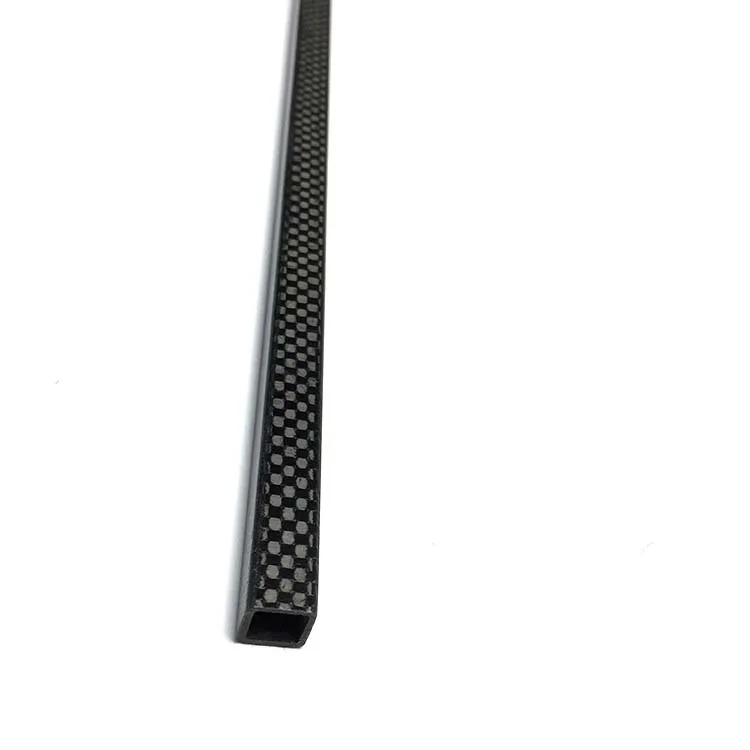
The square tube configuration provides optimal structural efficiency by distributing loads evenly across four walls, creating superior resistance to both compression and torsional forces. This geometric advantage, combined with carbon fiber's inherent material properties, results in components that outperform traditional materials in critical applications where weight reduction and strength maximization are paramount.
Material Properties and Engineering Advantages
Strength-to-Weight Ratio Excellence
Carbon fiber square tube designs achieve remarkable strength-to-weight ratios that surpass conventional materials by significant margins. The carbon fiber matrix provides tensile strength values exceeding 500,000 psi while maintaining density levels approximately 75% lower than steel equivalents. This combination enables engineers to create structural frameworks that support substantial loads without compromising mobility or efficiency requirements.
The oriented carbon fiber strands within each carbon fiber square tube wall contribute directional strength characteristics that can be tailored to specific loading conditions. Manufacturing processes allow for strategic fiber placement that optimizes performance for particular stress patterns, ensuring maximum structural integrity where it matters most. These customizable properties make carbon fiber square tube components ideal for applications requiring precise engineering specifications.
Corrosion Resistance and Longevity
Unlike metallic alternatives, carbon fiber square tube products demonstrate exceptional resistance to environmental degradation, chemical exposure, and electrochemical corrosion. This inherent stability ensures consistent performance throughout extended service periods, reducing maintenance requirements and replacement costs significantly. The non-reactive nature of carbon fiber matrices prevents galvanic corrosion issues common in mixed-material assemblies.
Environmental factors such as humidity, temperature fluctuations, and chemical exposure have minimal impact on carbon fiber square tube structural integrity. This durability translates to reliable long-term performance in harsh operating conditions where traditional materials would deteriorate rapidly, making these components particularly valuable for offshore, underground, and extreme climate applications.
Structural Engineering Applications
Aerospace and Aviation Frameworks
The aerospace industry relies heavily on carbon fiber square tube components for aircraft fuselage frames, wing spars, and landing gear assemblies. These applications demand materials that maintain structural integrity under extreme stress cycles while contributing minimal weight to overall aircraft mass. The predictable failure characteristics of carbon fiber square tube designs enable engineers to calculate precise safety margins and optimize structural configurations for maximum efficiency.
Modern aircraft manufacturing incorporates carbon fiber square tube elements in critical load-bearing structures where traditional materials would add unacceptable weight penalties. The ability to create complex geometries while maintaining consistent wall thickness makes these components ideal for aerospace applications requiring intricate internal frameworks and support systems.
Automotive Performance Structures
High-performance automotive applications utilize carbon fiber square tube technology for roll cages, chassis reinforcement, and suspension components. Racing vehicles benefit from the superior crash protection characteristics provided by carbon fiber's controlled failure modes, which absorb impact energy through progressive delamination rather than catastrophic collapse. This safety advantage makes carbon fiber square tube designs essential for professional motorsports applications.
The automotive industry increasingly adopts carbon fiber square tube solutions for electric vehicle battery enclosures and structural battery integration systems. These applications require materials that provide electromagnetic shielding while maintaining structural integrity throughout vehicle operation cycles. The design flexibility of carbon fiber square tube manufacturing enables custom geometries that accommodate complex battery layouts and cooling systems.
Manufacturing and Design Considerations
Production Methods and Quality Control
Pultrusion manufacturing techniques produce carbon fiber square tube components with consistent wall thickness and fiber orientation throughout the entire length. This process ensures uniform mechanical properties and eliminates weak points that could compromise structural performance. Quality control measures monitor fiber volume ratios, void content, and dimensional accuracy to maintain exacting standards for critical applications.
Advanced manufacturing capabilities enable the production of carbon fiber square tube components with integrated features such as mounting brackets, connection points, and reinforced sections. These integrated designs eliminate the need for secondary machining operations and reduce assembly complexity while maintaining optimal structural characteristics throughout the component.
Customization and Engineering Support
Engineers can specify carbon fiber square tube dimensions, wall thickness, and fiber orientations to match specific application requirements. This customization capability allows for optimal material utilization and performance characteristics tailored to individual project needs. Finite element analysis and structural modeling support the design process by validating carbon fiber square tube performance under anticipated loading conditions.
The availability of various carbon fiber grades and resin systems enables further optimization of carbon fiber square tube properties for specialized applications. High-modulus fibers provide maximum stiffness for applications requiring minimal deflection, while intermediate modulus options offer balanced performance characteristics suitable for general structural use.
Performance Advantages in Support Systems
Load Distribution and Structural Efficiency
The square cross-sectional geometry of carbon fiber square tube designs provides superior moment of inertia values compared to round tubes of equivalent weight. This geometric advantage results in increased resistance to bending and torsional loads, making these components ideal for applications requiring maximum structural efficiency. The four-wall configuration distributes loads uniformly, preventing stress concentration points that could lead to premature failure.
Structural analysis demonstrates that carbon fiber square tube assemblies can support loads up to three times greater than equivalent weight aluminum structures. This performance advantage enables engineers to reduce material usage while maintaining or improving structural capabilities, resulting in more efficient and cost-effective designs for critical applications.
Vibration Damping and Dynamic Response
Carbon fiber square tube components exhibit excellent vibration damping characteristics due to the viscoelastic properties of the resin matrix. This damping capability reduces structural resonance issues and improves dynamic response characteristics in applications subject to cyclic loading or environmental vibrations. The ability to tune damping properties through resin selection makes carbon fiber square tube designs particularly valuable for precision equipment mounting systems.
Dynamic loading applications benefit from the fatigue resistance properties inherent in carbon fiber square tube construction. Unlike metallic materials that experience gradual degradation under cyclic loading, properly designed carbon fiber structures maintain consistent performance characteristics throughout their service life, providing reliable support for rotating machinery and dynamic systems.
Economic and Environmental Benefits
Lifecycle Cost Analysis
While initial material costs for carbon fiber square tube components may exceed traditional alternatives, comprehensive lifecycle analysis reveals significant economic advantages through reduced maintenance requirements, extended service life, and improved operational efficiency. The durability and corrosion resistance of carbon fiber materials eliminate periodic replacement cycles common with metallic structures, resulting in lower total ownership costs.
Energy efficiency improvements achieved through weight reduction translate to operational cost savings in transportation and mobile applications. Carbon fiber square tube structures enable fuel economy improvements and reduced operating costs that offset initial material investment over the component lifecycle, making these materials increasingly attractive for cost-conscious applications.
Sustainability and Environmental Impact
The extended service life of carbon fiber square tube components reduces material consumption and waste generation compared to traditional materials requiring frequent replacement. Advanced recycling technologies enable end-of-life carbon fiber recovery and reuse, supporting circular economy principles and reducing environmental impact. Manufacturing processes continue to evolve toward more sustainable production methods and renewable energy utilization.
Carbon footprint analysis shows that despite energy-intensive production processes, the operational benefits and longevity of carbon fiber square tube structures result in net environmental advantages over their service life. Weight reduction benefits in transportation applications contribute to reduced fuel consumption and emissions, supporting environmental sustainability goals.
FAQ
What are the primary advantages of carbon fiber square tube over round carbon fiber tubes?
Carbon fiber square tube designs provide superior structural efficiency compared to round tubes due to increased moment of inertia and better load distribution characteristics. The square geometry offers approximately 25-30% higher bending resistance for equivalent weight, making these components ideal for applications requiring maximum structural performance. Additionally, square tubes provide flat mounting surfaces that simplify connection and assembly processes in structural frameworks.
How do manufacturing tolerances affect carbon fiber square tube performance?
Manufacturing tolerances directly impact the structural performance and assembly compatibility of carbon fiber square tube components. Tight dimensional control ensures consistent wall thickness distribution and maintains designed moment of inertia values throughout the tube length. Quality pultrusion processes achieve tolerances within ±0.003 inches for critical dimensions, ensuring reliable performance and proper fit in precision assemblies where structural integrity depends on accurate geometry.
What factors determine the optimal wall thickness for carbon fiber square tube applications?
Wall thickness selection depends on loading requirements, buckling resistance needs, and weight constraints specific to each application. Structural analysis considers factors such as expected loads, safety margins, and failure modes to determine optimal thickness values. Generally, thicker walls provide increased load capacity and buckling resistance but add weight, requiring careful balance between performance requirements and efficiency goals in carbon fiber square tube design optimization.
Can carbon fiber square tube components be repaired if damaged during service?
Carbon fiber square tube components can often be repaired using appropriate composite repair techniques, depending on the extent and type of damage. Minor surface damage and small cracks can typically be addressed through patch repairs using compatible carbon fiber materials and structural adhesives. However, significant structural damage may require component replacement to ensure continued safety and performance, making damage assessment by qualified composite repair specialists essential for determining appropriate repair strategies.
Table of Contents
- Material Properties and Engineering Advantages
- Structural Engineering Applications
- Manufacturing and Design Considerations
- Performance Advantages in Support Systems
- Economic and Environmental Benefits
-
FAQ
- What are the primary advantages of carbon fiber square tube over round carbon fiber tubes?
- How do manufacturing tolerances affect carbon fiber square tube performance?
- What factors determine the optimal wall thickness for carbon fiber square tube applications?
- Can carbon fiber square tube components be repaired if damaged during service?