
 EN
EN


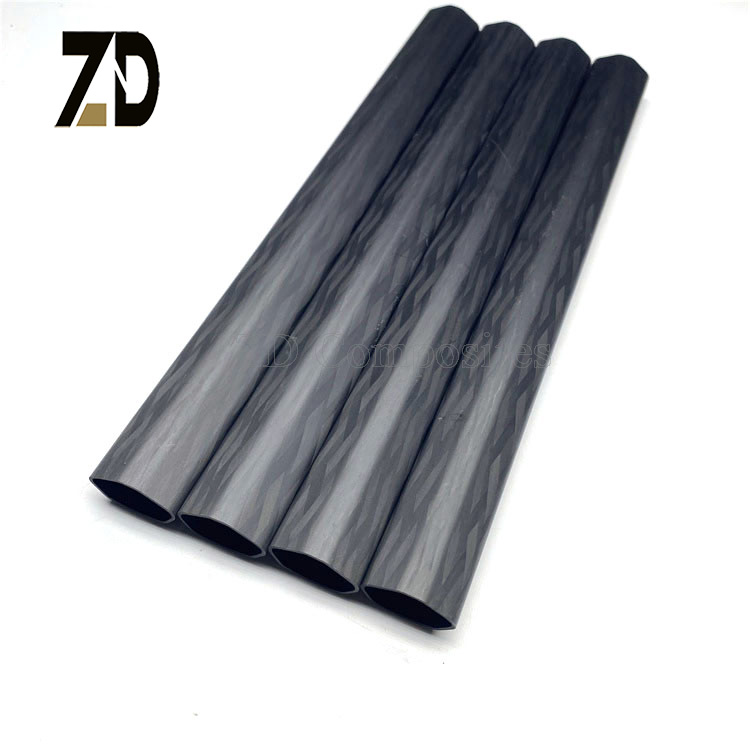
Modern engineering demands materials that deliver exceptional strength while minimizing weight, making carbon fiber tubing an increasingly popular choice across diverse industries. This advanced composite material combines carbon fibers with polymer resin to create structures that outperform traditional materials like steel and aluminum in specific applications. The unique properties of carbon fiber tubing have revolutionized how engineers approach structural design, enabling innovations in aerospace, automotive, sporting goods, and industrial applications where weight reduction without compromising strength remains paramount.
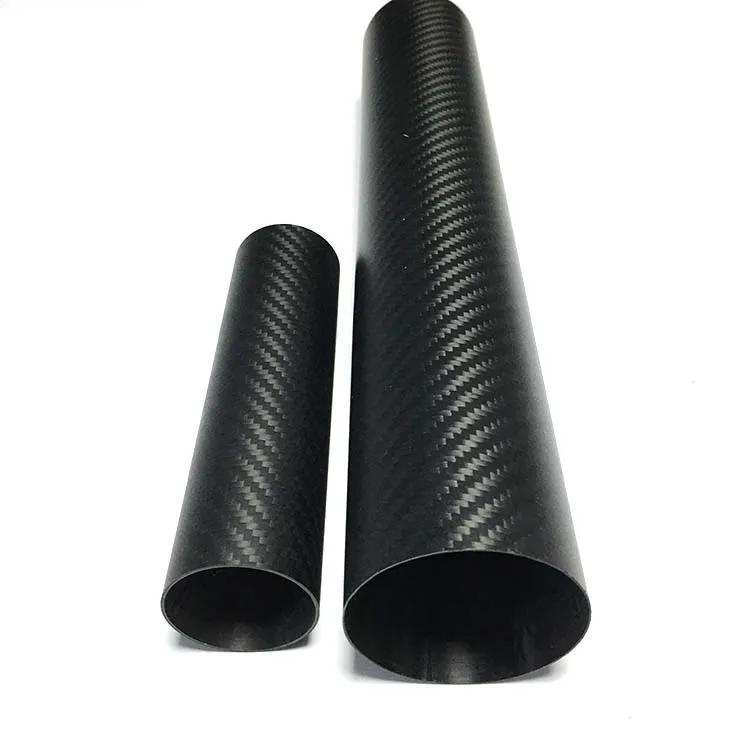
The manufacturing process of carbon fiber tubing involves sophisticated techniques that ensure consistent quality and performance characteristics. Engineers and designers increasingly specify carbon fiber tubing for applications requiring optimal strength-to-weight ratios, making it essential to understand its fundamental properties and advantages. The material's exceptional performance stems from the alignment of carbon fibers within a matrix, creating directional strength that can be tailored to specific load requirements.
Material Properties and Composition
Carbon Fiber Structure and Manufacturing Process
Carbon fiber tubing begins with precursor materials, typically polyacrylonitrile (PAN) fibers, which undergo carbonization at temperatures exceeding 1000°C. This process removes non-carbon elements, leaving behind pure carbon atoms arranged in crystalline structures. The resulting carbon fibers exhibit remarkable tensile strength, often exceeding 3500 MPa, while maintaining extremely low density. During carbon fiber tubing production, these fibers are carefully oriented and combined with epoxy or other polymer resins through processes like pultrusion, filament winding, or compression molding.
The resin matrix in carbon fiber tubing serves multiple critical functions beyond simply binding the fibers together. It transfers loads between individual fibers, protects them from environmental damage, and provides the structure with compressive strength. Advanced resin systems used in high-performance carbon fiber tubing applications often incorporate additives to enhance specific properties like thermal resistance, electrical conductivity, or chemical resistance. The curing process involves precise temperature and pressure control to ensure optimal fiber-to-resin bonding and minimal void content.
Fiber Orientation and Structural Design
The arrangement of carbon fibers within carbon fiber tubing significantly influences its mechanical properties and performance characteristics. Unidirectional fiber layouts provide maximum strength in the fiber direction but limited transverse strength, while multi-directional configurations offer more balanced properties. Engineers can customize carbon fiber tubing by selecting specific fiber orientations, such as 0°, ±45°, and 90° plies, to optimize performance for particular loading conditions. This design flexibility allows carbon fiber tubing to be tailored for applications ranging from pure tension members to complex combined loading scenarios.
Advanced carbon fiber tubing designs often incorporate multiple fiber types and orientations within a single structure. High-modulus carbon fibers provide exceptional stiffness, while standard-modulus fibers offer better impact resistance and elongation capabilities. By strategically combining different fiber types, manufacturers can create carbon fiber tubing with optimized properties for specific applications. The wall thickness and diameter of carbon fiber tubing can also be varied along its length to provide reinforcement in high-stress areas while maintaining weight efficiency in less critical sections.
Strength and Weight Advantages
Superior Strength-to-Weight Ratio
Carbon fiber tubing demonstrates exceptional strength-to-weight ratios that often exceed those of steel by factors of five or more. This advantage becomes particularly pronounced in applications where weight reduction directly impacts performance, such as aerospace structures, racing vehicles, and portable equipment. The low density of carbon fiber tubing, typically around 1.6 g/cm³ compared to steel's 7.8 g/cm³, enables significant weight savings without sacrificing structural integrity. This weight reduction translates into improved fuel efficiency, enhanced performance, and reduced operational costs across numerous applications.
The tensile strength of high-quality carbon fiber tubing can exceed 1000 MPa in optimized fiber directions, while maintaining weights comparable to plastic materials. This strength advantage allows engineers to use smaller cross-sections and thinner walls in carbon fiber tubing designs, further reducing weight while meeting or exceeding strength requirements. The material's excellent fatigue resistance ensures that carbon fiber tubing maintains its strength properties over extended service lives, even under cyclic loading conditions that might cause failure in traditional materials.
Stiffness and Dimensional Stability
The high modulus of elasticity inherent in carbon fiber tubing provides exceptional stiffness characteristics that resist deformation under load. This property proves crucial in precision applications where dimensional stability directly affects performance, such as optical equipment supports, measurement instruments, and high-precision machinery components. Carbon fiber tubing maintains its shape and dimensions across wide temperature ranges, exhibiting minimal thermal expansion compared to metals. This thermal stability makes carbon fiber tubing ideal for applications exposed to temperature variations where dimensional changes could compromise functionality.
The stiffness properties of carbon fiber tubing can be customized through fiber selection and orientation to match specific application requirements. High-modulus carbon fibers can provide elastic moduli exceeding 600 GPa, creating carbon fiber tubing with exceptional rigidity for weight-critical applications. The anisotropic nature of carbon fiber tubing allows engineers to design structures with high stiffness in primary load directions while maintaining flexibility in secondary directions. This design capability enables the creation of carbon fiber tubing structures that perform multiple functions simultaneously, such as providing structural support while allowing controlled deflection for damping or energy absorption.
Applications Across Industries
Aerospace and Aviation Applications
The aerospace industry represents one of the largest consumers of carbon fiber tubing, utilizing its exceptional properties in both commercial and military aircraft applications. Carbon fiber tubing forms critical components in aircraft structures, including fuselage frames, wing supports, and landing gear components where weight reduction directly impacts fuel efficiency and payload capacity. The material's resistance to fatigue and corrosion makes carbon fiber tubing particularly suitable for aviation environments where reliability and longevity are paramount concerns. Advanced aircraft designs increasingly incorporate carbon fiber tubing in primary structures, replacing traditional aluminum components to achieve significant weight savings.
Satellite and spacecraft applications demand the ultimate performance from carbon fiber tubing, where every gram of weight savings translates to substantial cost reductions in launch expenses. The material's dimensional stability in the extreme temperature variations of space makes carbon fiber tubing ideal for antenna supports, solar panel frameworks, and structural members that must maintain precise positioning over mission lifetimes. Space-grade carbon fiber tubing often incorporates specialized resin systems designed to withstand radiation exposure and outgassing requirements specific to vacuum environments.
Automotive and Transportation
Automotive applications of carbon fiber tubing continue expanding as manufacturers seek to improve fuel efficiency and performance while meeting increasingly stringent emissions regulations. High-performance vehicles utilize carbon fiber tubing in roll cages, suspension components, and chassis elements where weight reduction improves acceleration, handling, and fuel economy. The material's excellent vibration damping properties make carbon fiber tubing valuable for applications requiring noise and vibration reduction, such as driveshaft components and structural members in luxury vehicles.
Electric vehicle manufacturers particularly benefit from carbon fiber tubing applications, as weight reduction directly extends battery range and improves efficiency. Carbon fiber tubing enables the creation of lightweight structural frameworks that maintain safety standards while maximizing interior space and minimizing energy consumption. The material's electrical properties can be tailored through resin selection and fiber treatment to provide either electrical conductivity or insulation as required by specific automotive applications. Racing applications push carbon fiber tubing to its performance limits, where minimal weight and maximum strength often determine competitive success.
Manufacturing Processes and Quality Control
Advanced Production Techniques
Modern carbon fiber tubing production employs sophisticated manufacturing processes designed to ensure consistent quality and optimal fiber placement. Pultrusion represents one of the most common methods for producing carbon fiber tubing, involving the continuous pulling of fiber reinforcements through a resin bath and heated die system. This process enables the production of carbon fiber tubing with consistent cross-sections and excellent surface finishes while maintaining precise dimensional tolerances. Automated pultrusion systems can produce carbon fiber tubing at high production rates while maintaining quality standards essential for structural applications.
Filament winding techniques offer advantages for producing carbon fiber tubing with complex geometries or varying wall thicknesses along their length. This process involves winding continuous carbon fibers around a mandrel while simultaneously applying resin, allowing precise control of fiber orientation and placement. Advanced filament winding equipment can produce carbon fiber tubing with multiple fiber angles within a single layer, creating structures optimized for specific loading conditions. The process enables the production of carbon fiber tubing with integrated features such as mounting brackets, end fittings, or reinforced sections without secondary operations.
Quality Assurance and Testing Protocols
Quality control in carbon fiber tubing production involves comprehensive testing protocols that verify material properties, dimensional accuracy, and structural integrity. Non-destructive testing methods, including ultrasonic inspection and computed tomography, detect internal defects such as voids, delaminations, or fiber misalignment that could compromise performance. These inspection techniques ensure that carbon fiber tubing meets specified quality standards before reaching end-users, particularly critical for applications where failure could have serious consequences.
Mechanical testing of carbon fiber tubing samples validates design properties and confirms material consistency across production runs. Tensile, compression, and flexural tests verify strength characteristics, while fatigue testing ensures long-term durability under cyclic loading conditions. Environmental testing exposes carbon fiber tubing to temperature extremes, humidity, and chemical exposure to validate performance in service conditions. Statistical process control methods track production parameters to identify trends that might affect carbon fiber tubing quality, enabling proactive adjustments to maintain consistent output.
Design Considerations and Engineering Factors
Structural Analysis and Load Distribution
Designing with carbon fiber tubing requires specialized knowledge of composite material behavior and failure modes that differ significantly from traditional materials. Engineers must consider the anisotropic properties of carbon fiber tubing when analyzing stress distributions and predicting failure mechanisms. Finite element analysis software with composite-specific capabilities helps optimize carbon fiber tubing designs by predicting stress concentrations, buckling behavior, and progressive failure modes. The design process must account for the fact that carbon fiber tubing exhibits different properties in various directions, requiring careful consideration of load paths and support conditions.
Connection design presents unique challenges when incorporating carbon fiber tubing into larger structures, as traditional welding and mechanical fastening methods may not be suitable. Bonded joints using structural adhesives often provide the best load transfer while maintaining the weight advantages of carbon fiber tubing. Mechanical connections must be designed to avoid stress concentrations that could initiate failure in the composite material. The coefficient of thermal expansion differences between carbon fiber tubing and other materials requires careful consideration in applications experiencing temperature variations to prevent thermally induced stresses.
Environmental Factors and Durability
Environmental considerations play a crucial role in carbon fiber tubing application success, as the material's long-term performance depends on proper resin selection and surface protection. Ultraviolet radiation can degrade the polymer matrix in carbon fiber tubing exposed to outdoor environments, requiring UV-resistant resin systems or protective coatings. Moisture absorption can affect the mechanical properties of carbon fiber tubing, particularly in high-humidity environments or applications involving water exposure. Proper design and material selection ensure that carbon fiber tubing maintains its performance characteristics throughout its intended service life.
Chemical resistance varies depending on the resin system used in carbon fiber tubing production, with some formulations offering excellent resistance to specific chemicals while being vulnerable to others. Elevated temperatures can affect both the resin matrix and the fiber-resin interface in carbon fiber tubing, requiring careful consideration of service temperatures during design. Fire resistance may be enhanced through the use of flame-retardant resin systems or surface treatments, particularly important in applications where carbon fiber tubing might be exposed to ignition sources. Long-term creep behavior under sustained loads requires consideration in applications where carbon fiber tubing experiences constant stress over extended periods.
Cost Considerations and Economic Benefits
Initial Investment and Lifecycle Costs
While carbon fiber tubing typically commands higher initial costs than traditional materials, the total cost of ownership often favors composite solutions when considering performance benefits and lifecycle factors. The exceptional durability of carbon fiber tubing reduces maintenance requirements and extends service life, providing economic advantages over time. Weight savings achieved through carbon fiber tubing implementation can result in operational cost reductions, particularly in transportation applications where fuel efficiency directly impacts operating expenses. The corrosion resistance of carbon fiber tubing eliminates the need for protective coatings and regular maintenance associated with metal alternatives.
Manufacturing economics continue to improve for carbon fiber tubing as production volumes increase and manufacturing processes become more efficient. Economies of scale in carbon fiber production and advances in automated manufacturing techniques contribute to cost reductions that make carbon fiber tubing more accessible for a broader range of applications. The ability to consolidate multiple components into single carbon fiber tubing structures can reduce assembly costs and improve reliability while maintaining or improving performance characteristics.
Performance-Based Value Proposition
The value proposition of carbon fiber tubing extends beyond simple material cost comparisons to encompass performance improvements that enable new capabilities or enhanced functionality. In applications where weight reduction improves performance, the economic benefits of carbon fiber tubing may far exceed its additional material costs. The design flexibility offered by carbon fiber tubing allows engineers to create optimized structures that would be impossible or impractical with traditional materials, potentially enabling new product capabilities or market opportunities.
Energy savings achieved through weight reduction in carbon fiber tubing applications can provide substantial economic returns over product lifetimes. The material's excellent fatigue resistance reduces the risk of unexpected failures and associated downtime costs, particularly valuable in critical applications where reliability directly impacts profitability. Carbon fiber tubing's dimensional stability can improve precision and reduce adjustment requirements in applications where accuracy affects productivity or quality outcomes.
FAQ
What are the main advantages of carbon fiber tubing over aluminum tubing
Carbon fiber tubing offers significantly superior strength-to-weight ratios compared to aluminum, often providing 40-60% weight savings while maintaining equivalent or superior strength. The material exhibits excellent fatigue resistance and does not suffer from stress corrosion cracking like aluminum can in certain environments. Carbon fiber tubing also provides superior vibration damping characteristics and maintains dimensional stability across wider temperature ranges than aluminum alternatives.
How does the cost of carbon fiber tubing compare to traditional materials
Initial costs for carbon fiber tubing are typically 3-5 times higher than steel or aluminum alternatives, but lifecycle cost analysis often favors carbon fiber due to reduced maintenance requirements, longer service life, and operational savings from weight reduction. In applications where performance improvements justify the investment, carbon fiber tubing can provide excellent return on investment through improved efficiency, reduced operational costs, and enhanced capabilities that enable new market opportunities.
What manufacturing tolerances can be achieved with carbon fiber tubing
Modern carbon fiber tubing production techniques can achieve dimensional tolerances of ±0.1mm for diameter and wall thickness in most applications, with even tighter tolerances possible for specialized requirements. Surface finish quality depends on the manufacturing process, with pultruded carbon fiber tubing typically achieving smooth, consistent finishes suitable for most applications. Length tolerances are generally excellent, with variations typically less than ±1mm for standard production runs.
Is carbon fiber tubing suitable for high-temperature applications
The temperature capability of carbon fiber tubing depends primarily on the resin system used, with standard epoxy resins suitable for continuous use up to approximately 120°C. High-temperature resin systems enable carbon fiber tubing applications at temperatures exceeding 200°C, while specialized polyimide or ceramic matrix systems can handle even higher temperatures. The carbon fibers themselves maintain their strength properties at elevated temperatures, making carbon fiber tubing suitable for demanding thermal environments when properly designed with appropriate resin systems.