
 EN


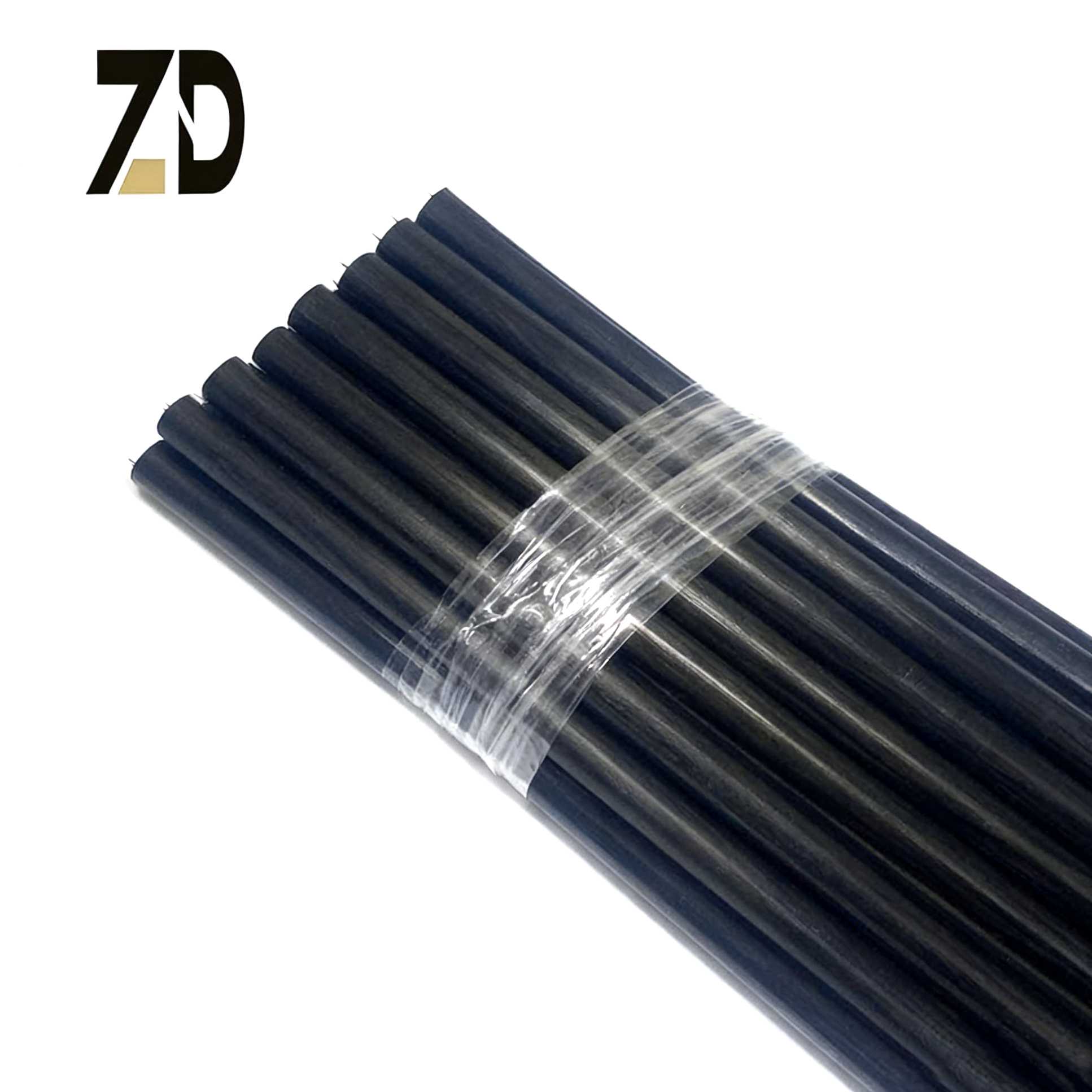
Aerospace engineers face a critical material selection decision when designing high-performance structural components: should they specify carbon fiber rods or titanium rods for their applications? Both materials have earned their place in aerospace design, yet each excels under different operational, cost, and performance conditions. Understanding when to choose carbon fiber rods over titanium rods requires a clear grasp of material properties, application demands, weight constraints, thermal environments, and lifecycle economics. This decision directly impacts aircraft performance, fuel efficiency, manufacturing timelines, and overall project cost.
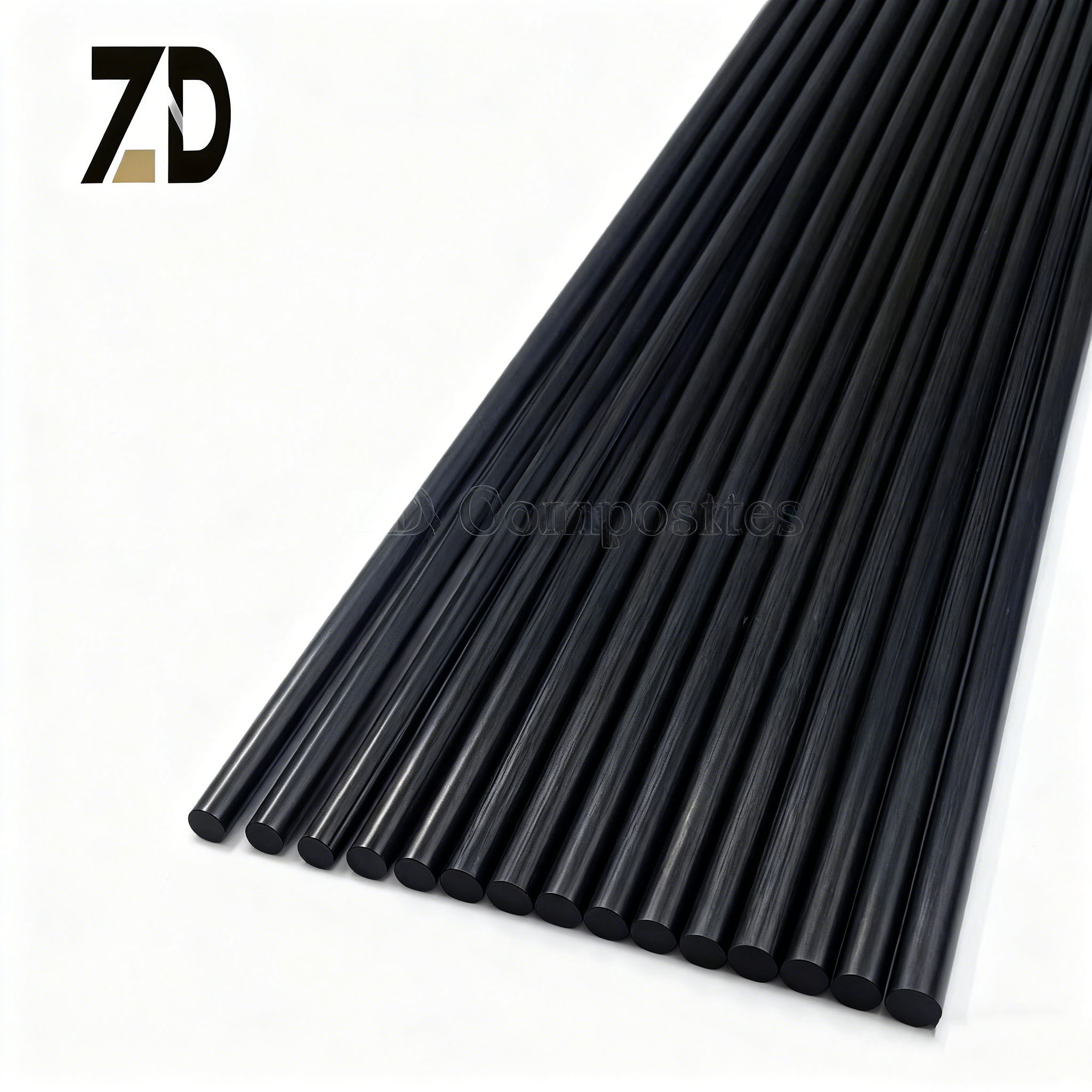
The evolution of advanced composite materials has shifted the competitive landscape dramatically. Carbon fiber rods now deliver performance characteristics that rival or exceed titanium in many aerospace scenarios, particularly where weight reduction, fatigue resistance, and rapid production cycles are priorities. However, titanium remains superior for extreme temperature exposure, certain loading profiles, and applications requiring superior impact resistance at cryogenic conditions. The choice between carbon fiber rods and titanium rods is not about which material is universally better, but rather which material aligns with your specific mission requirements, environmental constraints, and business objectives.
Weight Reduction and Structural Efficiency Benefits
Mass Advantage of Carbon Fiber Rods
Carbon fiber rods offer a significant weight advantage that directly translates to improved fuel efficiency and extended range in commercial and military aircraft. Carbon fiber rods deliver a specific strength (strength-to-weight ratio) that typically exceeds titanium by fifteen to twenty percent depending on the particular carbon fiber composite formulation and titanium alloy compared. For long-range commercial aircraft, reducing structural weight by even small percentages generates substantial fuel savings over the aircraft's operational lifetime. A regional jet or large widebody aircraft might save hundreds of kilograms of structural mass by substituting carbon fiber rods in primary load paths, secondary structures, and control surfaces.
Structural Optimization Through Anisotropy
Carbon fiber rods can be engineered with directional fiber orientation to optimize strength precisely where stress loads occur, whereas isotropic titanium distributes material properties uniformly in all directions. This directional capability allows engineers to orient carbon fiber rods for maximum efficiency in tension, compression, or combined loading. Designers can tailor carbon fiber rods to respond to specific stress distributions within a component, effectively removing unnecessary material and reducing overall weight without sacrificing safety margins. Titanium, being isotropic, cannot match this level of structural optimization for weight-critical aerospace applications.
Cost and Manufacturing Timeline Considerations
Production Economics and Lead Time
Carbon fiber rods typically offer faster manufacturing timelines and lower per-unit production costs when volume requirements are moderate to high. The fabrication process for carbon fiber rods—involving layup, curing, and automated fiber placement—can achieve consistent quality at production rates that exceed traditional titanium machining operations. Titanium rod manufacturing requires extensive machining, heat treatment, and quality verification steps that inherently demand longer lead times and higher labor costs. For programs requiring dozens or hundreds of component units annually, carbon fiber rods deliver superior cost performance and schedule certainty. This advantage becomes particularly pronounced when comparing carbon fiber rods to custom-machined titanium solutions requiring specialized tooling.
Total Cost of Ownership Analysis
While raw material costs for carbon fiber rods may exceed titanium per unit mass, the total cost of ownership often favors carbon fiber rods when accounting for manufacturing labor, tooling amortization, quality assurance, and assembly complexity. Carbon fiber rods integrate seamlessly with composite structures through adhesive bonding or mechanical fastening, reducing assembly complexity compared to titanium-to-composite interface challenges. Repair costs for carbon fiber rods are typically lower than titanium repairs requiring post-weld heat treatment and certification testing. Over an aircraft's twenty to thirty-year service life, carbon fiber rods frequently demonstrate lower lifecycle costs despite higher initial purchase prices.
Performance Characteristics and Environmental Suitability
Fatigue Resistance and Cyclic Loading
Carbon fiber rods demonstrate superior fatigue performance under high-cycle loading conditions typical of pressurized fuselage structures and wing attachments. The fatigue strength of carbon fiber rods typically remains at seventy to eighty percent of static strength even after millions of load cycles, whereas titanium strength degradation follows a different curve. For aircraft components experiencing twenty thousand to fifty thousand flight cycles annually, carbon fiber rods provide extended service life and reduced inspection intervals. Titanium excels in ultra-high-cycle fatigue regimes involving ten million plus cycles, but commercial aviation rarely encounters such extreme cycle counts in individual structural components.
Thermal and Environmental Boundaries
Carbon fiber rods maintain structural integrity in the minus forty to one hundred twenty-five degree Celsius range typical of pressurized cabin structures and wing environments. However, titanium withstands continuous exposure to temperatures exceeding three hundred degrees Celsius, making titanium essential for engine compartment components, hypersonic vehicle leading edges, and high-speed friction zones. When aerospace components operate within standard atmospheric flight envelopes without extreme heat exposure, carbon fiber rods provide optimal performance. Engineers should specify titanium for afterburner housings, exhaust nozzles, and high-temperature engine structures where carbon fiber rods would experience matrix degradation.
Design Integration and Manufacturing Maturity
Integration With Composite Structures
Modern aerospace platforms increasingly feature advanced composite primary structures in wings, fuselages, and control surfaces. Carbon fiber rods integrate naturally with these composite structures through bonded connections, eliminating stress concentrations associated with mechanical fasteners. When both structural elements and reinforcement rods consist of carbon fiber composites, designers achieve superior load transfer efficiency and simplified manufacturing workflows. Titanium rods introduced into predominantly composite structures create dissimilar material challenges requiring galvanic isolation, complex fastening schemes, and increased assembly labor. This integration advantage makes carbon fiber rods the logical choice for new-generation composite-intensive aircraft platforms.
Certification and Regulatory Acceptance
Carbon fiber rods have achieved extensive regulatory acceptance across civil aviation authorities, military platforms, and commercial spacecraft programs over the past two decades. Established design allowables, testing protocols, and inspection procedures now provide comparable certification confidence to traditional metallic materials. Design engineers reference established composite certification specifications, material specifications, and design guidance documented in aerospace standards. This maturity eliminates the historical perception that carbon fiber rods represent experimental or unproven materials. Regulatory bodies actively approve composite-intensive designs using carbon fiber rods at structural limits previously reserved for titanium and aluminum.
FAQ
At what temperature threshold does carbon fiber rods performance degrade below acceptable aerospace standards?
Carbon fiber rods begin experiencing matrix resin degradation and strength reduction above one hundred fifty degrees Celsius under continuous exposure, with accelerated degradation occurring above one hundred seventy-five degrees Celsius. Most epoxy-matrix carbon fiber rods are rated for continuous service to one hundred thirty degrees Celsius, with short-term exposure limits extending to one hundred sixty degrees Celsius depending on the specific resin system. Applications requiring sustained temperatures above one hundred fifty degrees Celsius should specify titanium or other metallic alternatives where carbon fiber rods cannot maintain design margins throughout the service life.
Can carbon fiber rods safely replace titanium rods in existing aerospace structures without redesign?
Direct substitution of carbon fiber rods for titanium rods typically requires detailed engineering analysis rather than simple material swapping due to differences in strength properties, stiffness, thermal expansion, and failure modes. While carbon fiber rods may deliver superior strength-to-weight ratios, component redesign might optimize the cross-section and configuration to capture full weight-reduction benefits. Existing airframe interfaces, fastening requirements, and load-path assumptions may require modification when transitioning to carbon fiber rods. Engineers should perform stress analysis, vibration assessment, thermal cycling evaluation, and damage tolerance studies before certifying any titanium-to-carbon fiber substitution.
What inspection and maintenance procedures are required for carbon fiber rods during aircraft service?
Carbon fiber rods require visual inspections for external matrix cracking, delamination, impact damage, and moisture ingress at intervals established in the aircraft maintenance manual, typically ranging from one thousand to five thousand flight hours depending on component criticality. Ultrasonic inspection can detect subsurface delamination and void content within carbon fiber rods that visual methods might miss, providing confidence in structural integrity during heavy maintenance checks. Unlike titanium rods requiring eddy-current inspection for fatigue crack detection, carbon fiber rods focus on composite-specific failure modes including matrix microcracking and fiber-matrix bond degradation. Preventive maintenance includes environmental protection coatings and moisture-control measures to ensure carbon fiber rods maintain long-term durability in service.
Table of Contents
- Weight Reduction and Structural Efficiency Benefits
- Cost and Manufacturing Timeline Considerations
- Performance Characteristics and Environmental Suitability
- Design Integration and Manufacturing Maturity
-
FAQ
- At what temperature threshold does carbon fiber rods performance degrade below acceptable aerospace standards?
- Can carbon fiber rods safely replace titanium rods in existing aerospace structures without redesign?
- What inspection and maintenance procedures are required for carbon fiber rods during aircraft service?