
 EN
EN


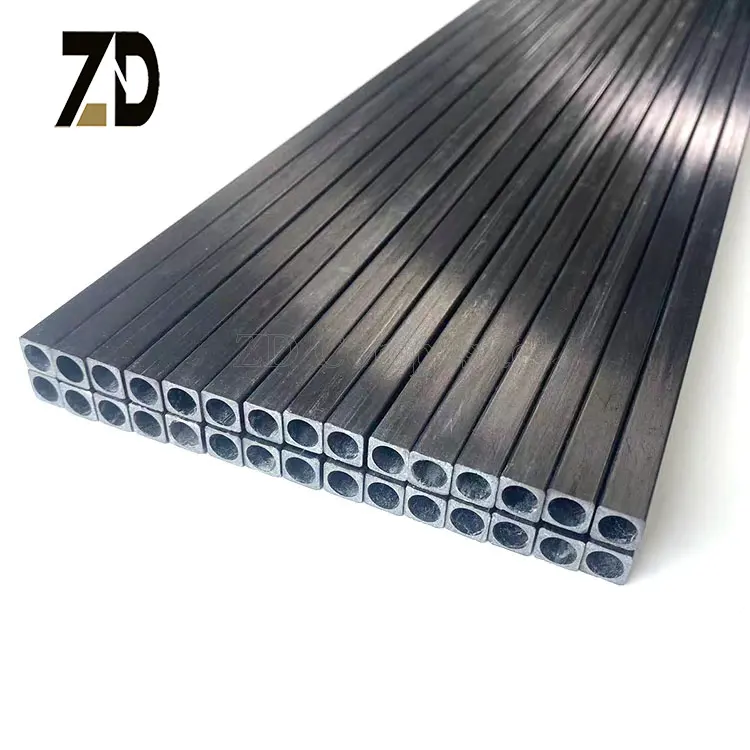
Selecting the appropriate carbon fiber rectangular tube for industrial applications requires careful evaluation of multiple technical and performance parameters. These advanced composite structures offer exceptional strength-to-weight ratios and superior mechanical properties that make them indispensable in aerospace, automotive, and structural engineering sectors. The decision-making process involves analyzing material specifications, dimensional requirements, manufacturing processes, and long-term performance expectations to ensure optimal results for your specific application.
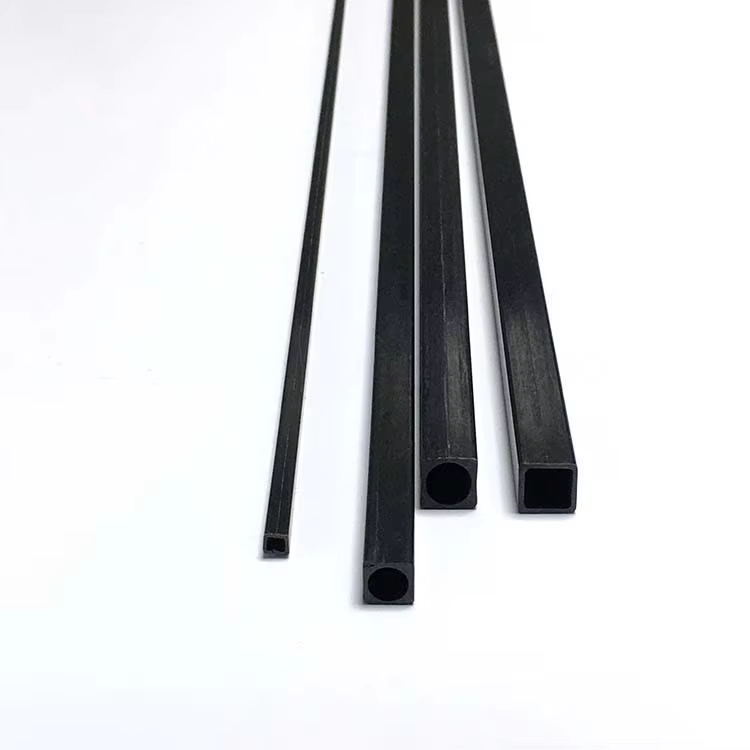
Modern engineering projects demand materials that deliver consistent performance under demanding conditions while maintaining cost-effectiveness throughout their service life. Carbon fiber rectangular tube solutions have revolutionized structural design by providing engineers with lightweight alternatives to traditional metallic components. Understanding the critical selection criteria ensures that your chosen carbon fiber rectangular tube will meet both immediate project requirements and long-term operational demands.
Material Composition and Fiber Architecture
Carbon Fiber Type and Grade Selection
The foundation of any high-performance carbon fiber rectangular tube begins with the selection of appropriate carbon fiber materials. Standard modulus carbon fibers typically offer tensile strengths ranging from 3,500 to 4,900 MPa, while intermediate and high modulus variants can exceed 5,500 MPa. The fiber architecture, including weave patterns such as plain, twill, or unidirectional orientations, significantly influences the mechanical properties and performance characteristics of the finished carbon fiber rectangular tube.
Different carbon fiber grades exhibit varying degrees of stiffness, strength, and thermal conductivity properties that directly impact application suitability. PAN-based carbon fibers dominate commercial applications due to their excellent balance of mechanical properties and cost-effectiveness. Pitch-based alternatives offer superior thermal conductivity but typically command higher prices and specialized processing requirements for carbon fiber rectangular tube manufacturing.
Resin Matrix Systems
The resin matrix serves as the binding agent that transfers loads between individual carbon fibers within the composite structure. Epoxy resins remain the most widely used matrix material for carbon fiber rectangular tube applications due to their excellent adhesion properties, chemical resistance, and temperature stability. Thermoset systems cure irreversibly during manufacturing, creating permanent crosslinked networks that maintain dimensional stability under varying environmental conditions.
Advanced resin formulations incorporate toughening agents, flame retardants, and UV stabilizers to enhance specific performance characteristics. The glass transition temperature of the resin matrix determines the upper service temperature limits for the carbon fiber rectangular tube, making this parameter crucial for high-temperature applications in aerospace or industrial processing environments.
Dimensional Specifications and Tolerances
Cross-Sectional Geometry
Precise dimensional control represents a critical factor in carbon fiber rectangular tube selection, as even minor variations can significantly impact structural performance and assembly compatibility. The aspect ratio between height and width dimensions influences bending stiffness characteristics, with higher aspect ratios generally providing increased resistance to buckling in the major axis direction. Wall thickness uniformity directly affects load distribution and stress concentration patterns throughout the tube structure.
Manufacturing tolerances for carbon fiber rectangular tube products typically range from ±0.1mm to ±0.3mm depending on production methods and quality requirements. Pultrusion processes generally achieve tighter dimensional controls compared to hand lay-up or filament winding techniques. Custom dimensional requirements may necessitate specialized tooling and extended lead times, making standard sizes more cost-effective for many applications.
Length and End Preparation
Standard carbon fiber rectangular tube lengths accommodate most structural applications, but custom cutting services enable precise length specifications for unique project requirements. End preparation methods including machining, grinding, or specialized cutting techniques affect both dimensional accuracy and surface finish quality. Clean, square cuts minimize stress concentrations and ensure proper fit-up during assembly operations.
Consider the impact of cutting operations on fiber integrity, as improper techniques can introduce delamination or edge fraying that compromises structural performance. Professional cutting services utilize diamond-coated tools and controlled feed rates to maintain fiber architecture integrity throughout the carbon fiber rectangular tube cross-section.
Mechanical Performance Requirements
Load Capacity and Stress Analysis
Determining appropriate load capacity requires comprehensive analysis of anticipated service conditions including static loads, dynamic forces, and environmental factors. Carbon fiber rectangular tube structures exhibit anisotropic behavior, meaning mechanical properties vary significantly depending on load direction relative to fiber orientation. Axial compression strength typically ranges from 60-80% of tensile strength values, making this parameter critical for column applications.
Shear strength properties become particularly important in torsional loading scenarios or when the carbon fiber rectangular tube experiences combined loading conditions. Interlaminar shear strength values typically range from 50-90 MPa depending on resin system and fiber-matrix interface quality. Fatigue resistance characteristics determine long-term durability under cyclic loading conditions common in aerospace and automotive applications.
Stiffness and Deflection Characteristics
Elastic modulus values for carbon fiber rectangular tube products typically exceed 120 GPa in the longitudinal direction, providing exceptional stiffness characteristics compared to metallic alternatives. The moment of inertia calculations for rectangular cross-sections enable precise deflection predictions under various loading scenarios. Designers must account for potential buckling modes including local wall buckling, global column buckling, and lateral-torsional buckling depending on support conditions and load applications.
Temperature-dependent stiffness variations can significantly impact performance in thermal cycling applications. Carbon fiber rectangular tube structures generally exhibit minimal thermal expansion coefficients, typically ranging from -0.5 to 1.0 μm/m°C depending on fiber orientation and resin system selection.
Environmental Resistance and Durability
Chemical Compatibility
Chemical resistance properties determine the suitability of carbon fiber rectangular tube products for specific environmental exposures. Epoxy resin systems generally provide excellent resistance to most organic solvents, fuels, and hydraulic fluids commonly encountered in industrial applications. However, prolonged exposure to strong acids, bases, or elevated temperatures can degrade matrix properties and compromise structural integrity.
Galvanic corrosion potential becomes a significant consideration when carbon fiber rectangular tube components interface with metallic structures. The high electrical conductivity of carbon fiber creates favorable conditions for galvanic cell formation in the presence of moisture and dissimilar metals. Proper isolation techniques including non-conductive barriers or protective coatings prevent electrochemical degradation of adjacent metallic components.
UV Stability and Weathering
Ultraviolet radiation exposure can degrade surface resin layers and compromise the appearance and performance of carbon fiber rectangular tube structures. UV-stable resin formulations and protective coatings extend service life in outdoor applications where direct sunlight exposure is unavoidable. Surface degradation typically progresses slowly and primarily affects aesthetic properties rather than structural performance in most applications.
Moisture absorption characteristics vary depending on resin system selection and environmental conditions. Most carbon fiber rectangular tube products absorb less than 2% moisture by weight under standard atmospheric conditions, with minimal impact on mechanical properties. However, elevated temperatures combined with high humidity can accelerate moisture uptake and potentially reduce glass transition temperatures.
Manufacturing Process Considerations
Production Methods
Pultrusion represents the most common manufacturing method for carbon fiber rectangular tube production, offering excellent dimensional control and cost-effectiveness for high-volume applications. This continuous process pulls carbon fiber reinforcements through a heated die while simultaneously curing the resin matrix, resulting in uniform cross-sections with consistent fiber volume fractions typically ranging from 55-65%.
Alternative manufacturing methods including filament winding, resin transfer molding, and prepreg lay-up techniques offer different advantages depending on specific requirements. Filament winding provides excellent hoop strength characteristics but may require secondary machining operations to achieve rectangular cross-sections. Hand lay-up methods enable complex geometries and variable wall thickness but generally result in higher labor costs and reduced dimensional consistency.
Quality Control and Testing
Comprehensive quality control procedures ensure that carbon fiber rectangular tube products meet specified performance requirements. Non-destructive testing methods including ultrasonic inspection, computed tomography, and visual examination detect internal defects such as voids, delaminations, or fiber misalignment that could compromise structural performance.
Mechanical testing protocols verify strength, stiffness, and durability characteristics through standardized test methods. Typical quality control procedures include tensile testing, compression testing, and interlaminar shear strength evaluation. Statistical process control methods track key parameters throughout production to maintain consistent quality levels and identify potential process variations before they affect product performance.
Cost Factors and Economic Considerations
Material Costs and Volume Requirements
Raw material costs typically represent 40-60% of total carbon fiber rectangular tube production expenses, making material selection a critical economic factor. High-performance aerospace-grade carbon fibers command premium prices compared to industrial-grade alternatives, but may be necessary for demanding applications requiring maximum strength and stiffness properties.
Volume requirements significantly impact unit pricing due to manufacturing setup costs and material procurement advantages. Large-volume orders enable bulk material purchasing and dedicated production runs that reduce per-unit costs. Standard dimensional configurations typically offer better pricing compared to custom specifications requiring specialized tooling or modified production processes.
Lifecycle Cost Analysis
Total cost of ownership extends beyond initial material costs to include installation, maintenance, and end-of-life disposal considerations. Carbon fiber rectangular tube products typically require minimal maintenance compared to metallic alternatives, eliminating periodic coating, inspection, and replacement costs associated with corrosion-prone materials.
Weight savings achieved through carbon fiber rectangular tube implementation can provide significant operational cost reductions in transportation applications through improved fuel efficiency and payload capacity. These long-term benefits often justify higher initial material costs, particularly in aerospace and automotive applications where weight reduction directly impacts operating economics.
Application-Specific Selection Criteria
Aerospace and Defense Applications
Aerospace applications demand carbon fiber rectangular tube products that meet stringent certification requirements and environmental specifications. Fire resistance properties become critical considerations, often necessitating specialized resin systems with flame-retardant additives or phenolic matrix materials that maintain structural integrity at elevated temperatures.
Electromagnetic interference shielding requirements may influence carbon fiber rectangular tube selection for avionics applications. Conductive carbon fiber provides inherent EMI shielding properties, but may require surface treatments or coatings to achieve specific conductivity levels or prevent galvanic corrosion when interfacing with aluminum structures.
Industrial and Infrastructure Applications
Industrial applications often prioritize cost-effectiveness and long-term durability over maximum performance characteristics. Carbon fiber rectangular tube products for infrastructure applications must withstand environmental exposures including temperature cycling, moisture, and potential chemical contact while maintaining structural integrity throughout extended service lives.
Joining and attachment methods significantly influence carbon fiber rectangular tube selection for industrial applications. Mechanical fastening techniques require sufficient bearing strength and through-thickness properties to prevent bolt pull-through or bearing failure. Adhesive bonding applications demand compatible surface treatments and environmental resistance to prevent joint degradation over time.
FAQ
What is the typical strength-to-weight ratio of carbon fiber rectangular tube compared to steel
Carbon fiber rectangular tube products typically exhibit specific strength values 3-5 times higher than steel alternatives, depending on fiber grade and resin system selection. While steel offers tensile strengths around 400-800 MPa with a density of 7.85 g/cm³, carbon fiber rectangular tube structures achieve similar or higher strength levels at densities of only 1.5-1.6 g/cm³. This exceptional strength-to-weight ratio enables significant weight reductions in structural applications while maintaining or improving load-carrying capacity.
How do temperature variations affect carbon fiber rectangular tube performance
Temperature effects on carbon fiber rectangular tube performance depend primarily on the resin matrix system rather than the carbon fiber reinforcement. Most epoxy-based systems maintain full mechanical properties up to 120-150°C, with gradual strength and stiffness reductions as temperatures approach the glass transition temperature. Carbon fibers themselves remain stable to temperatures exceeding 2000°C in inert atmospheres, making the resin matrix the limiting factor for high-temperature applications.
What surface treatments are available for carbon fiber rectangular tube products
Common surface treatments for carbon fiber rectangular tube include primer application, paint systems, and protective coatings designed to enhance specific properties. UV-resistant topcoats prevent surface degradation in outdoor applications, while conductive coatings can modify electrical properties for EMI shielding applications. Surface preparation through sanding or plasma treatment improves coating adhesion and ensures long-term durability of applied finishes.
Can carbon fiber rectangular tube be machined or modified after manufacturing
Carbon fiber rectangular tube products can be machined using appropriate cutting tools and techniques, though special precautions are necessary to prevent delamination and maintain dimensional accuracy. Diamond-coated tools, controlled feed rates, and proper workholding methods enable drilling, milling, and cutting operations. However, machining operations should be minimized during design phases to reduce costs and potential stress concentrations that could compromise structural performance.
Table of Contents
- Material Composition and Fiber Architecture
- Dimensional Specifications and Tolerances
- Mechanical Performance Requirements
- Environmental Resistance and Durability
- Manufacturing Process Considerations
- Cost Factors and Economic Considerations
- Application-Specific Selection Criteria
-
FAQ
- What is the typical strength-to-weight ratio of carbon fiber rectangular tube compared to steel
- How do temperature variations affect carbon fiber rectangular tube performance
- What surface treatments are available for carbon fiber rectangular tube products
- Can carbon fiber rectangular tube be machined or modified after manufacturing