
 EN
EN


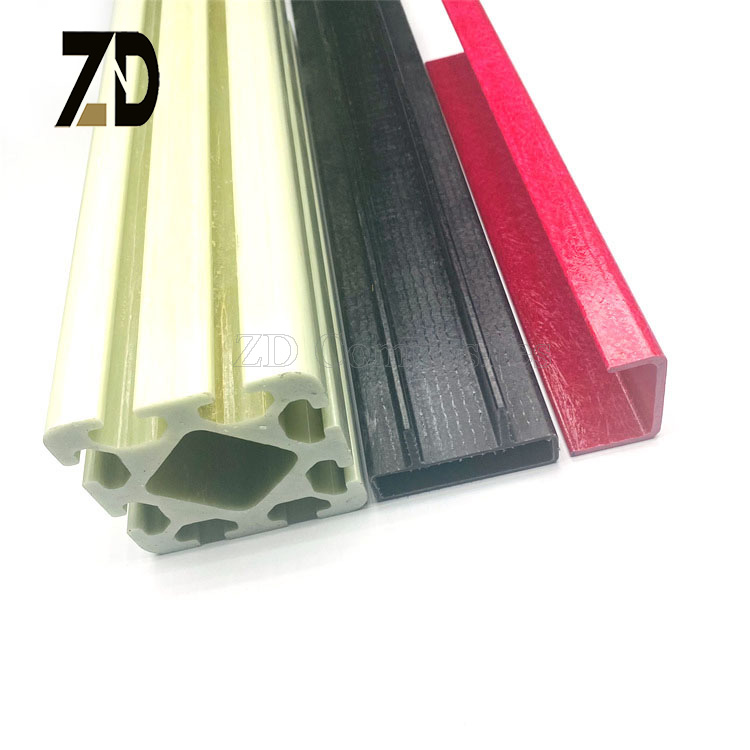
Industrial environments demand materials that can endure extreme temperatures without degrading or losing structural integrity. When selecting materials for high-temperature applications, many engineers and facility managers wonder about the thermal performance of reinforced composite options. A carbon fiber profile offers exceptional durability in demanding conditions, but understanding its actual heat resistance capabilities is essential for safe and effective deployment. This article explores the thermal limits of advanced composite profiles, their performance characteristics, and how they compare to other material choices in industrial settings where temperature extremes are a constant operational challenge.
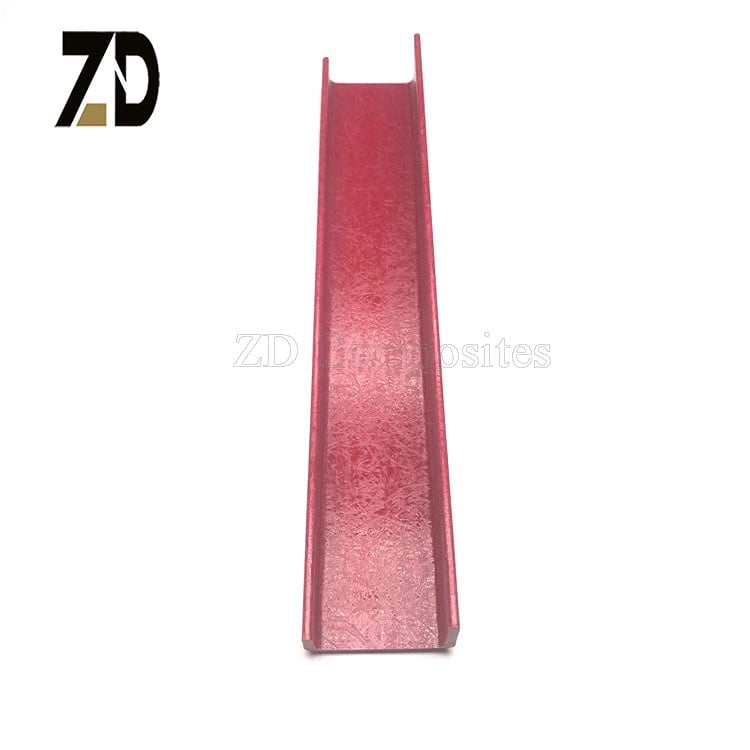
The thermal performance of a carbon fiber profile depends on multiple factors, including resin system composition, fiber orientation, wall thickness, and exposure duration. Unlike metal materials that lose strength gradually with temperature increase, composite profiles experience more dramatic performance shifts at specific thermal thresholds. Understanding these thresholds helps engineers design systems that remain safe and reliable throughout their operational lifespan. Industries ranging from aerospace to chemical processing rely on precise thermal data to specify the correct material solutions, and this knowledge transfer is critical for preventing costly failures and ensuring regulatory compliance.
Thermal Performance Limits of Advanced Composite Profiles
Understanding Carbon Fiber Profile Temperature Ratings
A carbon fiber profile manufactured with standard epoxy resin systems typically maintains structural integrity up to approximately 150 to 200 degrees Celsius under continuous exposure. This thermal limit represents the point where the resin matrix begins to experience significant molecular degradation, causing loss of stiffness and load-bearing capacity. For short-term exposure scenarios, many carbon fiber profile variants can tolerate temperatures reaching 250 degrees Celsius or higher without permanent damage. However, sustained exposure at these elevated levels accelerates the thermal degradation process, reducing the effective service life of the carbon fiber profile significantly. Engineers must distinguish between occasional temperature spikes and continuous high-temperature operation when specifying materials for industrial applications.
Resin Systems and Their Thermal Boundaries
The resin matrix is the component that most limits thermal performance in a carbon fiber profile. Standard polyester and vinyl ester resins begin exhibiting degradation around 120 to 140 degrees Celsius. Conversely, epoxy-based carbon fiber profile systems extend this boundary to roughly 150 to 200 degrees Celsius. For applications requiring even higher temperature tolerance, specialized resin formulations such as phenolic, bismaleimide, or polyimide-based systems can enable a carbon fiber profile to perform at 250 to 300 degrees Celsius or higher. The trade-off is typically higher material cost, longer production lead times, and potential brittleness at lower temperatures. Selecting the appropriate resin system for a carbon fiber profile is therefore a critical engineering decision that directly impacts both performance and project economics.
Practical Applications and Performance Expectations
Industrial Environments Where Carbon Fiber Profile Excels
A carbon fiber profile delivers proven value in industries where thermal cycling and high temperatures are routine operational conditions. Chemical processing plants use carbon fiber profile components for piping, structural supports, and equipment frames where corrosion resistance combines with thermal stability to reduce maintenance costs. Automotive manufacturing facilities employ carbon fiber profile in thermal management systems, exhaust support structures, and component fixtures that must withstand repeated temperature fluctuations. Power generation facilities, including both traditional and renewable energy installations, rely on carbon fiber profile for cooling tower frameworks and thermal insulation support systems. In each of these environments, the carbon fiber profile's combination of lightweight construction, corrosion immunity, and predictable thermal behavior translates into longer service intervals and reduced operational risk.
Failure Modes and Thermal Stress Indicators
When a carbon fiber profile exceeds its rated temperature limit, several predictable failure modes emerge. Matrix cracking appears as the first sign, often visible as fine stress lines on the surface. Delamination, where fiber layers separate from the resin matrix, develops next and significantly reduces load-bearing capacity. Fiber breakage becomes possible under sustained thermal stress, especially if the carbon fiber profile experiences mechanical loads simultaneously with elevated temperatures. Color change and surface degradation indicate accelerated resin decomposition, signaling imminent structural failure. Operators and maintenance personnel should monitor carbon fiber profile components for these warning signs and develop replacement protocols that prevent catastrophic failures. Regular thermal imaging and visual inspection protocols help identify thermal stress before it compromises structural safety.
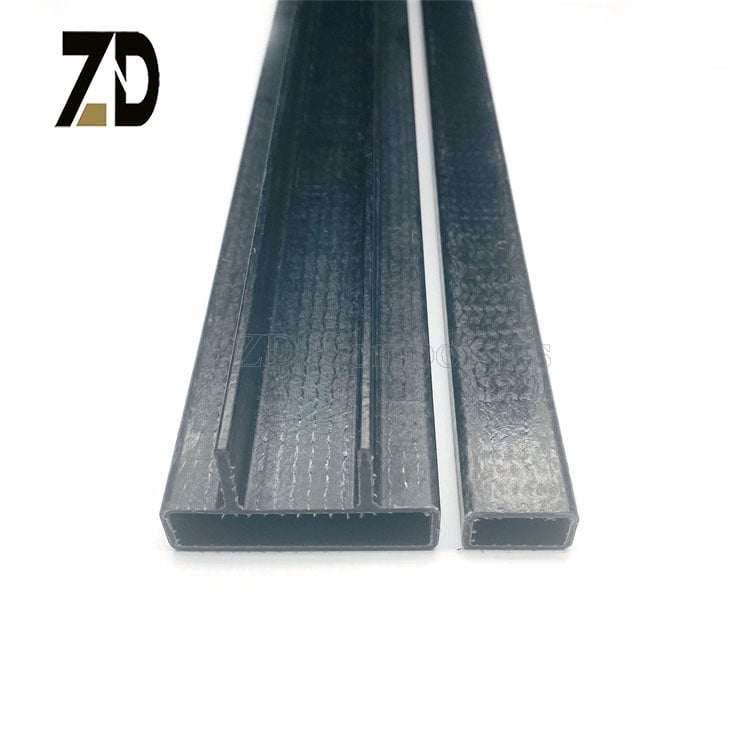
Comparing Carbon Fiber Profile to Alternative Materials
Fiberglass Versus Carbon Fiber Thermal Characteristics
Standard fiberglass profiles offer similar thermal performance to carbon fiber profile in many applications, with comparable temperature limits around 150 to 180 degrees Celsius for continuous exposure. However, fiberglass provides better dimensional stability during thermal cycling and exhibits fewer micro-crack formation patterns compared to a carbon fiber profile under rapid temperature changes. Fiberglass typically costs 30 to 50 percent less than equivalent carbon fiber profile solutions, making it the preferred choice when thermal performance alone drives material selection. The decision between fiberglass and carbon fiber profile should consider not only absolute temperature limits but also mechanical load requirements, weight constraints, and total lifecycle cost. Many industrial applications successfully use fiberglass profiles where thermal requirements are moderate, reserving carbon fiber profile for scenarios demanding both high stiffness and thermal resilience.
Metal Alternatives and Composite Advantages
Steel and aluminum remain dominant materials in many high-temperature industrial applications, with proven performance records spanning decades. Steel maintains structural integrity at temperatures where both fiberglass and carbon fiber profile would degrade, making it superior for extreme thermal environments exceeding 400 degrees Celsius. However, steel requires active corrosion management through coatings or stainless alloys, adding significant cost and maintenance burden. A carbon fiber profile eliminates corrosion concerns entirely and weighs approximately 75 percent less than steel for equivalent structural capacity. Thermal coefficient of expansion differs dramatically between metals and composites; a carbon fiber profile exhibits minimal expansion during thermal cycling, whereas steel expands considerably and creates stress at connection points. For applications balancing thermal performance with weight reduction, corrosion immunity, and installation ease, a carbon fiber profile often represents the most practical engineering solution despite higher per-unit material cost.
Design Considerations for High-Temperature Installations
Material Selection Criteria for Temperature-Critical Applications
Specifying the correct carbon fiber profile for a high-temperature industrial environment requires careful analysis of multiple thermal and mechanical factors. Engineers must establish the maximum expected continuous operating temperature, the frequency and magnitude of temperature fluctuations, and the duration of thermal exposure during each operational cycle. Mechanical loads applied simultaneously with elevated temperatures reduce the effective thermal limit of a carbon fiber profile by 20 to 30 percent compared to purely thermal scenarios. Environmental factors including UV exposure, chemical contact, and moisture absorption further influence carbon fiber profile performance and must be evaluated systematically. Conservative design practices recommend operating carbon fiber profile components at temperatures no higher than 75 percent of the rated continuous limit, providing margin for measurement uncertainty and unforeseen thermal transients.
Connection Details and Thermal Expansion Management
Connection design becomes critical when installing a carbon fiber profile in thermally dynamic environments. Unlike metals, carbon fiber profile exhibits minimal thermal expansion, creating potential stress concentration at connection points if adjacent materials expand significantly. Fastening systems should accommodate differential movement between the carbon fiber profile and attached steel or aluminum components through slotted holes or expansion provisions. Adhesive bonding of a carbon fiber profile requires thermal-rated epoxies capable of withstanding the same temperature range as the base composite; standard construction adhesives will fail at temperatures exceeding 80 to 100 degrees Celsius. Thermal barrier materials or design spacing between a carbon fiber profile and heat sources can extend service life by 50 to 100 percent in applications with localized intense heating. These design details are often overlooked but prove essential for achieving the theoretical thermal performance of the carbon fiber profile in real-world industrial installations.
Maintenance and Lifecycle Considerations
Inspecting and Maintaining Carbon Fiber Profile Systems
Proactive inspection protocols significantly extend the service life of a carbon fiber profile in high-temperature industrial environments. Visual examination should occur at regular intervals, typically every 6 to 12 months for continuous-duty installations, looking for surface cracking, discoloration, or visible fiber exposure. Thermal imaging identifies localized areas where a carbon fiber profile may be experiencing unintended heating or stress concentration. Mechanical testing through methods such as tap testing or ultrasonic scanning detects internal delamination in a carbon fiber profile before it becomes visible or causes structural failure. Documentation of inspection findings creates a performance database useful for predicting replacement timing and validating thermal exposure assumptions. Maintenance personnel require training to recognize early degradation signs in a carbon fiber profile and understand the distinction between cosmetic surface changes and structural compromise.
Planning Replacement and Lifecycle Economics
The total cost of ownership for a carbon fiber profile installation extends far beyond initial material purchase. While upfront cost may exceed fiberglass or metal alternatives, the extended replacement interval of a properly specified carbon fiber profile often produces 20 to 40 percent lower lifecycle costs over 10 to 20 year operational periods. Reduced maintenance requirements, minimal corrosion management, and lower failure rates throughout the carbon fiber profile's service life justify the premium material investment in most industrial applications. Planning for eventual replacement requires establishing realistic service life expectations based on operating conditions, inspection data, and industry experience with similar carbon fiber profile applications. Budgeting for replacement at appropriate intervals prevents emergency shutdowns and the associated production losses that far exceed material and labor costs.
FAQ
What is the maximum temperature a carbon fiber profile can withstand continuously?
A carbon fiber profile with standard epoxy resin can typically withstand continuous temperatures between 150 and 200 degrees Celsius. Specialized high-temperature resin systems in a carbon fiber profile extend this limit to 250 to 300 degrees Celsius or higher. The exact limit depends on the specific resin formulation, fiber orientation, and wall thickness of the carbon fiber profile.
How does a carbon fiber profile perform compared to fiberglass in high-temperature settings?
Both materials perform similarly at equivalent temperature ranges, with comparable continuous limits around 150 to 180 degrees Celsius. A carbon fiber profile offers superior stiffness and weight advantage, while standard fiberglass provides better dimensional stability during thermal cycling and costs 30 to 50 percent less. The choice between fiberglass and carbon fiber profile should weigh thermal needs against mechanical load requirements and budget constraints.
Can a carbon fiber profile fail suddenly from thermal stress, or does it show warning signs?
A carbon fiber profile typically exhibits visible warning signs before complete failure, including matrix cracking, surface discoloration, and delamination. However, catastrophic failure can occur without warning if thermal stress combines with mechanical loads or if internal damage goes undetected. Regular inspection protocols and conservative design practices help prevent unexpected carbon fiber profile failures in industrial environments.