
 EN
EN


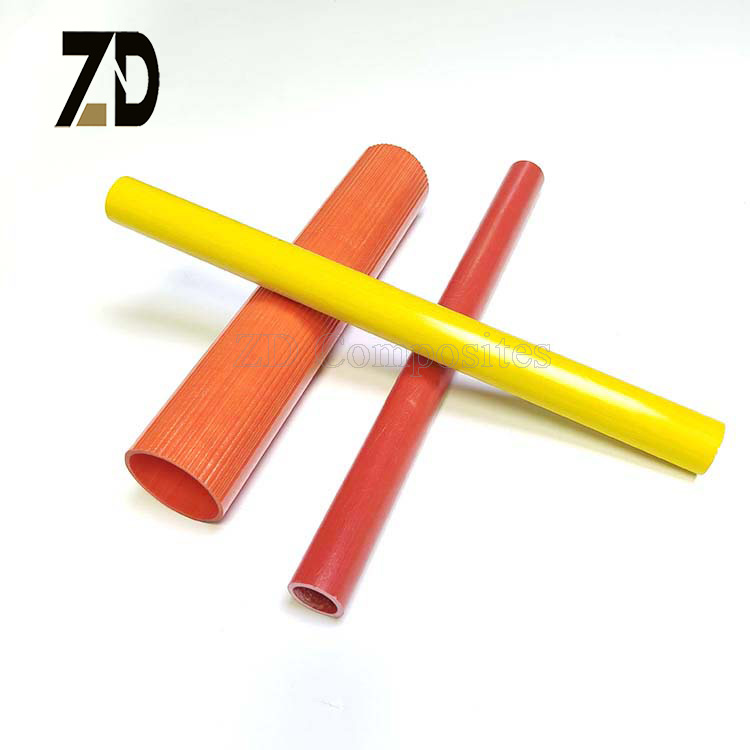
Modern engineering demands materials that deliver exceptional strength while maintaining minimal weight, and the fiberglass tube has emerged as a revolutionary solution across diverse industrial applications. These composite structures combine glass fiber reinforcement with polymer resin matrices to create tubular components that outperform traditional materials in numerous critical scenarios. The unique manufacturing process of pultrusion allows for consistent fiber orientation and optimal resin distribution, resulting in fiberglass tube products that exhibit remarkable mechanical properties. Industries ranging from aerospace to renewable energy have embraced these lightweight yet robust components for their ability to withstand demanding environmental conditions while reducing overall system weight.
Fundamental Properties of Fiberglass Composite Construction
Material Composition and Fiber Architecture
The structural integrity of a fiberglass tube originates from the strategic arrangement of glass fibers within a polymer matrix system. E-glass fibers, commonly used in these applications, possess tensile strengths exceeding 3,500 MPa while maintaining a density significantly lower than steel or aluminum alternatives. The pultrusion manufacturing process enables precise control over fiber orientation, typically incorporating unidirectional rovings along the longitudinal axis combined with woven or helical windings for hoop strength. This multi-directional reinforcement strategy ensures that each fiberglass tube can efficiently transfer loads in multiple directions while maintaining structural stability under various loading conditions.
Resin selection plays a crucial role in determining the final performance characteristics of fiberglass tube assemblies. Vinyl ester resins offer superior corrosion resistance and elevated temperature performance, making them ideal for chemical processing environments. Epoxy systems provide enhanced mechanical properties and fatigue resistance, particularly valuable in cyclic loading applications. Polyester resins deliver cost-effective solutions for general-purpose applications where moderate performance requirements exist. The curing process creates strong chemical bonds between the glass fibers and polymer matrix, resulting in a homogeneous composite structure that distributes stresses efficiently throughout the fiberglass tube cross-section.
Mechanical Performance Characteristics
Strength-to-weight ratios represent one of the most compelling advantages of fiberglass tube construction compared to conventional metallic alternatives. Typical specific strengths range from 400 to 800 MPa·cm³/g, substantially exceeding those of steel or aluminum alloys. The anisotropic nature of composite materials allows engineers to tailor fiber orientations to match anticipated loading patterns, optimizing structural efficiency for specific applications. Flexural modulus values typically range between 25 and 45 GPa, providing adequate stiffness for most structural applications while maintaining the flexibility necessary to absorb impact energy without catastrophic failure.
Fatigue resistance represents another critical performance parameter where fiberglass tube products demonstrate exceptional capabilities. The fiber-matrix interface effectively arrests crack propagation, preventing the rapid failure modes commonly observed in metallic structures subjected to cyclic loading. Endurance limits often exceed 50% of ultimate tensile strength for properly designed composite systems. Environmental factors such as moisture absorption and ultraviolet exposure can influence long-term performance, necessitating appropriate surface treatments and resin selection for outdoor applications involving fiberglass tube components.
Manufacturing Excellence Through Pultrusion Technology
Continuous Production Process Advantages
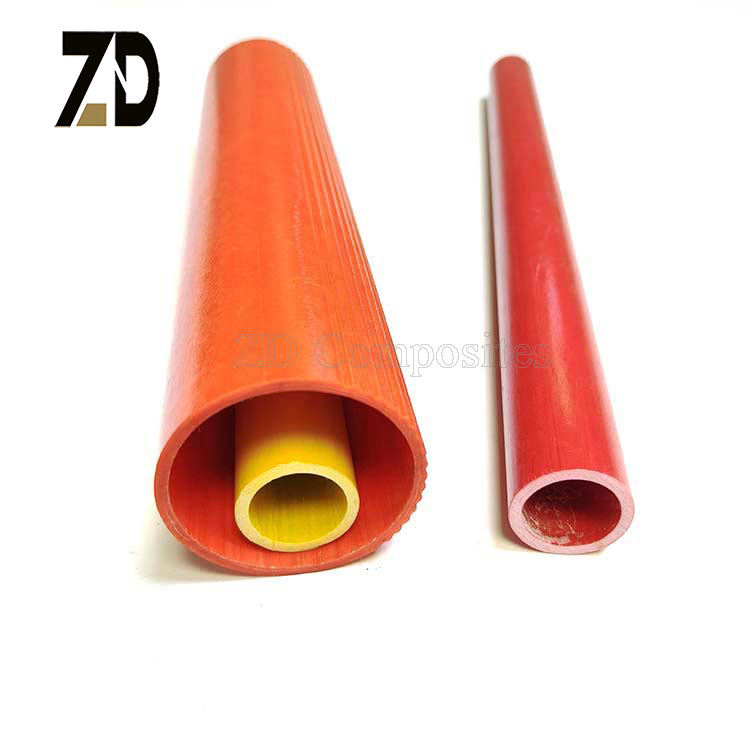
Pultrusion manufacturing enables the continuous production of fiberglass tube profiles with consistent cross-sectional geometry and uniform material properties along the entire length. This process begins with glass fiber rovings and fabrics being drawn through a resin bath where complete saturation occurs under controlled conditions. The impregnated fibers then pass through a heated steel die that shapes the profile while initiating the curing reaction. Temperature profiles within the die are carefully controlled to ensure complete polymerization without inducing thermal stresses that could compromise the structural integrity of the finished fiberglass tube.
Quality control throughout the pultrusion process ensures that each fiberglass tube meets stringent dimensional tolerances and mechanical property requirements. Automated pulling systems maintain consistent line speeds, typically ranging from 0.5 to 3 meters per minute depending on wall thickness and complexity. In-line monitoring systems track resin content, cure state, and surface quality to identify potential defects before they propagate through the production run. Post-cure conditioning may be applied to achieve optimal mechanical properties and dimensional stability in critical applications requiring premium performance from fiberglass tube assemblies.
Customization Capabilities and Design Flexibility
Modern pultrusion equipment accommodates a wide range of fiberglass tube configurations, from simple circular profiles to complex multi-cell cross-sections with integrated reinforcement features. Wall thickness variations can be achieved through selective fiber placement and resin distribution control. Custom fiber architectures allow engineers to optimize performance for specific loading conditions, such as incorporating additional circumferential windings for pressure vessel applications or increasing longitudinal fiber content for structural beam applications requiring high flexural strength.
Surface finishing options for fiberglass tube products include gel coats for enhanced weather resistance, conductive coatings for electromagnetic shielding applications, and specialized treatments for improved adhesive bonding characteristics. Machining operations can be performed after curing to achieve precise dimensional requirements or to incorporate mounting features such as flanges, threads, or connection hardware. The versatility of pultrusion manufacturing makes it possible to produce fiberglass tube components that meet the exact specifications required for demanding industrial applications while maintaining cost-effectiveness through efficient production methods.
Structural Applications and Performance Benefits
Aerospace and Transportation Industries
The aerospace sector has embraced fiberglass tube technology for numerous applications where weight reduction directly translates to improved fuel efficiency and enhanced payload capacity. Antenna masts, structural framework components, and environmental control system ducting benefit from the corrosion resistance and electromagnetic transparency properties inherent in composite construction. Aircraft manufacturers specify fiberglass tube assemblies for landing gear components, where the combination of high strength and vibration damping characteristics provides superior performance compared to metallic alternatives. The ability to integrate complex geometries during the pultrusion process eliminates the need for secondary assembly operations, reducing manufacturing costs and potential failure points.
Automotive applications increasingly utilize fiberglass tube components in drive shafts, suspension elements, and crash energy management systems. The tailorable stiffness characteristics of composite construction allow engineers to design components that exhibit specific deformation patterns during impact events, optimizing occupant protection while minimizing weight penalties. Racing applications particularly benefit from the high strength-to-weight ratios achievable with fiberglass tube construction, where performance advantages justify premium material costs. Thermal expansion coefficients can be controlled through fiber selection and orientation, ensuring dimensional stability across operating temperature ranges encountered in automotive environments.
Infrastructure and Construction Applications
Civil engineering projects increasingly specify fiberglass tube elements for bridge construction, where corrosion resistance provides significant lifecycle cost advantages over traditional steel reinforcement. The non-conductive nature of composite materials eliminates galvanic corrosion concerns in mixed-material assemblies while providing excellent resistance to chloride penetration in marine environments. Seismic isolation systems benefit from the energy absorption characteristics of fiberglass tube assemblies, which can be designed to yield progressively under extreme loading while maintaining structural integrity sufficient to protect critical infrastructure components.
Utility pole applications represent a growing market for fiberglass tube products, particularly in areas prone to severe weather events where traditional wooden poles are susceptible to damage. The lightweight nature of composite construction simplifies installation procedures while providing superior wind resistance through improved aerodynamic characteristics. Electrical utilities appreciate the non-conductive properties that enhance worker safety during maintenance operations. The dimensional stability of fiberglass tube construction prevents the splitting and checking commonly observed in wooden poles, reducing maintenance requirements and extending service life significantly beyond conventional alternatives.
Environmental Advantages and Sustainability Considerations
Corrosion Resistance and Longevity
Chemical inertness represents one of the most significant advantages of fiberglass tube construction in aggressive environments where metallic materials would rapidly deteriorate. The polymer matrix provides a barrier that prevents direct contact between corrosive media and the glass fiber reinforcement, ensuring long-term structural integrity even in highly acidic or alkaline conditions. Marine applications benefit particularly from this characteristic, as saltwater exposure that would quickly compromise steel or aluminum components has minimal impact on properly formulated fiberglass tube assemblies. Cathodic protection systems are unnecessary, eliminating ongoing maintenance costs associated with electrochemical corrosion prevention methods.
Temperature cycling effects that cause expansion and contraction stresses in metallic structures are significantly reduced with fiberglass tube construction due to the lower coefficient of thermal expansion inherent in composite materials. This characteristic prevents the fatigue failures commonly observed at bolted connections and welded joints in conventional structural systems. UV stabilization additives incorporated into the resin matrix prevent photodegradation that could compromise mechanical properties during extended outdoor exposure. Surface gel coats provide additional protection while maintaining aesthetic appearance throughout the service life of fiberglass tube installations.
Energy Efficiency and Carbon Footprint Reduction
The lightweight characteristics of fiberglass tube construction contribute to significant energy savings throughout the product lifecycle, from reduced transportation costs during delivery to lower operational energy requirements in dynamic applications. Wind turbine tower applications exemplify this advantage, where the reduced mass of fiberglass tube sections decreases foundation requirements while maintaining the structural performance necessary for reliable power generation. The manufacturing energy required to produce fiberglass tube components is substantially lower than that needed for equivalent steel or aluminum alternatives, contributing to reduced overall carbon footprint for construction projects.
Recyclability of fiberglass tube materials continues to improve through advances in mechanical recycling processes that recover glass fibers for use in new composite applications. Chemical recycling methods show promise for recovering both fiber and resin components, though economic viability remains dependent on scale and regional infrastructure development. The extended service life achievable with fiberglass tube construction often exceeds 50 years in appropriate applications, amortizing the environmental impact over significantly longer periods compared to materials requiring more frequent replacement. End-of-life disposal options include energy recovery through controlled incineration, where the organic resin content provides fuel value while the inorganic glass component forms inert ash suitable for construction aggregate applications.
Design Considerations and Engineering Guidelines
Load Analysis and Structural Optimization
Proper design of fiberglass tube structures requires understanding the anisotropic nature of composite materials and how fiber orientation affects load transfer mechanisms. Finite element analysis software with composite-specific capabilities enables accurate prediction of stress distributions and failure modes under complex loading conditions. The first ply failure criterion provides conservative design margins for applications where any matrix cracking would compromise performance, while progressive failure analyses allow optimization of fiber architectures for applications tolerating limited damage. Safety factors must account for the statistical variability inherent in composite materials while considering environmental effects such as temperature and moisture exposure on material properties.
Connection design represents a critical aspect of fiberglass tube structural systems, as stress concentrations at attachment points can limit overall performance. Mechanical fasteners require careful consideration of bearing strength and pull-through resistance, often necessitating local reinforcement with additional layers or metallic inserts. Bonded connections utilizing structural adhesives can provide more uniform load distribution but require surface preparation and environmental protection measures. Hybrid connection systems combining mechanical and adhesive elements offer redundancy while optimizing load transfer characteristics for critical applications involving fiberglass tube assemblies.
Quality Assurance and Testing Protocols
Non-destructive testing methods for fiberglass tube components include ultrasonic inspection for detecting internal voids or delaminations, thermographic analysis for identifying resin-rich or fiber-poor regions, and acoustic emission monitoring during proof loading to detect progressive damage initiation. Visual inspection protocols focus on surface defects such as fiber protrusion, resin starvation, or dimensional variations that could indicate manufacturing irregularities. Destructive testing of representative samples provides verification of mechanical properties including tensile strength, flexural modulus, and interlaminar shear strength according to established industry standards.
Long-term environmental exposure testing simulates service conditions through accelerated aging protocols involving thermal cycling, UV exposure, and chemical immersion testing. Fatigue testing protocols evaluate performance under cyclic loading conditions representative of actual service requirements. Statistical analysis of test results provides confidence intervals for design allowables while identifying any systematic variations in material properties that could affect structural reliability. Quality management systems ensure traceability from raw material certification through final inspection, enabling rapid identification and correction of any issues affecting fiberglass tube production quality.
FAQ
What are the main advantages of fiberglass tubes compared to metal tubes?
Fiberglass tubes offer several significant advantages over metal alternatives, including superior corrosion resistance that eliminates the need for protective coatings or cathodic protection systems. The strength-to-weight ratio of fiberglass tube construction typically exceeds that of steel or aluminum by 40-60%, resulting in easier handling and reduced structural loading requirements. Additionally, fiberglass tubes provide excellent electrical insulation properties and can be manufactured with precise dimensional tolerances through the pultrusion process, often eliminating secondary machining operations required for metal components.
How long do fiberglass tubes typically last in outdoor applications?
Properly manufactured fiberglass tubes with appropriate UV stabilization and surface protection can provide service lives exceeding 50 years in outdoor environments. The inherent corrosion resistance of composite construction prevents the degradation mechanisms that limit the lifespan of metallic structures in aggressive environments. Regular inspection and maintenance protocols can identify any surface wear or damage that might require attention, but the structural integrity of the fiberglass tube typically remains uncompromised throughout extended service periods when properly designed for the specific application requirements.
Can fiberglass tubes be customized for specific applications?
Modern pultrusion manufacturing enables extensive customization of fiberglass tube products to meet specific performance requirements and dimensional specifications. Fiber architecture can be tailored by adjusting the ratio of longitudinal to circumferential reinforcement, while resin selection optimizes chemical resistance and temperature performance. Wall thickness variations, integrated flanges, and complex cross-sectional geometries can be incorporated during manufacturing. Surface treatments and coatings provide additional customization options for aesthetic requirements, enhanced durability, or specialized functional characteristics such as electrical conductivity or enhanced bonding properties.
What industries commonly use fiberglass tubes?
Fiberglass tubes find applications across numerous industries including aerospace for antenna masts and structural components, automotive for drive shafts and suspension elements, renewable energy for wind turbine components, telecommunications for utility poles and tower structures, chemical processing for piping and tank systems, and marine applications for masts and structural frameworks. The construction industry utilizes fiberglass tube products for bridge components, building frameworks, and architectural elements where corrosion resistance and aesthetic appearance are important considerations. Each industry benefits from the specific performance characteristics that make fiberglass tube construction superior to traditional materials in their particular applications.