
 EN
EN


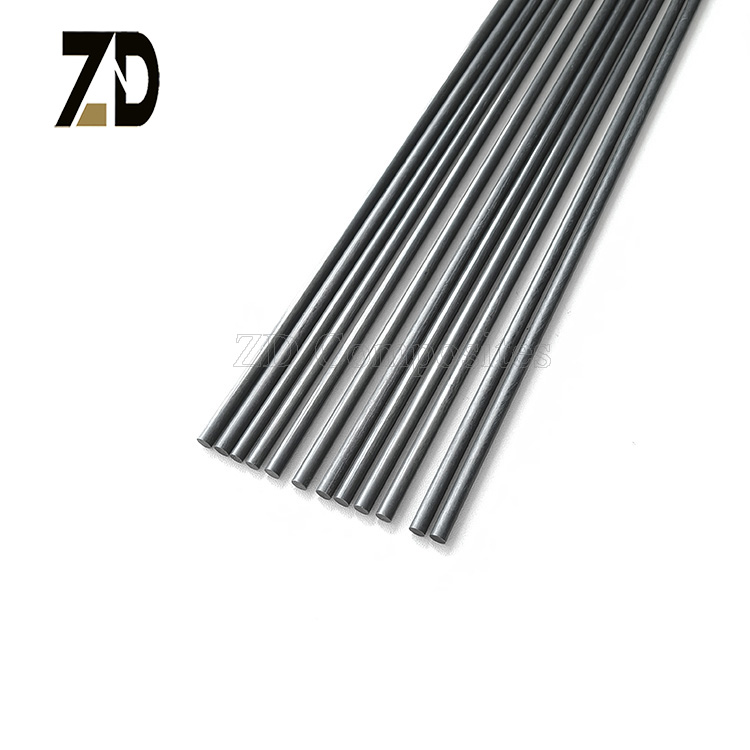
In modern engineering and manufacturing applications, the choice of rod material significantly impacts performance, durability, and overall project success. The carbon fiber rod has emerged as a revolutionary alternative to traditional metal options, offering unique properties that challenge conventional thinking about structural components. Understanding how these advanced composite materials compare to aluminum and steel rods requires examining multiple factors including weight, strength, corrosion resistance, and cost considerations. Engineers and manufacturers across industries are increasingly evaluating carbon fiber rod solutions for applications ranging from aerospace components to sporting goods, driven by the compelling advantages these materials offer over conventional alternatives.
Material Properties and Fundamental Characteristics
Density and Weight Comparison
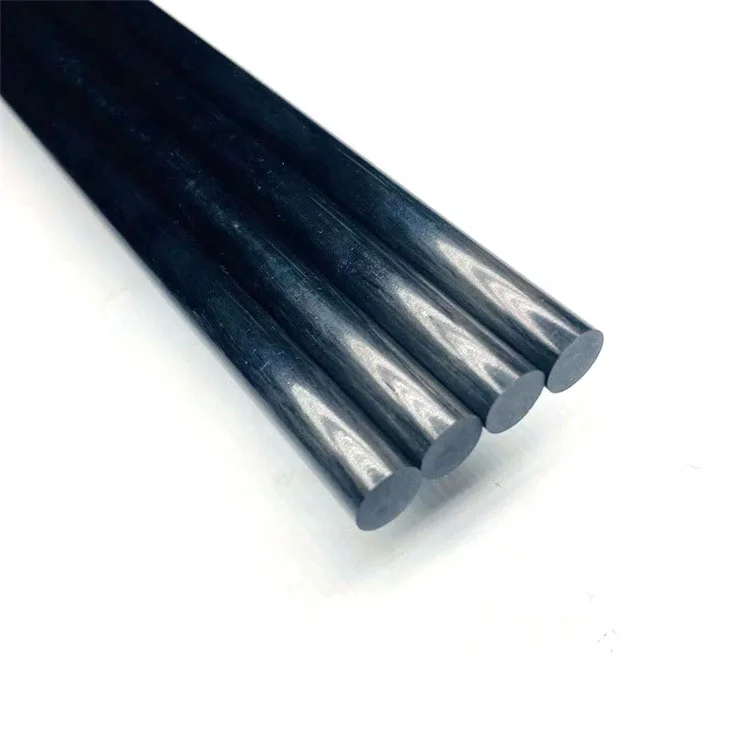
The most striking advantage of a carbon fiber rod lies in its exceptional strength-to-weight ratio, fundamentally changing how engineers approach structural design. Carbon fiber composites typically exhibit densities ranging from 1.4 to 1.8 grams per cubic centimeter, significantly lower than aluminum's 2.7 g/cm³ and steel's 7.8 g/cm³. This dramatic weight reduction translates to substantial benefits in applications where mass reduction directly impacts performance, such as automotive components, aerospace structures, and portable equipment. The lightweight nature of carbon fiber rod assemblies enables designers to create more efficient systems while maintaining or improving structural integrity.
Weight considerations become particularly critical in dynamic applications where reduced inertia improves responsiveness and energy efficiency. A carbon fiber rod weighing 60% less than an equivalent aluminum rod and 80% less than steel offers compelling advantages in rotating machinery, robotic arms, and handheld tools. Manufacturing operations benefit from reduced handling requirements and lower shipping costs, while end-users experience improved ergonomics and reduced fatigue during extended use periods.
Mechanical Strength Characteristics
Tensile strength represents another area where carbon fiber rod technology demonstrates superior performance compared to traditional materials. High-quality carbon fiber composites achieve tensile strengths exceeding 3,500 MPa, substantially higher than aluminum alloys at 276-310 MPa and comparable to high-strength steels. However, the directional nature of carbon fiber strength requires careful consideration during design phases, as properties vary significantly based on fiber orientation and loading direction.
Flexural strength and modulus characteristics of carbon fiber rod products often surpass metal alternatives in specific loading conditions. The ability to tailor fiber orientation during manufacturing allows engineers to optimize strength properties for intended applications, creating rods with exceptional performance in bending, torsion, or combined loading scenarios. This customization capability represents a fundamental advantage over isotropic metal materials, enabling application-specific optimization that maximizes performance while minimizing material usage.
Environmental Resistance and Durability
Corrosion and Chemical Resistance
Environmental durability represents a critical advantage for carbon fiber rod applications, particularly in harsh chemical or marine environments where metal corrosion poses significant challenges. Unlike aluminum and steel, carbon fiber composites remain virtually immune to electrochemical corrosion, eliminating the need for protective coatings or cathodic protection systems. This inherent resistance to oxidation and chemical attack ensures consistent performance throughout extended service lives, reducing maintenance requirements and lifecycle costs.
Chemical compatibility extends across a broad range of substances, making carbon fiber rod solutions ideal for chemical processing equipment, marine applications, and industrial environments where exposure to acids, bases, or salt solutions would rapidly degrade metal components. The stable polymer matrix protects carbon fibers from environmental degradation while maintaining structural integrity under conditions that would cause significant deterioration in aluminum or steel rods.
Temperature Performance and Thermal Properties
Thermal expansion characteristics of carbon fiber rod materials offer distinct advantages in precision applications where dimensional stability is critical. Carbon fiber composites exhibit extremely low coefficients of thermal expansion, often near zero or slightly negative depending on fiber orientation and resin system. This thermal stability surpasses both aluminum and steel, which expand significantly with temperature increases, potentially causing alignment issues or stress concentrations in precision assemblies.
High-temperature performance varies depending on the matrix material, with epoxy-based systems typically operating effectively up to 150°C, while specialized high-temperature resins enable service temperatures exceeding 300°C. While steel maintains strength at higher temperatures than carbon fiber composites, the combination of lightweight construction and adequate temperature resistance makes carbon fiber rod solutions attractive for many elevated temperature applications where extreme heat resistance is not required.
Manufacturing and Processing Considerations
Production Methods and Scalability
Manufacturing processes for carbon fiber rod production differ substantially from traditional metal forming techniques, requiring specialized equipment and expertise. Pultrusion represents the most common production method, enabling continuous production of consistent cross-sectional profiles with excellent mechanical properties. This process allows for high-volume manufacturing while maintaining precise dimensional tolerances and uniform fiber orientation, resulting in predictable performance characteristics across production runs.
Scalability considerations favor traditional materials in some applications, as aluminum and steel production infrastructure is well-established and capable of handling massive volumes at competitive costs. However, growing carbon fiber rod manufacturing capacity and improving production efficiency continue to narrow cost gaps while expanding availability. Custom cross-sections and specialized properties can be incorporated during the pultrusion process, offering design flexibility that may require expensive secondary operations with metal alternatives.
Machining and Secondary Operations
Secondary processing requirements differ significantly between carbon fiber rod materials and traditional metals, influencing overall manufacturing costs and complexity. Machining operations on carbon fiber composites require specialized tooling and techniques to prevent fiber damage, delamination, or dimensional inaccuracies. Diamond-coated cutting tools and appropriate feed rates ensure clean cuts while minimizing fiber pull-out or matrix cracking that could compromise structural integrity.
Assembly methods for carbon fiber rod components often utilize mechanical fastening or adhesive bonding rather than welding techniques common with metal materials. This requirement influences joint design and may necessitate different approaches to creating assemblies. However, the high strength of properly designed bonded joints, combined with the corrosion resistance of carbon fiber materials, often results in more durable connections than welded metal joints in corrosive environments.
Economic Analysis and Cost Considerations
Initial Investment and Material Costs
Material costs represent the most significant barrier to carbon fiber rod adoption in price-sensitive applications, with carbon fiber composites typically costing 5-15 times more than equivalent aluminum or steel materials. However, this initial cost premium must be evaluated against the total cost of ownership, including reduced shipping costs due to lower weight, elimination of corrosion protection systems, and extended service life in demanding environments.
Volume requirements significantly influence pricing, as large-scale carbon fiber rod purchases often achieve better cost efficiency through manufacturing economies of scale. Standard profiles and common sizes typically offer better pricing than custom specifications, making early consideration of available options important for cost-effective design solutions. The growing market acceptance and production capacity continue to drive down costs while improving performance characteristics.
Lifecycle Cost Analysis
Total cost of ownership calculations often favor carbon fiber rod solutions despite higher initial material costs, particularly in applications where weight reduction, corrosion resistance, or dimensional stability provide operational benefits. Reduced maintenance requirements, extended service life, and elimination of protective coating systems contribute to lower lifecycle costs in many applications. Energy savings from reduced weight become particularly significant in mobile applications or systems requiring frequent acceleration and deceleration cycles.
Replacement and repair considerations influence long-term economics, as the excellent durability of carbon fiber rod assemblies often results in extended replacement intervals compared to metal alternatives. While repair procedures may be more complex than simple metal welding, the reduced frequency of required maintenance often results in lower overall maintenance costs throughout the service life of the equipment.
Application-Specific Performance Comparison
Aerospace and Automotive Applications
In aerospace applications, the exceptional strength-to-weight ratio of carbon fiber rod components enables significant performance improvements while meeting stringent safety and reliability requirements. Weight reduction directly translates to improved fuel efficiency, extended range, and enhanced payload capacity, making the higher material costs economically justified. The dimensional stability and fatigue resistance of carbon fiber materials provide excellent durability under cyclic loading conditions common in aerospace environments.
Automotive applications increasingly utilize carbon fiber rod technology in performance vehicles and electric vehicle construction, where weight reduction directly impacts acceleration, handling, and battery range. The ability to create complex geometries through pultrusion processes enables integration of multiple functions into single components, reducing assembly complexity while improving overall structural efficiency. Racing applications particularly benefit from the combination of light weight and high strength that carbon fiber rod assemblies provide.
Industrial and Marine Applications
Industrial applications often prioritize the corrosion resistance and chemical compatibility of carbon fiber rod materials over pure cost considerations. Chemical processing equipment, offshore structures, and marine applications benefit tremendously from the elimination of corrosion-related maintenance and the extended service life in harsh environments. The non-conductive nature of carbon fiber composites provides additional safety benefits in electrical environments where metal components might create hazardous conditions.
Marine environments represent ideal applications for carbon fiber rod technology, as the combination of saltwater corrosion resistance, weight reduction for improved vessel performance, and excellent fatigue resistance under wave loading creates compelling advantages. Boat building, offshore equipment, and marine instrumentation increasingly rely on carbon fiber rod components to achieve superior performance and durability compared to traditional metal alternatives.
Future Trends and Technology Development
Manufacturing Innovation and Cost Reduction
Ongoing developments in carbon fiber rod manufacturing technology continue to improve production efficiency while reducing costs, making these materials increasingly competitive with traditional alternatives. Advanced pultrusion techniques, automated fiber placement systems, and improved resin formulations contribute to better quality control and higher production rates. Recycling initiatives and sustainable manufacturing practices address environmental concerns while potentially reducing raw material costs.
Emerging production technologies including continuous fiber reinforcement and hybrid construction techniques promise to further expand the capabilities and applications of carbon fiber rod products. Integration with smart manufacturing systems enables real-time quality monitoring and process optimization, ensuring consistent properties while minimizing waste and production costs.
Material Science Advances
Research and development efforts continue to enhance the performance characteristics of carbon fiber rod materials through improved fiber technology, advanced matrix systems, and optimized manufacturing processes. Nanotechnology integration, hybrid reinforcement systems, and bio-based matrix materials represent emerging technologies that could further improve performance while addressing sustainability concerns.
Smart material integration enables carbon fiber rod components with embedded sensing capabilities, structural health monitoring systems, and adaptive properties that respond to environmental conditions. These advanced capabilities open new application areas while providing enhanced safety and performance monitoring that traditional materials cannot match.
FAQ
What are the main advantages of carbon fiber rods over aluminum rods
Carbon fiber rods offer several key advantages over aluminum including significantly lower weight, higher strength-to-weight ratios, excellent corrosion resistance, and superior dimensional stability across temperature variations. While aluminum rods cost less initially, carbon fiber provides better performance in applications requiring lightweight construction, chemical resistance, or precision dimensional requirements over extended service periods.
How do carbon fiber rods perform compared to steel in high-stress applications
Carbon fiber rods can match or exceed steel performance in many high-stress applications while providing substantial weight savings and corrosion resistance benefits. The directional strength properties of carbon fiber require careful design consideration, but properly engineered carbon fiber rod assemblies often outperform steel in fatigue resistance and specific strength characteristics, making them excellent alternatives in demanding structural applications.
Are carbon fiber rods suitable for high-temperature industrial applications
Carbon fiber rods perform well in elevated temperature applications up to their resin system limits, typically 150-300°C depending on the matrix material used. While not suitable for extreme high-temperature applications where steel excels, carbon fiber rod solutions offer excellent performance in moderate temperature industrial environments while providing additional benefits including chemical resistance and weight reduction.
What factors should be considered when choosing between carbon fiber and metal rods
Key selection factors include weight requirements, environmental conditions, strength specifications, temperature exposure, cost constraints, and manufacturing volume. Carbon fiber rods excel in applications prioritizing weight reduction, corrosion resistance, dimensional stability, and fatigue performance, while metal alternatives may be preferred for extreme temperature applications, high-volume production, or cost-sensitive projects requiring basic structural performance.
Table of Contents
- Material Properties and Fundamental Characteristics
- Environmental Resistance and Durability
- Manufacturing and Processing Considerations
- Economic Analysis and Cost Considerations
- Application-Specific Performance Comparison
- Future Trends and Technology Development
-
FAQ
- What are the main advantages of carbon fiber rods over aluminum rods
- How do carbon fiber rods perform compared to steel in high-stress applications
- Are carbon fiber rods suitable for high-temperature industrial applications
- What factors should be considered when choosing between carbon fiber and metal rods