
 EN
EN


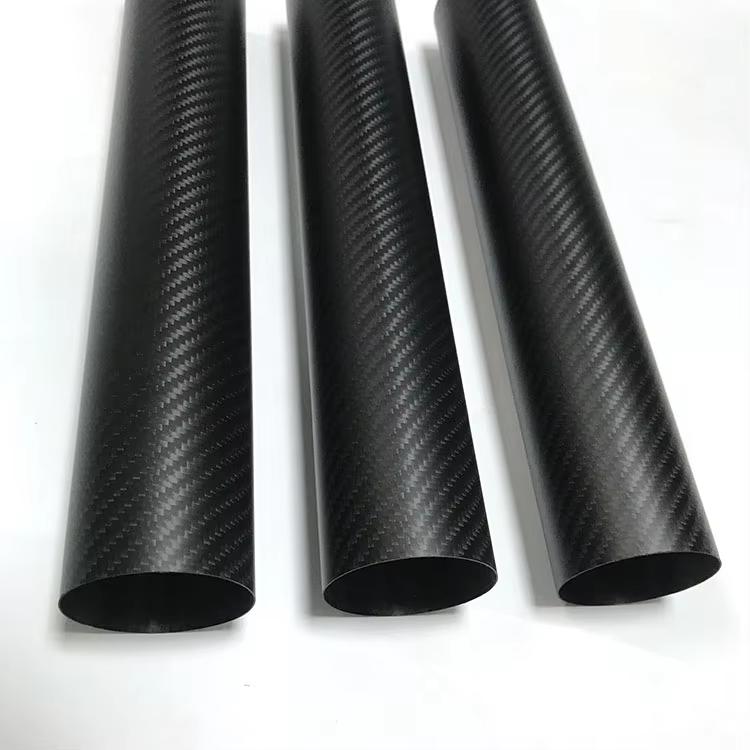
Carbon fiber tubing has revolutionized modern engineering by offering an exceptional combination of strength, lightweight properties, and design flexibility. This advanced composite material enables engineers to create custom solutions that were previously impossible with traditional materials like steel or aluminum. The ability to tailor carbon fiber tubing specifications to exact application requirements has opened new possibilities across aerospace, automotive, robotics, and industrial sectors. Understanding how to leverage custom carbon fiber tubing design can significantly enhance project performance while reducing overall system weight and improving efficiency.
Understanding Carbon Fiber Tubing Design Parameters
Material Composition and Fiber Architecture
The foundation of custom carbon fiber tubing design begins with selecting the appropriate fiber type and weave pattern. Engineers can choose from various carbon fiber grades, including standard modulus, intermediate modulus, and high modulus fibers, each offering distinct mechanical properties. The fiber orientation and layup sequence directly influence the tube's strength characteristics in different directions. Unidirectional carbon fiber tubing provides maximum strength along the fiber direction, while woven fabrics offer more balanced properties.
The resin matrix system plays a crucial role in determining the final properties of carbon fiber tubing. Epoxy resins are most commonly used due to their excellent adhesion and mechanical properties, while specialized resins like bismaleimide or polyimide may be selected for high-temperature applications. The fiber-to-resin ratio can be optimized to achieve specific performance targets, with higher fiber content generally resulting in increased stiffness and strength.
Dimensional Specifications and Tolerances
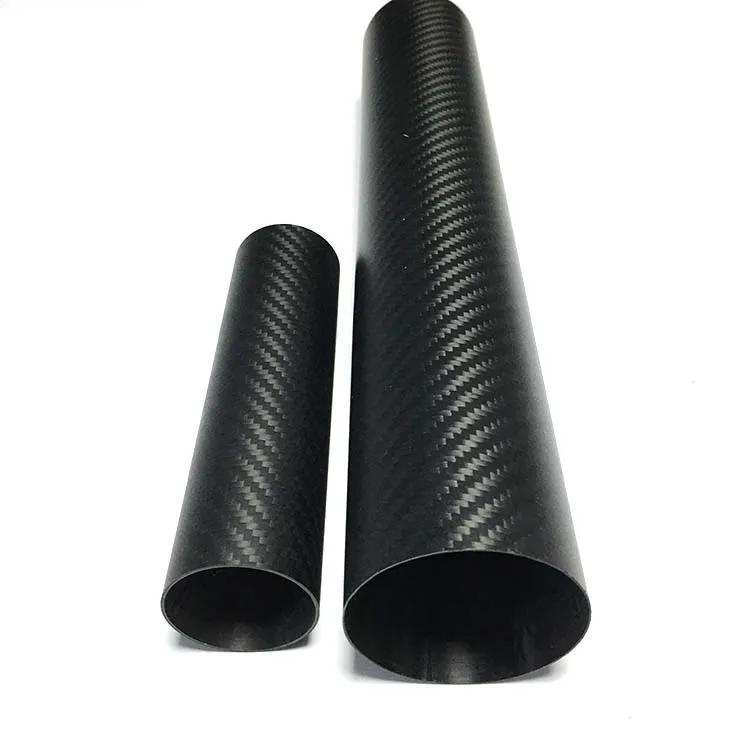
Custom carbon fiber tubing can be manufactured to precise dimensional requirements, including inner diameter, outer diameter, wall thickness, and length specifications. Advanced manufacturing techniques allow for complex geometries, including tapered sections, varying wall thickness, and integrated features. Tolerance control is critical in engineering applications, and modern carbon fiber tubing production can achieve tolerances as tight as ±0.05mm when required.
The aspect ratio of carbon fiber tubing significantly affects its performance characteristics. Longer tubes with smaller diameters may require special consideration for buckling resistance, while shorter, larger diameter tubes might focus on torsional rigidity. Engineers must balance these geometric factors with material properties to achieve optimal performance for specific applications.
Manufacturing Processes for Custom Applications
Pultrusion Technology
Pultrusion represents one of the most efficient methods for producing continuous lengths of carbon fiber tubing with consistent cross-sectional properties. This process involves pulling carbon fibers through a resin bath and then through a heated die that shapes and cures the composite material. The pultrusion process enables precise control over fiber content, orientation, and dimensional accuracy while maintaining cost-effectiveness for longer production runs.
Advanced pultrusion systems can incorporate multiple fiber types and orientations within a single carbon fiber tubing design. This capability allows engineers to create hybrid structures that optimize performance in different loading directions. The continuous nature of pultrusion also ensures consistent material properties throughout the length of the tube, which is essential for structural applications requiring predictable performance.
Filament Winding Techniques
Filament winding offers exceptional flexibility in designing carbon fiber tubing with complex fiber orientations and varying wall thickness. This process winds continuous carbon fiber tows around a rotating mandrel in predetermined patterns to achieve specific mechanical properties. Engineers can program the winding angles, tension, and resin content to optimize the tube for particular loading conditions.
The filament winding process excels in creating carbon fiber tubing with high hoop strength for pressure vessel applications or tubes with specific torsional properties for drive shafts. Multi-axis winding capabilities enable the creation of complex fiber architectures that cannot be achieved through other manufacturing methods. This flexibility makes filament winding ideal for custom applications requiring unique performance characteristics.
Application-Specific Design Considerations
Aerospace and Defense Applications
Aerospace applications demand carbon fiber tubing that meets stringent weight, strength, and environmental resistance requirements. Custom designs must account for extreme temperature variations, vibration resistance, and long-term durability under challenging conditions. The carbon fiber tubing used in aircraft structures often incorporates flame-retardant resins and specialized surface treatments to meet aviation safety standards.
Satellite and space applications require carbon fiber tubing with exceptional dimensional stability and resistance to radiation degradation. Custom designs for these applications often feature specialized resin systems and surface coatings that maintain performance in the harsh space environment. The coefficient of thermal expansion must be carefully controlled to prevent dimensional changes that could affect precision instruments or optical systems.
Automotive and Motorsport Engineering
The automotive industry leverages custom carbon fiber tubing for weight reduction without compromising safety or performance. Roll cage structures, drive shafts, and suspension components benefit from the high strength-to-weight ratio of carbon fiber materials. Custom designs must meet specific crash safety requirements while providing optimal performance characteristics for the intended application.
Motorsport applications push carbon fiber tubing design to its limits, requiring components that can withstand extreme loads and harsh operating conditions. Custom tubing for racing applications often features specialized joints and connection systems that facilitate rapid assembly and maintenance. The ability to tailor carbon fiber tubing properties for specific racing disciplines gives teams a competitive advantage through optimized performance.
Advanced Design Optimization Techniques
Finite Element Analysis Integration
Modern carbon fiber tubing design relies heavily on finite element analysis (FEA) to optimize performance before manufacturing. Advanced simulation software can model the complex anisotropic properties of carbon fiber materials and predict performance under various loading conditions. This capability enables engineers to refine designs and reduce the need for physical prototyping, accelerating the development process while reducing costs.
Multi-physics simulations can evaluate carbon fiber tubing performance under combined mechanical, thermal, and environmental loads. This comprehensive analysis approach ensures that custom designs will perform as expected in real-world applications. The integration of manufacturing constraints into the simulation process helps optimize designs for both performance and producibility.
Topology Optimization Methods
Topology optimization techniques enable the creation of carbon fiber tubing designs that achieve maximum performance with minimum material usage. These computational methods can determine optimal fiber orientations, wall thickness variations, and geometric features to meet specific performance requirements. The resulting designs often feature complex geometries that would be difficult to achieve through traditional design approaches.
Advanced optimization algorithms can balance multiple objectives simultaneously, such as weight minimization, stiffness maximization, and manufacturability constraints. This multi-objective approach ensures that carbon fiber tubing designs represent the best compromise between competing requirements, resulting in more efficient and cost-effective solutions.
Quality Control and Testing Protocols
Non-Destructive Evaluation Methods
Quality assurance for custom carbon fiber tubing requires sophisticated non-destructive testing methods to verify material integrity and dimensional accuracy. Ultrasonic inspection techniques can detect internal defects such as voids, delaminations, or fiber misalignment that could compromise performance. Computed tomography scanning provides detailed three-dimensional images of the tube structure, enabling comprehensive quality assessment.
Dimensional inspection using coordinate measuring machines ensures that carbon fiber tubing meets specified tolerances and geometric requirements. Advanced optical measurement systems can evaluate complex geometries and surface characteristics with high precision. These quality control measures are essential for applications where performance reliability is critical.
Mechanical Property Verification
Custom carbon fiber tubing designs require comprehensive mechanical testing to validate performance characteristics. Standardized test methods evaluate tensile strength, compressive strength, flexural properties, and fatigue resistance under controlled conditions. Specialized test fixtures accommodate the unique geometries and loading conditions specific to each application.
Environmental testing protocols verify carbon fiber tubing performance under expected service conditions, including temperature cycling, humidity exposure, and chemical resistance. Long-term durability testing provides confidence in the design's ability to maintain performance throughout its intended service life. These comprehensive testing programs ensure that custom carbon fiber tubing designs meet or exceed application requirements.
Future Trends in Carbon Fiber Tubing Design
Smart Materials Integration
The integration of smart materials and sensors into carbon fiber tubing design represents a significant advancement in structural health monitoring capabilities. Embedded fiber optic sensors can provide real-time monitoring of strain, temperature, and damage progression throughout the structure's service life. This capability enables predictive maintenance strategies and enhanced safety in critical applications.
Shape memory alloy integration within carbon fiber tubing designs enables adaptive structures that can change configuration in response to environmental conditions. These smart carbon fiber tubing systems offer new possibilities for morphing structures and self-healing capabilities that could revolutionize aerospace and automotive applications.
Sustainable Manufacturing Approaches
Environmental sustainability is driving innovations in carbon fiber tubing manufacturing and design. Recycled carbon fiber materials are being integrated into new tubing designs, reducing environmental impact while maintaining performance characteristics. Bio-based resin systems offer alternatives to traditional petroleum-derived materials without compromising mechanical properties.
Additive manufacturing techniques are being developed for carbon fiber tubing production, enabling complex geometries and reduced waste compared to traditional manufacturing methods. These advanced production techniques allow for more sustainable carbon fiber tubing designs while opening new possibilities for customization and performance optimization.
FAQ
What are the key advantages of custom carbon fiber tubing over standard aluminum or steel tubing?
Custom carbon fiber tubing offers several significant advantages over traditional metallic materials. The primary benefit is the exceptional strength-to-weight ratio, with carbon fiber tubing being up to 70% lighter than steel while maintaining comparable or superior strength properties. Additionally, carbon fiber tubing exhibits excellent corrosion resistance, eliminating the need for protective coatings and reducing long-term maintenance requirements. The anisotropic properties of carbon fiber allow engineers to tailor the material properties directionally, optimizing performance for specific loading conditions in ways that are impossible with isotropic metals.
How does the manufacturing process affect the cost of custom carbon fiber tubing?
The manufacturing process significantly impacts the cost of custom carbon fiber tubing, with different techniques offering various cost-performance trade-offs. Pultrusion is generally the most cost-effective method for high-volume production of constant cross-section tubes, while filament winding offers greater design flexibility but typically at higher unit costs. Hand layup processes provide maximum customization capability but are labor-intensive and suitable primarily for low-volume, high-performance applications. The complexity of the design, required tolerances, and production volume all influence the optimal manufacturing approach and associated costs.
What design considerations are most critical for high-temperature carbon fiber tubing applications?
High-temperature applications require careful consideration of both the carbon fiber and resin matrix system. The resin system typically becomes the limiting factor at elevated temperatures, with standard epoxy resins suitable up to approximately 120°C, while specialized high-temperature resins like bismaleimide or polyimide can operate at temperatures exceeding 300°C. Thermal expansion coefficients must be carefully matched between the fiber and matrix to prevent internal stresses. Additionally, oxidation protection becomes critical at high temperatures, often requiring specialized coatings or barrier layers to prevent degradation of the carbon fibers in oxidizing environments.
How can engineers optimize carbon fiber tubing designs for specific fatigue life requirements?
Optimizing carbon fiber tubing for fatigue life requires attention to several key design parameters. Fiber orientation plays a crucial role, with off-axis fibers helping to distribute loads and reduce stress concentrations that can initiate fatigue cracks. Surface finish quality is critical, as surface defects can act as stress concentrators and reduce fatigue life significantly. The resin system selection affects the interface between fibers and matrix, influencing crack propagation resistance. Additionally, proper joint design and stress distribution at connection points can prevent premature fatigue failure. Comprehensive fatigue testing under representative loading conditions is essential to validate the design and establish appropriate safety factors for the intended application.
Table of Contents
- Understanding Carbon Fiber Tubing Design Parameters
- Manufacturing Processes for Custom Applications
- Application-Specific Design Considerations
- Advanced Design Optimization Techniques
- Quality Control and Testing Protocols
- Future Trends in Carbon Fiber Tubing Design
-
FAQ
- What are the key advantages of custom carbon fiber tubing over standard aluminum or steel tubing?
- How does the manufacturing process affect the cost of custom carbon fiber tubing?
- What design considerations are most critical for high-temperature carbon fiber tubing applications?
- How can engineers optimize carbon fiber tubing designs for specific fatigue life requirements?