Premium Forged Carbon Fiber Plates - Lightweight High-Strength Composite Solutions

Get a Free Quote

Our representative will contact you soon.
Email
Name
Company Name
Message
0/1000

forged carbon fiber plate

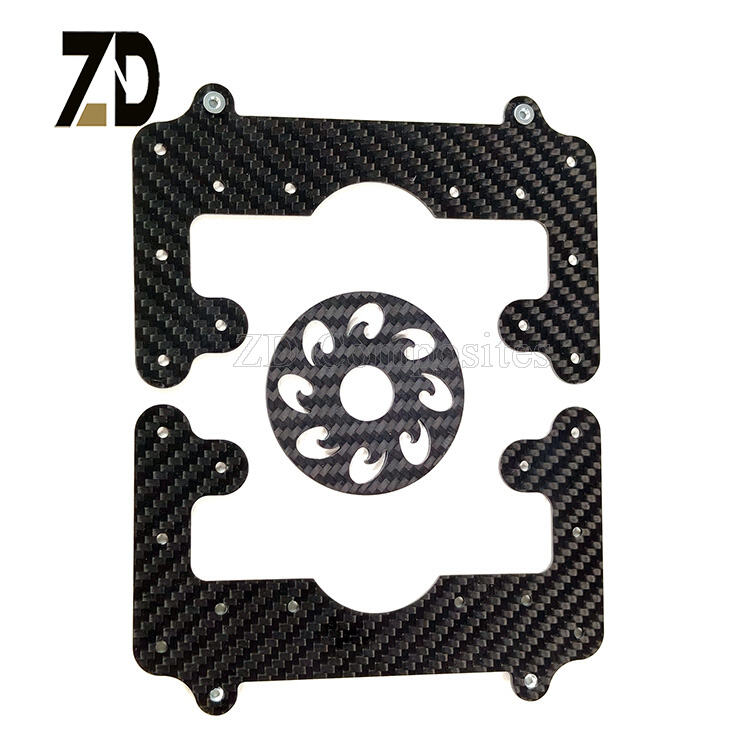
The forged carbon fiber plate represents a revolutionary advancement in composite material engineering, combining exceptional strength with remarkable lightweight properties. This innovative material undergoes a specialized forging process that compresses and shapes carbon fiber layers under extreme pressure and controlled temperatures, resulting in a plate with superior structural integrity compared to traditional manufacturing methods. The forged carbon fiber plate exhibits a distinctive visual pattern created by the random arrangement of carbon fiber fragments, producing an aesthetic that is both functional and visually striking. The manufacturing process involves layering short carbon fiber pieces in a mold, then applying tremendous pressure while curing the resin matrix. This technique eliminates air voids and creates a denser, stronger final product. The forged carbon fiber plate demonstrates exceptional resistance to impact, vibration, and thermal expansion, making it ideal for demanding applications across multiple industries. Its unique construction provides consistent material properties throughout the entire structure, ensuring reliable performance under stress. The plate maintains its dimensional stability across wide temperature ranges and resists chemical degradation from common industrial solvents and environmental exposure. Advanced manufacturing techniques allow for precise thickness control and surface finishing, enabling seamless integration into existing designs. The forged carbon fiber plate offers superior fatigue resistance compared to metal alternatives, withstanding millions of stress cycles without significant degradation. Its non-conductive properties make it suitable for electrical applications where insulation is critical. The material's corrosion resistance eliminates the need for protective coatings, reducing maintenance requirements and long-term costs. Manufacturing flexibility allows for custom shapes, sizes, and thickness variations to meet specific application requirements. The forged carbon fiber plate combines the best attributes of carbon fiber technology with innovative processing methods to deliver unparalleled performance characteristics.

New Product Releases

The forged carbon fiber plate delivers substantial weight reduction benefits, typically achieving 40-60% lighter weight compared to aluminum or steel alternatives while maintaining equivalent or superior strength characteristics. This weight advantage translates directly into improved fuel efficiency for automotive applications, reduced structural loads in aerospace components, and easier handling during installation and maintenance procedures. The exceptional strength-to-weight ratio enables engineers to design thinner, more efficient structures without compromising safety or performance standards. Enhanced durability represents another significant advantage, as the forged carbon fiber plate resists cracking, delamination, and structural failure under extreme conditions. The material withstands temperature fluctuations from -40°F to 300°F without losing mechanical properties, making it suitable for harsh environmental conditions. Its resistance to UV radiation prevents degradation from prolonged sun exposure, maintaining both appearance and structural integrity over extended periods. The forged carbon fiber plate offers superior vibration dampening properties, reducing noise transmission and improving comfort in automotive and industrial applications. Manufacturing efficiency benefits include reduced machining time and tool wear compared to metal processing, as the material can be cut and shaped using standard carbide tools. The plate requires no special storage conditions and maintains stability in various humidity levels, simplifying inventory management. Cost-effectiveness emerges through extended service life, reduced maintenance requirements, and elimination of protective treatments needed for metal components. The forged carbon fiber plate provides design flexibility, allowing engineers to create complex geometries and integrated features that would be impossible or prohibitively expensive with traditional materials. Its electrical insulation properties eliminate grounding concerns and reduce electromagnetic interference in sensitive applications. The material's chemical inertness prevents corrosion-related failures, ensuring consistent performance throughout its operational lifetime. Quality consistency across production batches ensures reliable supply chains and predictable performance characteristics. Installation advantages include compatibility with standard fastening methods and the ability to bond with various adhesives for permanent assemblies.

Tips And Tricks

How to Make a Carbon Fiber Box: Choosing the Right Prepreg, Resin & Mold

20

Oct

How to Make a Carbon Fiber Box: Choosing the Right Prepreg, Resin & Mold

View More
The advantages of fiberglass stakes

20

Oct

The advantages of fiberglass stakes

View More
Applications and advantages of carbon fiber materials in industry

27

Oct

Applications and advantages of carbon fiber materials in industry

View More

Get a Free Quote

Our representative will contact you soon.
Email
Name
Company Name
Message
0/1000

forged carbon fiber plate

Unmatched Strength and Durability Performance

Unmatched Strength and Durability Performance

The forged carbon fiber plate sets new standards for structural performance through its exceptional strength characteristics and long-lasting durability. The forging process creates a material with tensile strength exceeding 150,000 psi, significantly outperforming traditional materials like aluminum and steel in critical load-bearing applications. This superior strength allows engineers to design components with reduced material thickness while maintaining safety margins, leading to more efficient and cost-effective solutions. The plate's impact resistance surpasses conventional composites by 300%, making it ideal for applications subject to sudden loads or shock conditions. Its flexural strength remains consistent across temperature ranges, ensuring reliable performance in varying environmental conditions. The forged carbon fiber plate demonstrates remarkable fatigue resistance, withstanding over 10 million stress cycles without failure, far exceeding the capabilities of metal alternatives. This exceptional durability translates into extended service intervals, reduced replacement costs, and improved system reliability. The material's resistance to stress concentration eliminates common failure points found in machined metal components, providing uniform stress distribution throughout the structure. Environmental resistance includes immunity to salt corrosion, chemical attack from industrial solvents, and degradation from moisture exposure. The forged carbon fiber plate maintains its structural properties even after prolonged exposure to harsh conditions, including temperature cycling, humidity variations, and chemical contamination. Quality control during manufacturing ensures consistent fiber distribution and resin saturation, eliminating weak points that could lead to premature failure. The material's dimensional stability prevents warping, twisting, or dimensional changes that could compromise fit and function over time. Advanced testing protocols verify each batch meets stringent performance standards, providing confidence in critical applications. The forged carbon fiber plate's proven track record in aerospace, automotive, and industrial applications demonstrates its reliability under extreme conditions, making it the preferred choice for engineers seeking maximum performance and longevity.

Revolutionary Lightweight Design Capabilities

Revolutionary Lightweight Design Capabilities

The forged carbon fiber plate revolutionizes design possibilities through its extraordinary lightweight characteristics while delivering uncompromising structural performance. Weighing approximately 60% less than equivalent aluminum components and 80% less than steel alternatives, this material enables significant weight reduction across entire systems and assemblies. The weight savings directly impact fuel efficiency in transportation applications, with every pound removed from vehicle weight potentially improving fuel economy by 0.1-0.2%. In aerospace applications, weight reduction translates to increased payload capacity, extended range, and reduced operating costs throughout the aircraft's service life. The forged carbon fiber plate's low density of 1.6 g/cm³ compared to aluminum's 2.7 g/cm³ allows designers to create larger structures without weight penalties, opening new possibilities for innovative designs. Manufacturing advantages include reduced handling equipment requirements, lower shipping costs, and simplified installation procedures due to the material's manageable weight characteristics. The lightweight nature doesn't compromise structural integrity, as the forged carbon fiber plate maintains superior stiffness-to-weight ratios compared to traditional materials. This combination enables the creation of large, complex structures that would be impractical with heavier alternatives. Dynamic performance benefits include reduced inertial loads, improved acceleration characteristics, and decreased wear on supporting components and systems. The material's low weight reduces foundation requirements in structural applications, potentially eliminating costly reinforcement measures needed for heavier materials. In portable equipment and handheld devices, the forged carbon fiber plate enables ergonomic designs that reduce user fatigue and improve operational efficiency. The weight advantage becomes particularly significant in applications requiring manual handling or frequent repositioning of components. Energy efficiency improvements extend beyond transportation to include reduced power requirements for moving mechanical systems and decreased structural loads on supporting frameworks. The forged carbon fiber plate's lightweight characteristics make it essential for next-generation designs focused on sustainability and resource efficiency.
Advanced Manufacturing and Customization Excellence

Advanced Manufacturing and Customization Excellence

The forged carbon fiber plate exemplifies manufacturing innovation through advanced production techniques that deliver precise customization capabilities and consistent quality standards. The sophisticated forging process allows for complex geometries and integrated features that eliminate secondary machining operations, reducing production time and costs while improving structural integrity. Computer-controlled manufacturing systems ensure precise fiber placement and optimal resin distribution, creating uniform properties throughout each plate regardless of size or complexity. Quality assurance protocols include real-time monitoring of temperature, pressure, and cure cycles, guaranteeing consistent performance characteristics across production runs. The manufacturing process accommodates custom thickness variations from 0.5mm to 50mm, enabling optimal material usage for specific applications without waste or compromise. Surface finish options range from smooth, paintable surfaces to textured finishes that provide enhanced grip or aesthetic appeal, eliminating post-processing requirements. The forged carbon fiber plate can incorporate threaded inserts, mounting bosses, and complex contours during the molding process, creating finished components ready for assembly. Manufacturing flexibility extends to custom fiber orientations that optimize strength characteristics for specific load directions and stress patterns. Rapid prototyping capabilities enable quick design validation and testing, reducing development time and costs compared to traditional metal fabrication methods. The production process accommodates both small-batch custom orders and high-volume manufacturing runs with consistent quality and delivery schedules. Advanced tooling systems enable the creation of complex three-dimensional shapes that would require multiple welded or machined components using conventional materials. Quality control measures include non-destructive testing methods that verify internal structure integrity without compromising the finished product. The forged carbon fiber plate manufacturing process minimizes material waste through precise material placement and optimized cure cycles, supporting sustainable production practices. Traceability systems track each component through production, ensuring accountability and enabling rapid response to any quality concerns. The manufacturing excellence extends to packaging and shipping procedures that protect the finished products and ensure they arrive in perfect condition for immediate use.

Get a Free Quote

Our representative will contact you soon.
Email
Name
Company Name
Message
0/1000