
 EN
EN



Carbon Fiber Plate Applications: The Structural Backbone of Next-Gen Industry
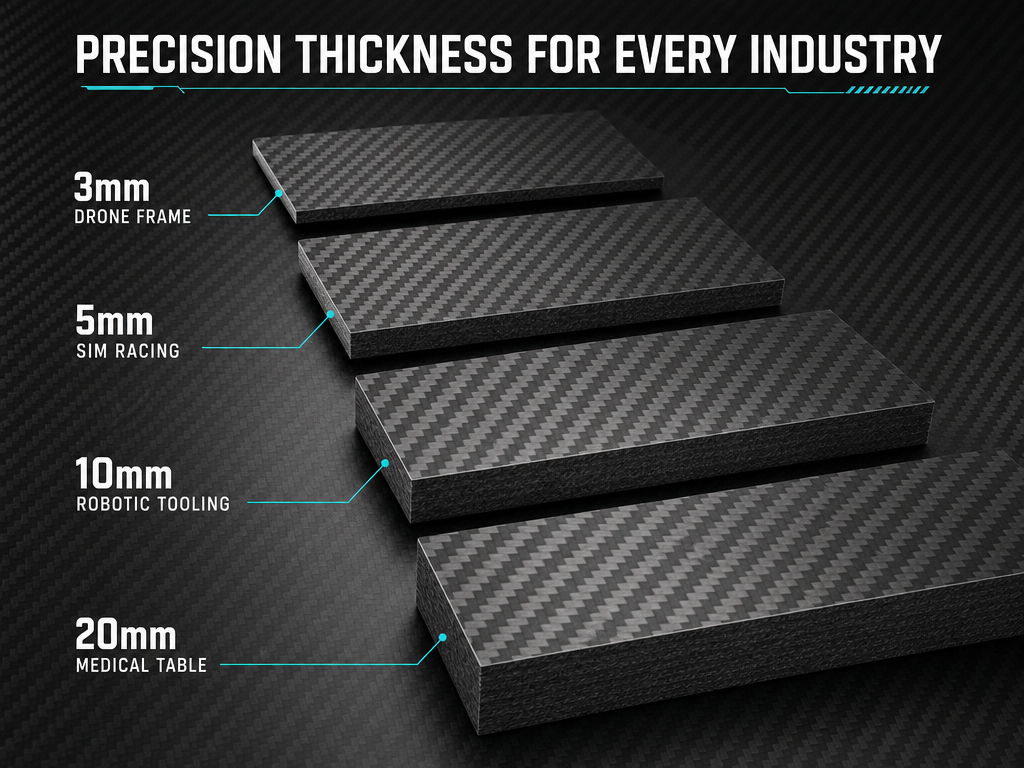
In the hierarchy of high-performance materials, the carbon fiber plate (also known as carbon fiber sheet or board) occupies a unique position. While carbon fiber tubes provide the framework, the plate provides the skin, the structural heart, and the precision surface for the world's most demanding engineering tasks.
As we move into 2026, the transition from traditional alloys like aluminum and steel toward carbon composites has accelerated. This isn't just about weight—it's about a fundamental shift in how we solve problems in robotics, medicine, aerospace, and high-stakes recreation.
This comprehensive guide explores the diverse applications of the carbon fiber plate, analyzing why this material is the silent hero of modern innovation.
1. Industrial Automation and Robotics: The Speed of Light
In industrial automation, mass is the enemy of productivity. Every gram of weight on a robotic arm requires energy to move, time to stabilize, and torque to stop.
Robotic End-Effectors and Tooling
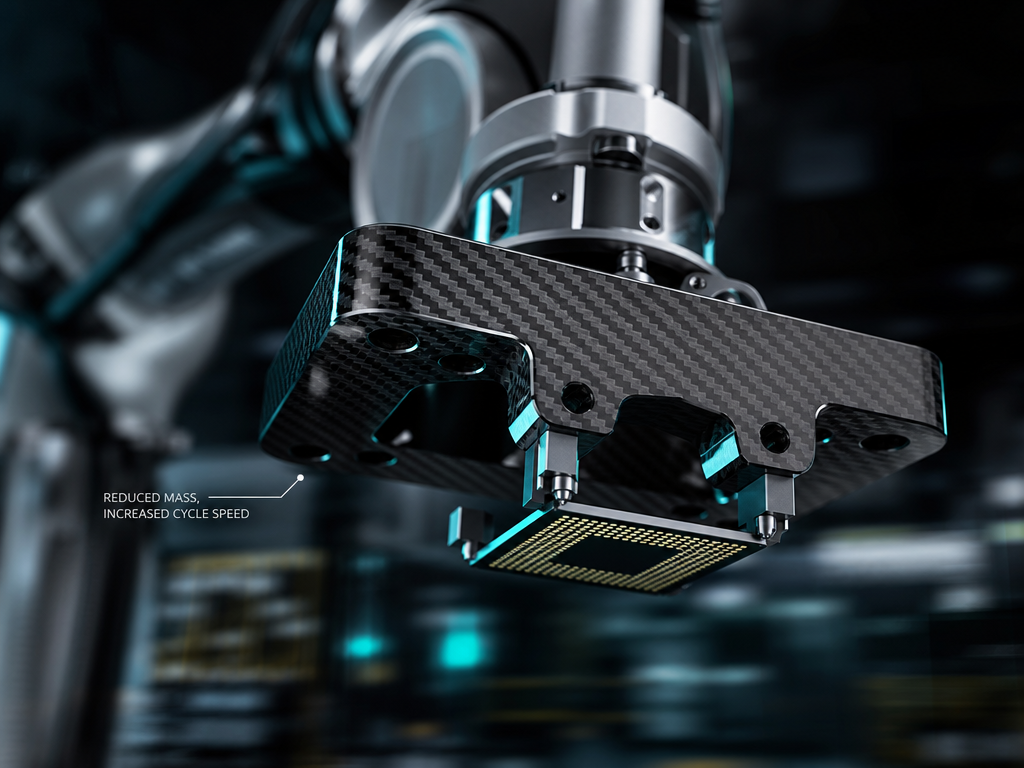
The carbon fiber plate has become the industry standard for custom end-effectors (the "hands" of the robot).
- Higher Cycle Rates: By replacing aluminum tooling with a CNC-machined carbon fiber board, manufacturers can reduce the mass of the end-effector by up to 60%. This allows for faster acceleration and deceleration, leading to a direct 20-30% increase in production line speed.
- Vibration Damping: Unlike metals, carbon composites naturally dissipate energy. In high-speed pick-and-place operations, a carbon fiber tool settles faster, allowing the sensor to confirm placement without the "jitter" associated with heavier metal tools.
Precision Jigs and Fixtures
For high-precision assembly lines, the low Coefficient of Thermal Expansion (CTE) of a carbon fiber plate ensures that fixtures remain dimensionally stable even under significant temperature fluctuations. This is critical in semiconductor and electronics manufacturing.
2. Medical and Healthcare: The Power of Radiolucency
One of the most specialized applications of the carbon fiber plate is in the medical field, where its interaction with radiation is as important as its strength.
X-Ray and Imaging Tables
Carbon fiber is "radiolucent," meaning X-rays pass through it with minimal absorption or scattering.
- Clearer Imaging: A thin, high-modulus carbon fiber sheet used as a tabletop for CT scanners or MRI machines allows for high-resolution images while using lower radiation doses for the patient.
- Structural Support: Despite being invisible to X-rays, the plate provides the extreme rigidity needed to support patients weighing up to 250kg without significant deflection.
Orthotics and Prosthetics
From custom insoles to structural components of prosthetic limbs, the spring-like energy return of a carbon fiber plate helps restore mobility to patients, providing a lightweight solution that mirrors the natural flex of human bone and tendon.
3. Aerospace and Defense: Structural Efficiency
In aerospace, every kilogram removed from a structure is worth thousands of dollars in fuel savings or additional payload capacity.
UAV and Drone Frames
The modern drone industry is built on the carbon fiber plate.
- Arm Braces and Main Frames: Multirotors utilize 3mm to 6mm plates for their core chassis. The high stiffness-to-weight ratio ensures that the motors' vibrations do not resonate through the frame, protecting sensitive flight controllers and camera gimbals.
- Impact Resistance: High-toughness resin systems used in our carbon fiber plates allow drones to survive hard landings that would shatter plastic or permanently bend aluminum frames.
Internal Aircraft Components
Beyond the outer skin, carbon fiber plates are used for internal bulkheads, seat structures, and avionics trays, providing a fire-resistant, lightweight alternative to traditional materials.
4. Professional Sim Racing and High-Performance Automotive
As discussed in our [Sim Racing Technical Guide], carbon fiber is the ultimate material for cockpit feedback.
Steering Wheel Faceplates
The carbon fiber plate is the face of high-end sim racing.
- Tactile Feedback: A 4mm matte carbon fiber board provides a rigid platform for buttons and magnetic shifters. This rigidity ensures that the force feedback from the motor is transmitted directly to the driver's hands without being absorbed by a flexing plastic panel.
- Aesthetic Authority: The 3K twill weave finish is the global visual shorthand for "performance," making it essential for boutique sim hardware manufacturers.
Aerodynamic Components (Splitters and Diffusers)
In real-world racing and track-day cars, large carbon fiber plates are CNC-machined into front splitters and rear diffusers. The material’s ability to resist high-velocity airflow while remaining incredibly thin makes it the only choice for controlling downforce.
5. Marine and Outdoor Gear: Corrosion Resistance
Unlike steel or aluminum, a carbon fiber plate will never rust or corrode, making it the superior choice for saline environments.
- Marine Hardware: Used for custom deck reinforcements, instrument panels, and ultra-lightweight rudders.
- Tactical Gear: Carbon fiber sheets are used in specialized outdoor equipment, from backpack frames to knife handles and camera tripod mounting plates.
6. How to Choose the Right Plate for Your Application
Choosing the right carbon fiber plate involves more than just selecting a thickness. At Zhongda Composites, we guide our B2B partners through three technical tiers:
A. Fabric-Based Plates (3K Twill/Plain)
The "Classic" plate. Features woven fabric on both faces, providing balanced strength in two axes (0°/90°). Ideal for aesthetics, sim racing, and general structural panels.
B. Unidirectional (UD) Structural Plates
Optimized for maximum strength in a single direction. Often used for drone arms or long support beams where the load is predictable.
C. Sandwich Core Plates (Honeycomb/Foam)
When thickness is required without the weight of solid carbon, we utilize sandwich cores. A 10mm sandwich carbon fiber plate can be stiffer than a solid 5mm plate while being significantly lighter.
Summary Technical Matrix: Application vs. Specification
| Application | Recommended Thickness | Recommended Finish | Key Benefit |
|---|---|---|---|
| Drone Frames | 3.0mm - 5.0mm | Matte / Non-Slip | Crash Durability |
| Robotic End-Effectors | 5.0mm - 10.0mm | High-Gloss | Cycle Speed |
| Sim Racing Faceplates | 3.0mm - 4.5mm | 3K Twill Matte | Rigidity / Feel |
| X-Ray Tables | 10.0mm - 20.0mm | Smooth Polish | Radiolucency |
| Automotive Splitters | 2.0mm - 3.0mm | UV-Protected Gloss | Aerodynamics |
The Future: Pultruded Carbon Fiber Plates
For 2027, Zhongda is expanding its pultruded carbon fiber plate line. By utilizing continuous manufacturing, we can produce plates of infinite length with 100% longitudinal fiber alignment. This is a game-changer for infrastructure reinforcement and industrial conveyor systems where cost-per-meter and tensile strength are the primary drivers.
Conclusion: Partnering with Zhongda for Custom Solutions
The carbon fiber plate is not a commodity; it is a solution to an engineering challenge. Whether you are building the next generation of robotic end-effectors or a tournament-winning drone, the quality of your composite substrate defines the ceiling of your product’s performance.
Zhongda Composites Co., Ltd. provides full-service CNC machining, custom layups, and engineering consultation for B2B clients worldwide. Contact our technical team today to discuss your application's load requirements and receive a precision-engineered carbon fiber solution.