
 EN
EN


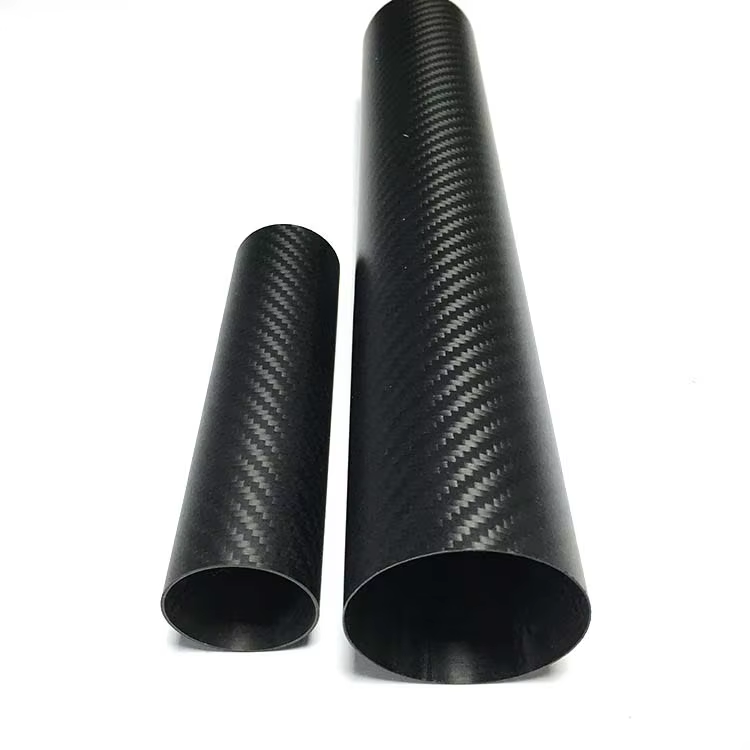
Manufacturing industries today demand materials that deliver exceptional performance while maintaining structural integrity under extreme conditions. The carbon fiber tube has emerged as a revolutionary solution, offering unparalleled strength-to-weight ratios and remarkable flexibility that traditional materials simply cannot match. These advanced composite structures are transforming applications across aerospace, automotive, sporting goods, and industrial sectors by providing engineers with unprecedented design possibilities.
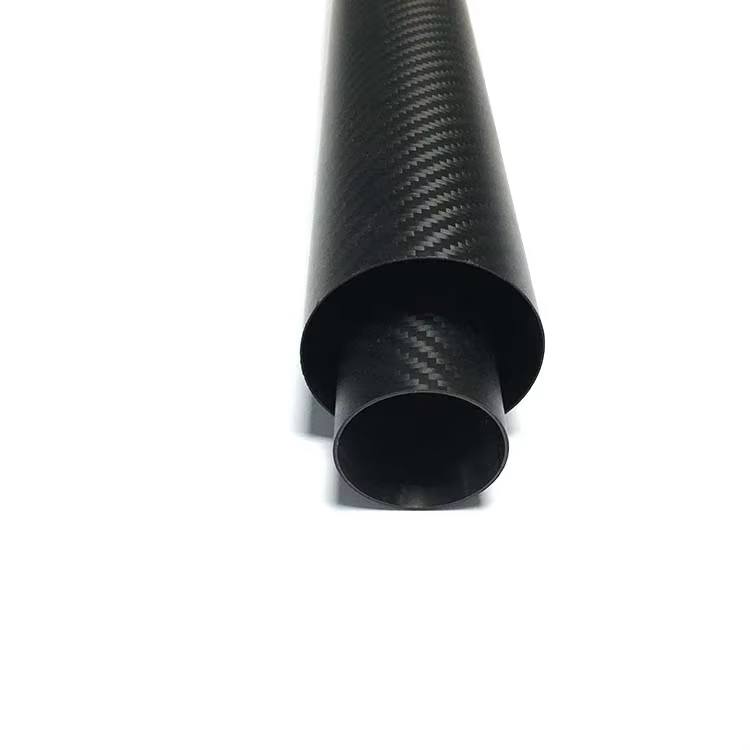
The unique properties of carbon fiber tube construction stem from the material's molecular structure and manufacturing process. Carbon fibers are woven into specific patterns and then combined with resin systems through precise curing techniques, creating tubes with exceptional mechanical properties. This sophisticated manufacturing approach results in components that can withstand tremendous loads while remaining remarkably lightweight and flexible enough to accommodate dynamic stresses without failure.
Understanding Carbon Fiber Tube Construction and Material Properties
Advanced Fiber Weaving Techniques
The foundation of any high-performance carbon fiber tube begins with the strategic arrangement of carbon fibers during the weaving process. Manufacturers employ various weaving patterns, including plain weave, twill weave, and unidirectional arrangements, each contributing specific strength characteristics to the final product. These patterns determine how loads are distributed throughout the tube structure, enabling engineers to optimize performance for specific applications.
Plain weave configurations provide excellent dimensional stability and are commonly used in general-purpose carbon fiber tube applications. The fibers alternate over and under each other in both directions, creating a balanced structure that offers consistent strength properties in all orientations. This weaving method is particularly valuable when the tube must resist multidirectional forces or when manufacturing precision is paramount.
Twill weave patterns offer enhanced drapability and surface smoothness compared to plain weave structures. In these arrangements, the weft fibers pass over and under multiple warp fibers in a specific sequence, creating a diagonal pattern that improves the material's ability to conform to complex shapes during manufacturing. This flexibility makes twill weave carbon fiber tube construction ideal for applications requiring curved or contoured geometries.
Resin Matrix Systems and Curing Processes
The resin matrix system serves as the binding agent that holds carbon fibers together and transfers loads between individual fibers within a carbon fiber tube. Epoxy resins are the most commonly used matrix materials due to their excellent adhesion properties, chemical resistance, and ability to cure at relatively low temperatures. These resins infiltrate the fiber structure completely, ensuring optimal load transfer and protecting the fibers from environmental degradation.
Temperature and pressure control during the curing process directly impact the final properties of the carbon fiber tube. Autoclave curing, which involves applying heat and pressure in a controlled environment, produces the highest quality tubes with minimal voids and maximum fiber-to-resin ratios. This process ensures complete resin cure and optimal consolidation of the composite layers, resulting in superior mechanical properties.
Alternative curing methods, such as oven curing and room temperature curing, offer cost advantages for certain applications while still producing high-quality carbon fiber tube products. The selection of curing method depends on the specific performance requirements, production volume, and cost considerations for each application. Advanced manufacturers often employ multiple curing techniques to optimize both performance and manufacturing efficiency.
Mechanical Properties That Define Superior Performance
Tensile Strength and Load Distribution
The tensile strength of a carbon fiber tube significantly exceeds that of traditional materials like steel or aluminum, often reaching values of 3,500 MPa or higher depending on the fiber grade and construction method. This exceptional strength allows engineers to design lighter structures that can handle greater loads, reducing overall system weight while improving performance. The unidirectional nature of carbon fibers means that strength can be optimized in specific directions based on anticipated load patterns.
Load distribution within a carbon fiber tube occurs through the interconnected fiber network, where individual fibers share loads through the resin matrix. This mechanism prevents catastrophic failure by distributing stress over a large number of fibers rather than concentrating it in a single location. When one fiber reaches its ultimate strength, surrounding fibers continue to carry the load, providing a progressive failure mode that offers better damage tolerance than many traditional materials.
The modulus of elasticity for carbon fiber tube construction typically ranges from 230 to 650 GPa, depending on the fiber type and orientation. This high stiffness-to-weight ratio enables the creation of structures that maintain their shape under load while remaining lightweight. Engineers can tailor the stiffness characteristics by adjusting fiber orientations and layup sequences to match specific application requirements.
Flexural Properties and Dynamic Response
Flexibility in carbon fiber tube design comes not from material softness but from optimized structural configurations that allow controlled deformation under load. The flexural modulus can be adjusted through strategic fiber placement and tube geometry, enabling engineers to create structures that bend without breaking while maintaining their load-carrying capacity. This controlled flexibility is particularly valuable in applications subject to dynamic loading or vibration.
The fatigue resistance of carbon fiber tube construction surpasses that of many metallic alternatives, with the ability to withstand millions of load cycles without significant degradation. This property stems from the stable nature of carbon-carbon bonds and the absence of grain boundaries that can initiate crack propagation in metals. The result is a material system that maintains its mechanical properties over extended service life, even under repeated loading conditions.
Dynamic response characteristics of carbon fiber tube structures include excellent vibration damping properties due to the viscoelastic nature of the resin matrix. This inherent damping reduces resonance effects and improves system stability in applications involving rotating machinery or oscillating loads. The combination of high stiffness and good damping makes these tubes ideal for precision applications where dimensional stability is critical.
Manufacturing Processes and Quality Control
Pultrusion and Filament Winding Techniques
Pultrusion represents one of the most efficient methods for producing continuous carbon fiber tube profiles with consistent cross-sectional properties. This process involves pulling carbon fibers through a resin bath and then through a heated die that shapes and cures the material simultaneously. The continuous nature of pultrusion enables the production of long lengths of carbon fiber tube with excellent dimensional accuracy and surface finish.
Filament winding offers superior control over fiber orientation and is particularly well-suited for producing carbon fiber tube structures with complex stress patterns. In this process, continuous fibers are wound around a mandrel in predetermined patterns while being impregnated with resin. The winding angle and pattern can be precisely controlled to optimize the tube's mechanical properties for specific loading conditions, making this technique ideal for high-performance applications.
The selection between pultrusion and filament winding depends on factors such as tube geometry, performance requirements, production volume, and cost considerations. Pultrusion excels in high-volume production of constant cross-section tubes, while filament winding provides greater flexibility for custom applications requiring specific fiber orientations or varying wall thicknesses along the tube length.
Quality Assurance and Testing Protocols
Non-destructive testing methods play a crucial role in ensuring the quality and reliability of carbon fiber tube products. Ultrasonic inspection can detect internal defects such as delaminations, voids, or resin-rich areas that could compromise the tube's performance. These testing methods allow manufacturers to verify structural integrity without damaging the finished product, ensuring that only tubes meeting stringent quality standards reach customers.
Mechanical testing protocols for carbon fiber tube validation include tensile testing, compression testing, flexural testing, and fatigue testing to verify that the finished products meet design specifications. These tests provide quantitative data on strength, stiffness, and failure modes that engineers need for confident design implementation. Statistical analysis of test results helps establish design allowables and safety factors appropriate for each application.
Environmental testing ensures that carbon fiber tube products will perform reliably under service conditions including temperature extremes, humidity exposure, and chemical exposure. Accelerated aging tests simulate long-term environmental effects in compressed time frames, allowing manufacturers to predict service life and recommend appropriate maintenance intervals for their products.
Applications Across Multiple Industries
Aerospace and Aviation Applications
The aerospace industry has embraced carbon fiber tube technology for applications ranging from structural components to control system elements. Aircraft manufacturers utilize these tubes in wing structures, fuselage frames, and landing gear components where weight reduction directly translates to improved fuel efficiency and payload capacity. The excellent fatigue resistance of carbon fiber tube construction makes it particularly valuable for components subjected to repeated loading cycles during flight operations.
Satellite and space vehicle applications benefit from the thermal stability and dimensional precision of carbon fiber tube structures. These components must maintain their shape and properties across extreme temperature ranges while minimizing weight penalties. The low coefficient of thermal expansion and high specific strength of carbon fiber tube construction make it ideal for applications such as antenna supports, instrument booms, and structural frameworks in space systems.
Unmanned aerial vehicle manufacturers increasingly rely on carbon fiber tube components for airframe construction, where the combination of lightweight construction and high strength enables extended flight times and improved payload capabilities. The design flexibility offered by carbon fiber tube technology allows engineers to create optimized structures that maximize performance while meeting strict weight constraints.
Industrial and Manufacturing Equipment
Manufacturing equipment applications for carbon fiber tube technology include rollers, drive shafts, and precision positioning systems where dimensional stability and vibration damping are critical. The high stiffness-to-weight ratio enables the construction of long, slender components that maintain their straightness under load while operating at high rotational speeds. This capability is particularly valuable in printing, textile, and material processing equipment where precise web handling is essential.
Robotic systems benefit from carbon fiber tube construction in arm segments and structural elements where reducing moving mass improves positioning accuracy and response time. The excellent fatigue resistance ensures reliable operation through millions of positioning cycles, while the lightweight construction reduces power consumption and enables faster acceleration and deceleration. These characteristics make carbon fiber tube components ideal for high-precision manufacturing and assembly operations.
Chemical processing equipment utilizes carbon fiber tube technology for applications requiring corrosion resistance and structural integrity in harsh environments. The inert nature of properly formulated carbon fiber composites provides excellent resistance to many chemicals while maintaining mechanical properties that allow safe operation under pressure and temperature conditions that would degrade traditional materials.
Design Considerations and Engineering Guidelines
Load Analysis and Structural Optimization
Effective carbon fiber tube design begins with thorough analysis of anticipated loading conditions throughout the component's service life. Engineers must consider not only peak loads but also fatigue loading, environmental effects, and potential impact conditions that could affect performance. The anisotropic nature of carbon fiber composites requires careful attention to fiber orientation relative to principal stress directions to maximize structural efficiency.
Finite element analysis tools specifically developed for composite materials enable engineers to optimize carbon fiber tube designs for minimum weight while meeting performance requirements. These analysis methods account for the complex stress distributions that occur in composite structures and help identify critical areas that require design attention. Advanced modeling techniques can predict failure modes and safety margins with high accuracy when properly calibrated with test data.
Joint design represents a critical aspect of carbon fiber tube implementation, as the connection between composite tubes and other components often determines overall system performance. Mechanical fasteners, bonded joints, and co-cured attachments each offer different advantages depending on the specific application requirements. Proper joint design ensures that the superior properties of the carbon fiber tube are effectively utilized throughout the complete structure.
Environmental Considerations and Service Life
Environmental factors significantly influence the long-term performance of carbon fiber tube installations, making it essential to consider exposure conditions during the design phase. Ultraviolet radiation can degrade the resin matrix over time, particularly in outdoor applications, requiring appropriate surface protection or UV-resistant resin formulations. Temperature cycling can induce thermal stresses due to differences in expansion coefficients between fibers and matrix materials.
Moisture absorption by the resin matrix can affect both mechanical properties and dimensional stability of carbon fiber tube structures. While carbon fibers themselves are unaffected by moisture, the resin system may experience property changes that influence overall performance. Design practices must account for these effects through appropriate material selection and protective measures when necessary.
Service life prediction for carbon fiber tube applications requires consideration of multiple degradation mechanisms acting simultaneously over extended periods. Accelerated testing methods help establish degradation rates under controlled conditions, but actual service environments may present complex combinations of stresses that require careful extrapolation from laboratory data. Regular inspection and maintenance programs help ensure continued safe operation throughout the intended service life.
Future Developments and Industry Trends
Advanced Materials and Manufacturing Technologies
Emerging carbon fiber tube technologies focus on improving manufacturing efficiency while enhancing performance characteristics through advanced materials and processes. New fiber treatments and resin systems promise improved interfacial bonding between fibers and matrix, resulting in better load transfer and enhanced mechanical properties. These developments enable the creation of carbon fiber tube products with even higher strength-to-weight ratios and improved damage tolerance.
Automated manufacturing processes are reducing production costs and improving quality consistency for carbon fiber tube products. Robotic fiber placement systems enable precise control over fiber orientation and placement, while automated inspection systems ensure consistent quality throughout production runs. These technological advances are making carbon fiber tube technology more accessible to a broader range of applications by reducing manufacturing costs and lead times.
Sustainability considerations are driving development of recyclable carbon fiber tube products and bio-based resin systems that reduce environmental impact without compromising performance. Research into fiber recycling methods and biodegradable matrix materials offers the potential for truly sustainable composite structures that maintain the performance advantages of traditional carbon fiber tube construction while addressing environmental concerns.
Expanding Application Areas
The construction industry represents an emerging market for carbon fiber tube technology, where these materials offer advantages in seismic retrofitting, architectural elements, and infrastructure repair applications. The corrosion resistance and high strength of carbon fiber tube construction make it particularly attractive for bridge cables, building reinforcement, and other structural applications where long service life and minimal maintenance are priorities.
Medical device applications for carbon fiber tube technology continue to expand as manufacturers seek lightweight, biocompatible materials with excellent mechanical properties. Prosthetic devices, surgical instruments, and medical imaging equipment benefit from the radiolucent properties of carbon fiber composites, which allow clear imaging while providing necessary structural support.
Energy sector applications for carbon fiber tube products include wind turbine components, transmission line supports, and energy storage systems where the combination of high performance and environmental resistance provides significant advantages over traditional materials. The ability to tailor mechanical properties for specific loading conditions makes carbon fiber tube technology particularly valuable for renewable energy applications with demanding performance requirements.
FAQ
What makes carbon fiber tubes stronger than traditional materials
Carbon fiber tubes achieve superior strength through their unique molecular structure and manufacturing process. The carbon-carbon bonds in the fibers provide exceptional tensile strength, while the strategic arrangement of fibers in the tube structure ensures optimal load distribution. The strength-to-weight ratio of carbon fiber tube construction typically exceeds steel by 3-5 times while weighing significantly less, making it ideal for applications where both strength and weight are critical factors.
How do carbon fiber tubes maintain flexibility while providing structural support
The flexibility of carbon fiber tube structures comes from engineered design rather than material softness. By controlling fiber orientation, wall thickness, and tube geometry, manufacturers can create structures that flex under load without breaking while maintaining their load-carrying capacity. This controlled deformation allows carbon fiber tubes to absorb energy and accommodate dynamic loading conditions while returning to their original shape when loads are removed.
What factors affect the service life of carbon fiber tube installations
Service life of carbon fiber tube products depends on environmental exposure, loading conditions, and manufacturing quality. UV radiation, temperature cycling, and chemical exposure can affect the resin matrix over time, while mechanical loading patterns influence fatigue life. Proper design, material selection, and protective measures can ensure service lives of 20-50 years or more in most applications, with some aerospace components designed for even longer service periods.
How do manufacturing processes influence carbon fiber tube performance characteristics
Manufacturing processes directly impact the final properties of carbon fiber tube products through their influence on fiber orientation, resin content, and void content. Pultrusion produces consistent properties ideal for structural applications, while filament winding allows optimization of fiber orientation for specific loading conditions. Quality control during manufacturing, including proper curing temperatures and pressures, ensures that the finished carbon fiber tube achieves its maximum potential performance characteristics.
Table of Contents
- Understanding Carbon Fiber Tube Construction and Material Properties
- Mechanical Properties That Define Superior Performance
- Manufacturing Processes and Quality Control
- Applications Across Multiple Industries
- Design Considerations and Engineering Guidelines
- Future Developments and Industry Trends
-
FAQ
- What makes carbon fiber tubes stronger than traditional materials
- How do carbon fiber tubes maintain flexibility while providing structural support
- What factors affect the service life of carbon fiber tube installations
- How do manufacturing processes influence carbon fiber tube performance characteristics