Flexible Carbon Fiber Tubes - Lightweight High-Strength Solutions for Advanced Applications

Get a Free Quote

Our representative will contact you soon.
Email
Name
Company Name
Message
0/1000

flexible carbon fiber tube

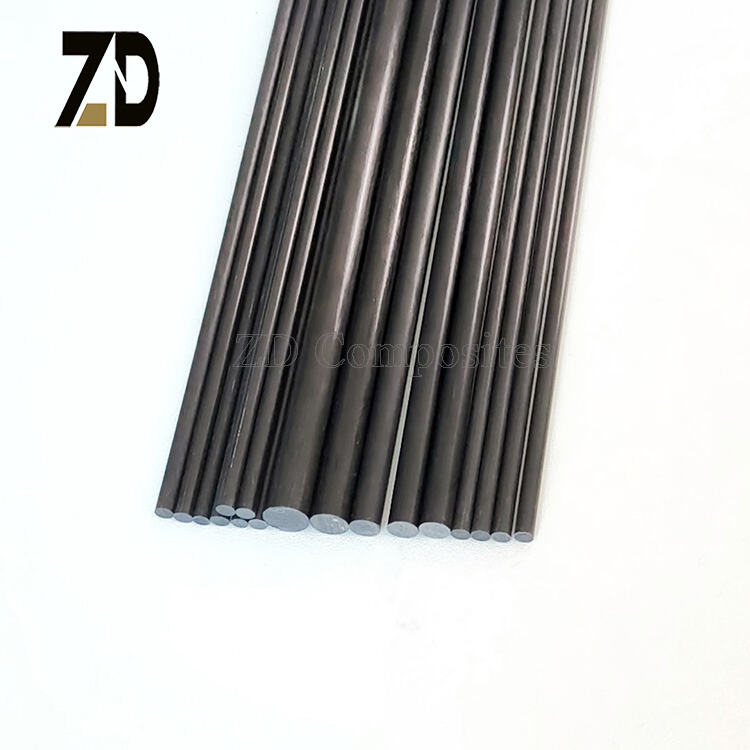
The flexible carbon fiber tube represents a revolutionary advancement in composite materials engineering, combining the exceptional strength-to-weight ratio of carbon fiber with unprecedented flexibility and durability. This innovative tubular structure consists of woven carbon fiber strands embedded in a specialized polymer matrix that allows for controlled bending and flexing while maintaining structural integrity. The manufacturing process involves precise layup techniques where carbon fiber sheets are wrapped around mandrels using specific fiber orientations to achieve optimal flexibility characteristics. The resulting flexible carbon fiber tube exhibits remarkable tensile strength, typically exceeding 3500 MPa, while weighing significantly less than traditional materials like steel or aluminum. The tube's unique construction allows it to bend repeatedly without fatigue failure, making it ideal for dynamic applications requiring both strength and movement. Temperature resistance ranges from -40°C to 120°C in standard configurations, with specialized variants capable of withstanding extreme conditions. The smooth internal surface reduces friction and turbulence, making these tubes excellent for fluid transfer applications. Corrosion resistance is exceptional, as carbon fiber does not rust or degrade when exposed to most chemicals and environmental conditions. The flexible carbon fiber tube finds extensive use across aerospace, automotive, robotics, medical devices, and industrial automation sectors. In aerospace applications, these tubes serve as fuel lines, hydraulic conduits, and structural elements in wing assemblies. The automotive industry utilizes them for exhaust systems, suspension components, and lightweight chassis elements. Medical applications include catheter guides, surgical instruments, and prosthetic components where biocompatibility and precision are crucial. The manufacturing tolerances can be held to extremely tight specifications, often within ±0.1mm, ensuring consistent performance across production runs.

New Product Releases

The flexible carbon fiber tube offers numerous compelling advantages that make it superior to conventional materials in demanding applications. Weight reduction stands as the most significant benefit, with these tubes weighing up to 70% less than equivalent steel components while providing comparable or superior strength characteristics. This weight savings translates directly into improved fuel efficiency in vehicles, reduced energy consumption in machinery, and enhanced payload capacity in aerospace applications. The exceptional strength properties allow for thinner wall sections without compromising structural integrity, further reducing overall system weight and material costs. Flexibility represents another crucial advantage, as these tubes can bend and flex thousands of times without developing stress fractures or fatigue failures that plague rigid materials. This flexibility enables complex routing through tight spaces and around obstacles, simplifying installation procedures and reducing the need for additional fittings and joints. The smooth bore interior minimizes pressure losses in fluid systems, improving overall efficiency and reducing pump requirements. Corrosion immunity eliminates the need for protective coatings, regular maintenance, and replacement due to environmental degradation, resulting in significant long-term cost savings. Temperature stability ensures consistent performance across wide temperature ranges without expansion or contraction issues that affect metal components. The non-conductive properties provide electrical isolation, preventing galvanic corrosion and eliminating electromagnetic interference concerns. Vibration damping characteristics reduce noise transmission and protect sensitive components from harmful oscillations. Manufacturing versatility allows for custom configurations, including varying wall thicknesses, internal linings, and specialized end fittings to meet specific application requirements. The aesthetic appeal of carbon fiber's distinctive weave pattern adds visual value in consumer applications. Chemical resistance extends service life in harsh environments where traditional materials would deteriorate rapidly. Precision manufacturing capabilities ensure dimensional stability and consistent performance characteristics across production batches. The combination of these advantages results in lower total cost of ownership, improved system performance, and enhanced reliability compared to traditional material solutions.

Tips And Tricks

How to Make a Carbon Fiber Box: Choosing the Right Prepreg, Resin & Mold

20

Oct

How to Make a Carbon Fiber Box: Choosing the Right Prepreg, Resin & Mold

View More
The advantages of fiberglass stakes

20

Oct

The advantages of fiberglass stakes

View More
Applications and advantages of carbon fiber materials in industry

27

Oct

Applications and advantages of carbon fiber materials in industry

View More

Get a Free Quote

Our representative will contact you soon.
Email
Name
Company Name
Message
0/1000

flexible carbon fiber tube

Unmatched Strength-to-Weight Performance

Unmatched Strength-to-Weight Performance

The flexible carbon fiber tube delivers exceptional strength-to-weight performance that fundamentally transforms how engineers approach structural design challenges. With tensile strengths reaching 3500 MPa while maintaining weights 60-70% lower than steel equivalents, these tubes enable previously impossible design solutions. The carbon fiber construction provides a strength-to-weight ratio approximately five times greater than steel and twice that of aluminum, making it the material of choice for weight-critical applications. This performance advantage stems from the unique molecular structure of carbon fibers, where carbon atoms form strong covalent bonds in a crystalline lattice arrangement. When woven and embedded in polymer matrices, these individual fibers work collectively to distribute loads evenly throughout the tube structure. The directional properties can be tailored during manufacturing by adjusting fiber orientations, allowing engineers to optimize strength characteristics for specific loading conditions. In aerospace applications, this weight reduction directly translates to increased fuel efficiency, extended range, and higher payload capacity. A single flexible carbon fiber tube replacing a steel component can save several pounds, and when multiplied across an entire aircraft, the cumulative weight savings can exceed hundreds of pounds. The automotive industry benefits similarly, with lighter vehicles achieving better acceleration, braking performance, and fuel economy. The strength properties also enable thinner wall constructions without compromising safety factors, creating additional space savings and material cost reductions. Fatigue resistance exceeds that of metals by significant margins, with flexible carbon fiber tubes capable of withstanding millions of flex cycles without degradation. This durability ensures long service life even in dynamic applications involving constant movement and vibration. The consistent strength properties across temperature ranges maintain performance integrity in extreme conditions where metals might become brittle or lose strength. Quality control during manufacturing ensures each flexible carbon fiber tube meets stringent specifications for strength, weight, and dimensional accuracy.
Superior Flexibility and Durability Engineering

Superior Flexibility and Durability Engineering

The engineered flexibility of carbon fiber tubes represents a breakthrough in material science, combining the inherent strength of carbon fiber with controlled bendability that maintains structural integrity throughout repeated flex cycles. This flexibility results from precise fiber orientation engineering during the manufacturing process, where carbon fiber layers are strategically positioned to allow controlled deformation while preventing failure. The polymer matrix system plays a crucial role, providing the flexible medium that allows individual carbon fibers to move relative to each other during bending operations. Advanced manufacturing techniques create tubes capable of bending to radii as tight as five times their diameter without permanent deformation or strength degradation. This flexibility enables routing through complex geometries, around obstacles, and through confined spaces that would be impossible with rigid materials. The durability aspect extends beyond simple flexibility to encompass resistance to fatigue, environmental conditions, and mechanical wear. Extensive testing demonstrates that flexible carbon fiber tubes can withstand over one million flex cycles at their maximum bend radius without developing micro-cracks or strength reduction. This exceptional fatigue resistance results from the fiber's ability to distribute stress loads evenly throughout the structure, preventing stress concentration points that cause failure in other materials. Environmental durability includes resistance to ultraviolet radiation, moisture, chemical exposure, and temperature cycling. Unlike metals that can corrode or degrade over time, carbon fiber maintains its properties indefinitely when properly manufactured. The smooth surface finish reduces wear on seals and connections, extending the life of entire systems. Impact resistance exceeds that of comparable rigid tubes, with the flexible construction absorbing energy through controlled deformation rather than catastrophic failure. Repair procedures for minor damage are straightforward, often requiring only surface treatments rather than complete component replacement. The combination of flexibility and durability makes these tubes ideal for robotic applications, where constant movement and precise positioning are required over extended operational periods.
Versatile Multi-Industry Applications

Versatile Multi-Industry Applications

The versatile nature of flexible carbon fiber tubes enables their successful integration across diverse industries, each benefiting from the unique combination of properties these advanced materials provide. In aerospace applications, these tubes serve critical functions in fuel systems, hydraulic lines, and environmental control systems where weight savings directly impact mission success and operational costs. The aerospace industry demands materials that can withstand extreme temperature variations, pressure differentials, and vibration loads while maintaining perfect reliability. Flexible carbon fiber tubes meet these requirements while providing significant weight reductions that improve aircraft performance and fuel efficiency. The medical industry has embraced these tubes for catheter applications, surgical instruments, and prosthetic devices where biocompatibility, precision, and reliability are paramount. The smooth interior surface reduces friction and turbulence in medical applications, improving patient comfort and procedure success rates. Sterilization compatibility allows for repeated processing without degradation, making these tubes cost-effective for reusable medical devices. Automotive applications range from exhaust systems and fuel lines to suspension components and chassis elements, where the combination of weight reduction and performance enhancement drives adoption. The vibration damping properties reduce noise transmission, improving passenger comfort, while corrosion resistance extends service life in harsh automotive environments. Industrial automation and robotics benefit from the flexibility that allows complex motion patterns while maintaining structural strength for precise positioning and load bearing. The electrical isolation properties prevent interference in sensitive electronic systems common in modern robotic applications. Marine applications utilize the corrosion resistance and weight savings for hull reinforcement, mast construction, and rigging systems where saltwater exposure would quickly degrade traditional materials. The sports and recreation industry has adopted flexible carbon fiber tubes for fishing rods, golf club shafts, and bicycle frames, where performance enhancement and aesthetic appeal drive consumer preference. Manufacturing flexibility allows for custom configurations including varying diameters, wall thicknesses, and end connections to meet specific application requirements across all industries.

Get a Free Quote

Our representative will contact you soon.
Email
Name
Company Name
Message
0/1000