EN
EN



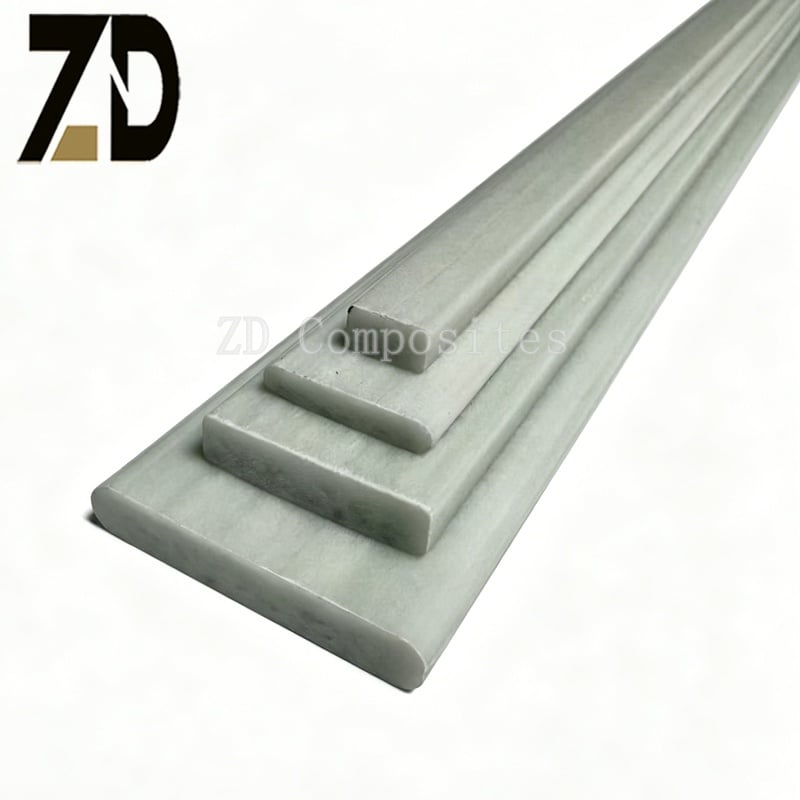
Fiberglass Flat Strip use for Yoga and Pilates
Fiberglass Flat Strip: The "Invisible Backbone" Supporting Yoga and Pilates
- Overview
- Recommended Products
Having worked in the fiberglass products industry for so many years, I've handled all sorts of products—from massive wind turbine blade frames to delicate communication equipment supports. But honestly, what I find most "interesting" is that unassuming fiberglass flat strip. Especially in the yoga and Pilates circles, it practically supports a large part of the "soft power" movement, yet it remains as unassuming as a behind-the-scenes hero.
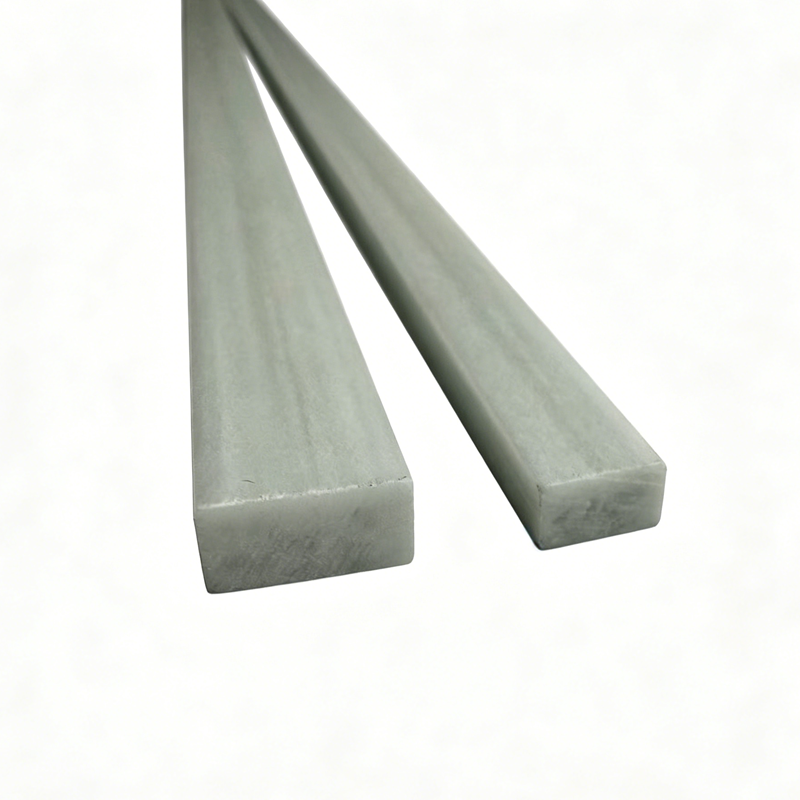
If you've ever been to a gym or noticed those beautiful magic circles in yoga studios, you've definitely seen it. That narrow, thin strip with a beautiful matte texture is hidden beneath a layer of foam or rubber. Many people are amazed by the resilience of a magic circle when they first hold it—press it firmly inward, and you can feel a dense yet resolute resistance; release it abruptly, and it quickly springs back to its original shape, crisp and clean, without any metallic creaking. This just-right "temperament" is what the fiberglass flat strip provides.
When I talk to clients, I often say: steel bars are too rigid, carbon fiber is too expensive, and plastic is too soft; only fiberglass strips are the "just right" choice.
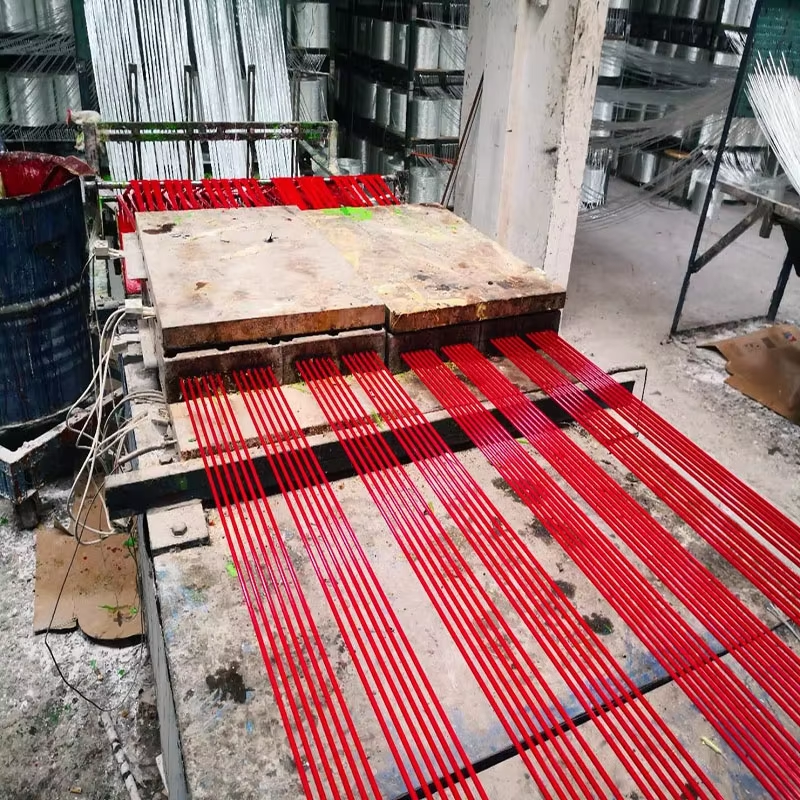
From a production perspective, there's a lot to consider with these strips. To meet the repeated stretching and releasing demands of yoga and Pilates training, we meticulously control the uniformity of resin impregnation during the pultrusion process. You might not imagine that inside a seemingly smooth strip, thousands upon thousands of fiberglass filaments must be twisted together like soldiers in a rope, all pointing in the same direction and with uniform tension. Only in this way can it withstand hundreds of thousands, even millions, of bends without internal cracks. Some cheaper alternatives will "delaminate" or develop white marks after only a few uses; this means the fibers and resin haven't bonded well. Those of us in the industry can tell how long a strip will last just by looking at the direction of the white marks.
Its advantages are real, and I can list three for you:
First is elastic memory. Unlike metal, fiberglass strips don't "fatigue." A properly manufactured strip, after being compressed, can almost completely spring back to its original state. This means that the resistance of the yoga studio's magic rings will remain as precise as when they were manufactured, even after three to five years of use. This is crucial for Pilates enthusiasts who need to progressively increase muscle strength.
Secondly, it offers gentle resilience. While carbon fiber is lighter and stronger, its breakage is brittle—it breaks suddenly and without warning. Fiberglass strips, on the other hand, exhibit noticeable bending and whitening before reaching their limit load, providing a warning. This "knowing when to advance and retreat" characteristic is a safety redundancy when used in training equipment that comes into contact with the human body.
Thirdly, it's not delicate. The humid weather in the south, sweat in the gym, occasional disinfectant wipes… these corrode metal and cause mold on wood, but for fiberglass strips, it's as natural as taking a shower. Its weather resistance determines the product's longer lifespan and lower maintenance costs.
Of course, not just any strip will do. As a manufacturer, I know that the surface smoothness and rounded edges of strips used in yoga/Pilates are extremely important. Because many products come into direct contact with the skin, even a 0.1mm burr can significantly detract from the user experience. Therefore, we spend twice as much time on mold polishing and perform chamfering and feel testing on each piece before shipping. Some in the industry might think this is overkill, but I believe it's the key difference between "industrial products" and "consumer products."
I'd also like to share an interesting detail. Years ago, some international brands used imported flat strips for their magic rings, resulting in exorbitant prices. Later, several major domestic manufacturers approached us to collaborate on improving the temperature curve and traction speed of the pultrusion molds. Now, the performance of domestically produced flat strips is completely on par with imported ones, and with reduced costs, yoga and Pilates equipment has truly become accessible to ordinary people. I often tell the workers in the workshop, "Don't underestimate that strip you're pulling; it might be part of the reason some fitness enthusiast has such a great physique."
Ultimately, fiberglass flat strips play the role of an "invisible backbone" in these products. Unassuming yet encased in soft material, it silently endures every stretch and release, providing users with stable, safe, and precise resistance feedback. The next time you see that beautiful magic circle in a yoga studio, or touch the elastic bar on a Pilates bed, pay closer attention—that hidden fiberglass strip is accompanying everyone pursuing health through yet another beautiful stretch.